
Validation Data Gallery
Tested Applications
Recommended dilution
| Application | Dilution |
|---|---|
| It is recommended that this reagent should be titrated in each testing system to obtain optimal results. | |
Product Information
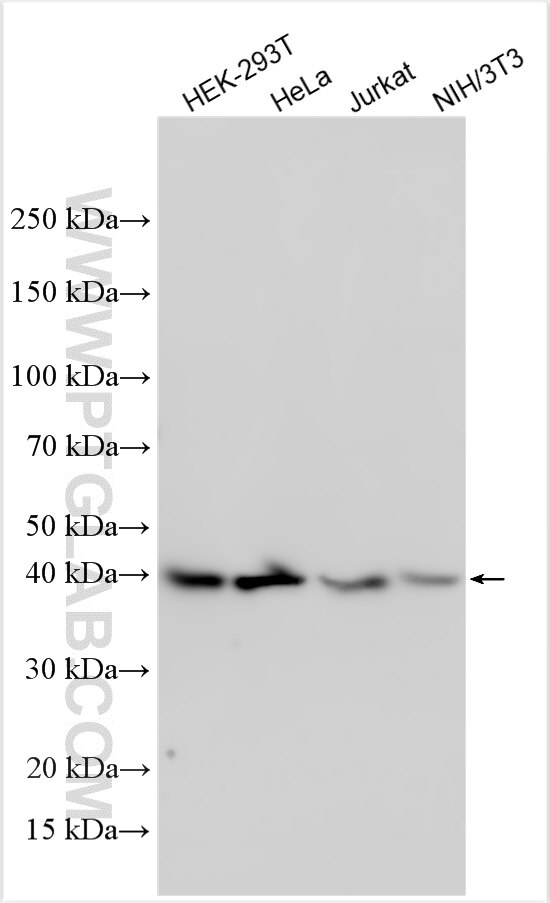
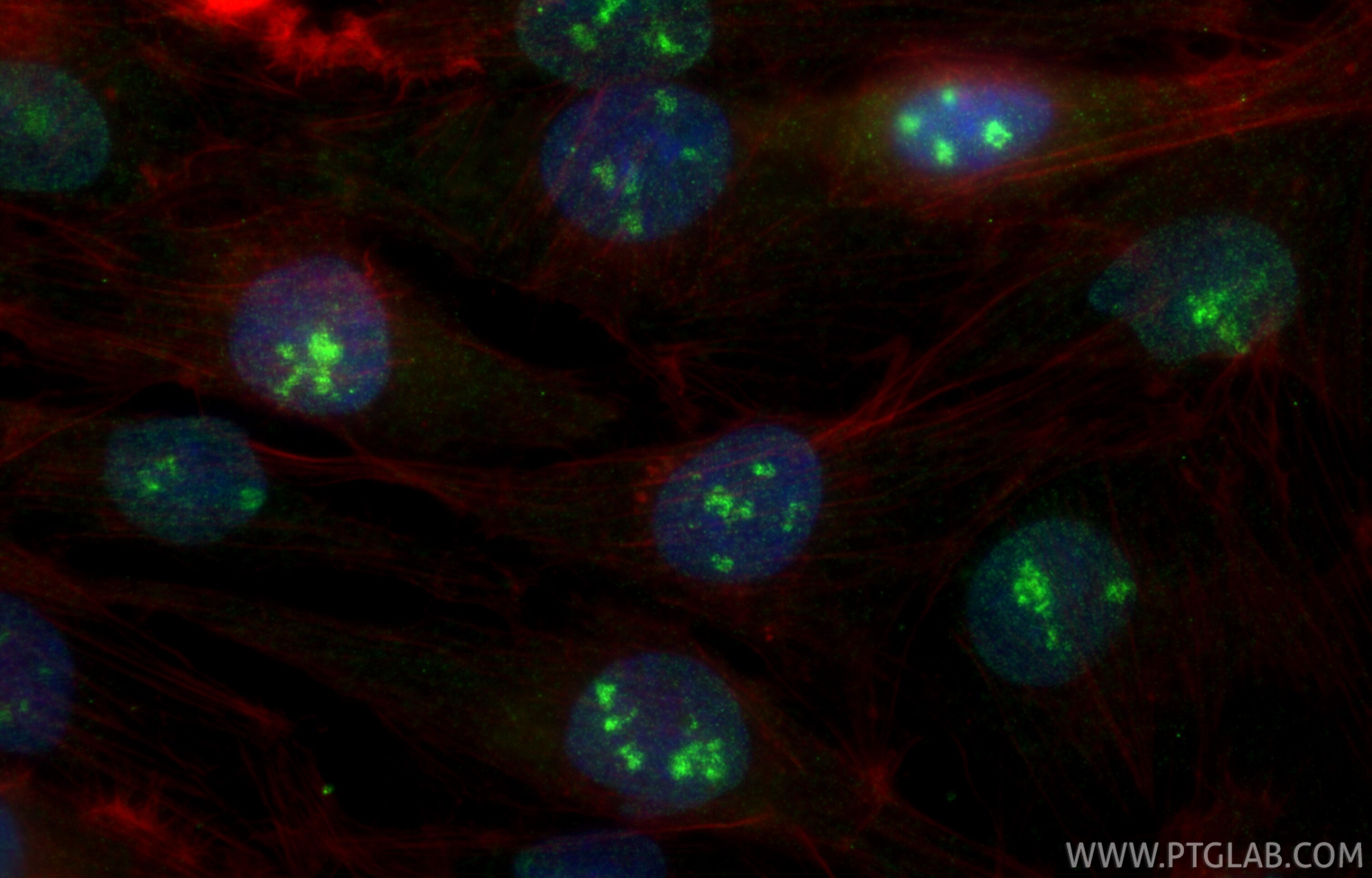
32161-1-PBS targets UBFD1 in WB, IF/ICC, Indirect ELISA applications and shows reactivity with human, mouse samples.
| Tested Reactivity | human, mouse |
| Host / Isotype | Rabbit / IgG |
| Class | Polyclonal |
| Type | Antibody |
| Immunogen |
CatNo: Ag36361 Product name: Recombinant human UBFD1 protein Source: e coli.-derived, PGEX-4T Tag: GST Domain: 1-270 aa of NM_019116 Sequence: MAAAGAPDGMEEPGMDTEAETVATEAPARPVNCLEAEAAAGAAAEDSGAARGSLQPAPAQPPGDPAAQASVSNGEDAGGGAGRELVDLKIIWNKTKHDVKFPLDSTGSELKQKIHSITGLPPAMQKVMYKGLVPEDKTLREIKVTSGAKIMVVGSTINDVLAVNTPKDAAQQDAKAEENKKEPLCRQKQHRKVLDKGKPEDVMPSVKGAQERLPTVPLSGMYNKSGGKVRLTFKLEQDQLWIGTKERTEKLPMGSIKNVVSEPIEGHEDY 相同性解析による交差性が予測される生物種 |
| Full Name | ubiquitin family domain containing 1 |
| Calculated molecular weight | 309aa, 33 kDa |
| Observed molecular weight | 40 kDa |
| GenBank accession number | NM_019116 |
| Gene Symbol | UBFD1 |
| Gene ID (NCBI) | 56061 |
| RRID | AB_3742534 |
| Conjugate | Unconjugated |
| Form | |
| Form | Liquid |
| Purification Method | Antigen affinity Purification |
| UNIPROT ID | O14562 |
| Storage Buffer | PBS only{{ptg:BufferTemp}}7.3 |
| Storage Conditions | Store at -80°C. |
Background Information
UBFD1 (Ubiquitin Family Domain Containing 1) is a polyubiquitin-binding protein containing ubiquitin-like structural domains that are widely involved in protein degradation and cell signaling. This protein shows aberrant expression in a variety of cancers, especially in estrogen receptor (ER)-positive breast cancer, where high expression of UBFD1 is closely associated with poor prognosis of patients, and is considered as a potential prognostic biomarker and therapeutic target. In addition, UBFD1 was also found to be associated with MYC-mediated tumor aggressiveness in T-cell acute lymphoblastic leukemia (T-ALL), which functionally involves the endoplasmic reticulum-associated degradation (ERAD) pathway. UBFD1 is also expressed in inner ear hair cells and ear epithelial cells, suggesting that it may play a role in hearing-related diseases.