
Validation Data Gallery
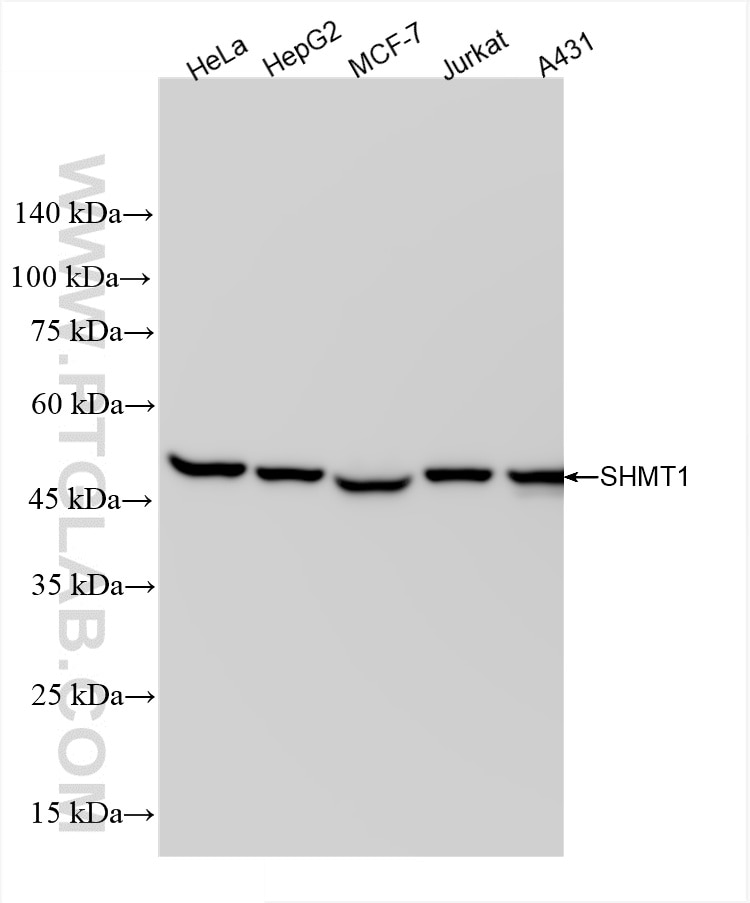
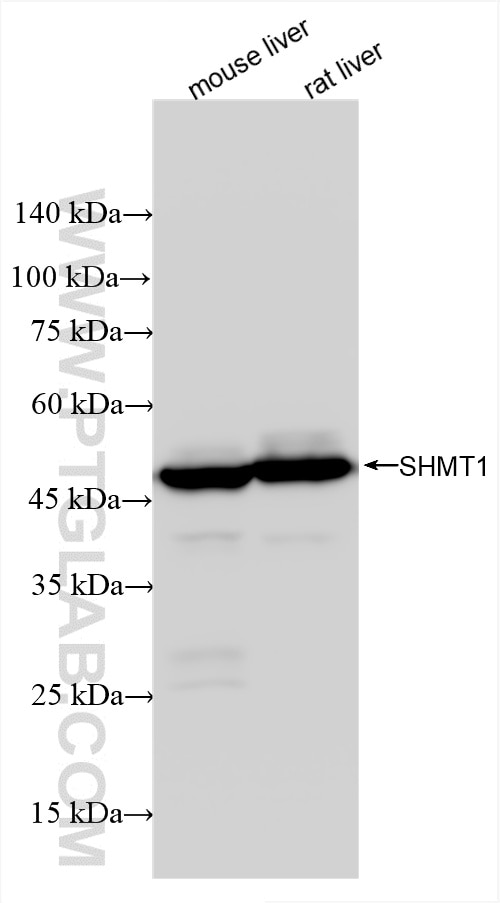
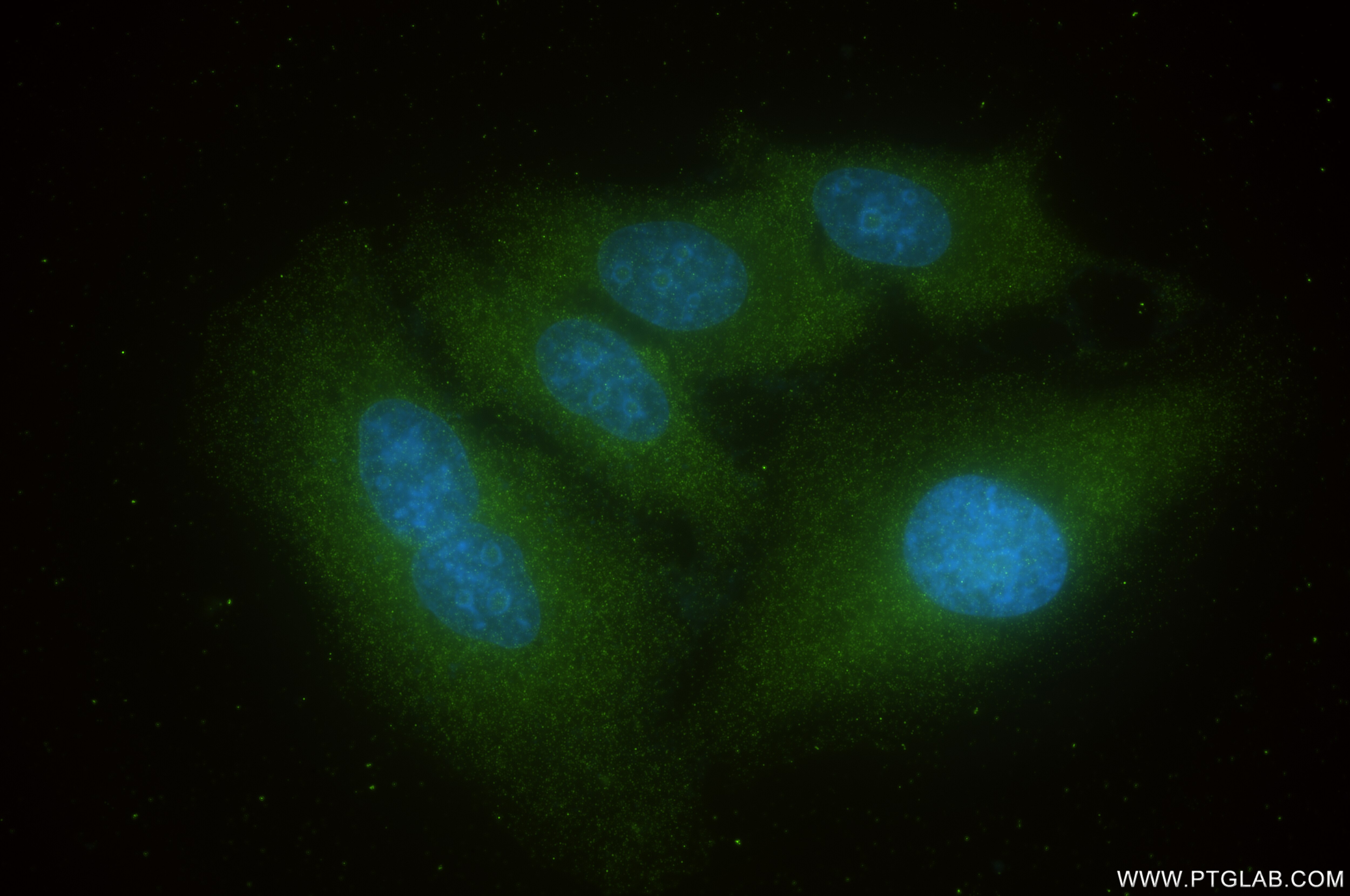
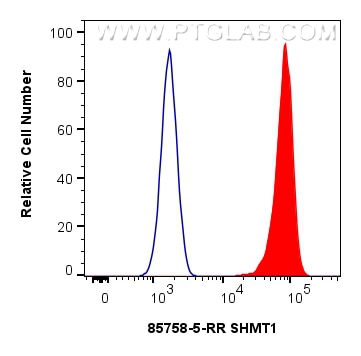
Tested Applications
Recommended dilution
| Application | Dilution |
|---|---|
| It is recommended that this reagent should be titrated in each testing system to obtain optimal results. | |
Product Information
85758-5-PBS targets SHMT1 in WB, IF/ICC, FC (Intra), Indirect ELISA applications and shows reactivity with human, mouse, rat samples.
| Tested Reactivity | human, mouse, rat |
| Host / Isotype | Rabbit / IgG |
| Class | Recombinant |
| Type | Antibody |
| Immunogen |
CatNo: Ag31269 Product name: Recombinant human SHMT1 protein Source: e coli.-derived, PET28a Tag: 6*His Domain: 320-483 aa of BC038598 Sequence: MTLEFKVYQHQVVANCRALSEALTELGYKIVTGGSDNHLILVDLRSKGTDGGRAEKVLEACSIACNKNTCPGDRSALRPSGLRLGTPALTSRGLLEKDFQKVAHFIHRGIELTLQIQSDTGVRATLKEFKERLAGDKYQAAVQALREEVESFASLFPLPGLPDF 相同性解析による交差性が予測される生物種 |
| Full Name | serine hydroxymethyltransferase 1 (soluble) |
| Calculated molecular weight | 483 aa, 53 kDa |
| Observed molecular weight | 45-53 kDa |
| GenBank accession number | BC038598 |
| Gene Symbol | SHMT1 |
| Gene ID (NCBI) | 6470 |
| RRID | AB_3744353 |
| Conjugate | Unconjugated |
| Form | |
| Form | Liquid |
| Purification Method | Protein A purification |
| UNIPROT ID | P34896 |
| Storage Buffer | PBS only{{ptg:BufferTemp}}7.3 |
| Storage Conditions | Store at -80°C. |
Background Information
SHMT1 (serine hydroxymethyltransferase 1) is a cytosolic enzyme that plays a central role in one-carbon metabolism, catalyzing the reversible conversion of serine and tetrahydrofolate (THF) to glycine and 5,10-methylenetetrahydrofolate (5,10-methylene-THF). This reaction provides the primary source of one-carbon units for a variety of essential biosynthetic processes, including the synthesis of purines, thymidylate, and methionine, as well as for methylation reactions and redox balance maintenance. SHMT1 is highly expressed in proliferating tissues and cancer cells, where its activity supports increased nucleotide synthesis and cell growth. Additionally, SHMT1 is regulated at both transcriptional and post-translational levels, and its dysregulation has been linked to metabolic disorders, developmental defects, and cancer progression. The enzyme's critical role in compartmentalized one-carbon metabolism makes it an important target for therapeutic intervention, particularly in oncology.