
Validation Data Gallery
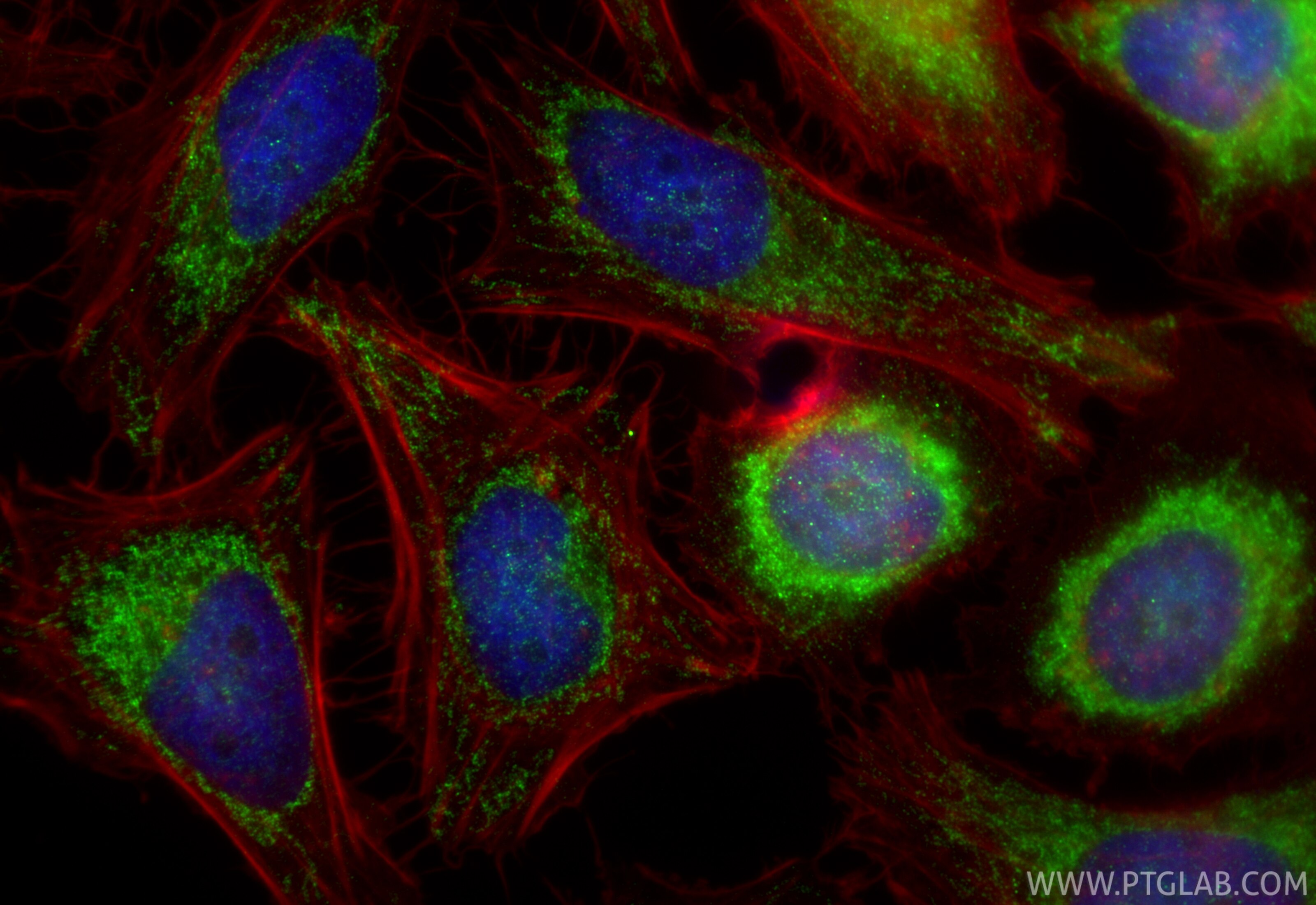
Tested Applications
Recommended dilution
| Application | Dilution |
|---|---|
| It is recommended that this reagent should be titrated in each testing system to obtain optimal results. | |
Product Information
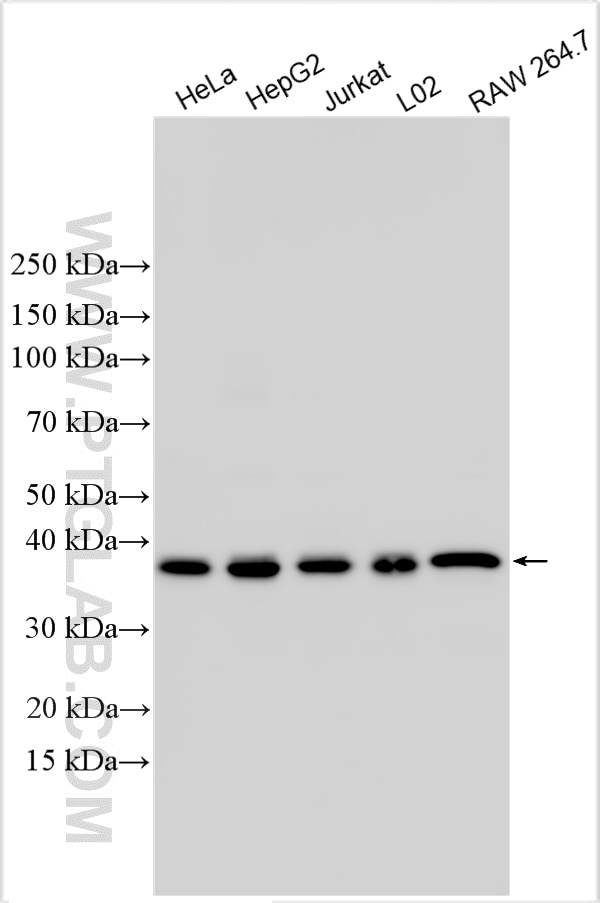
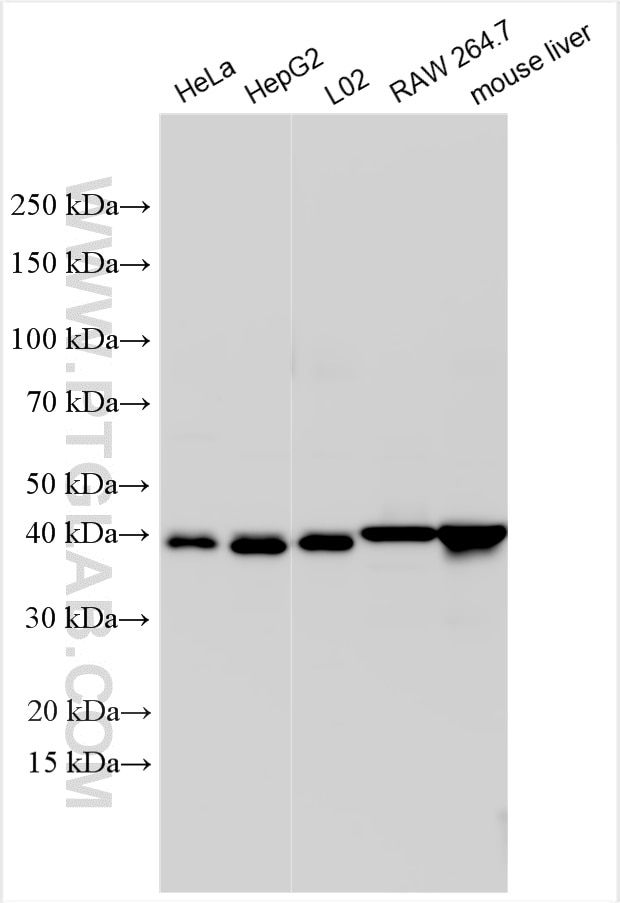
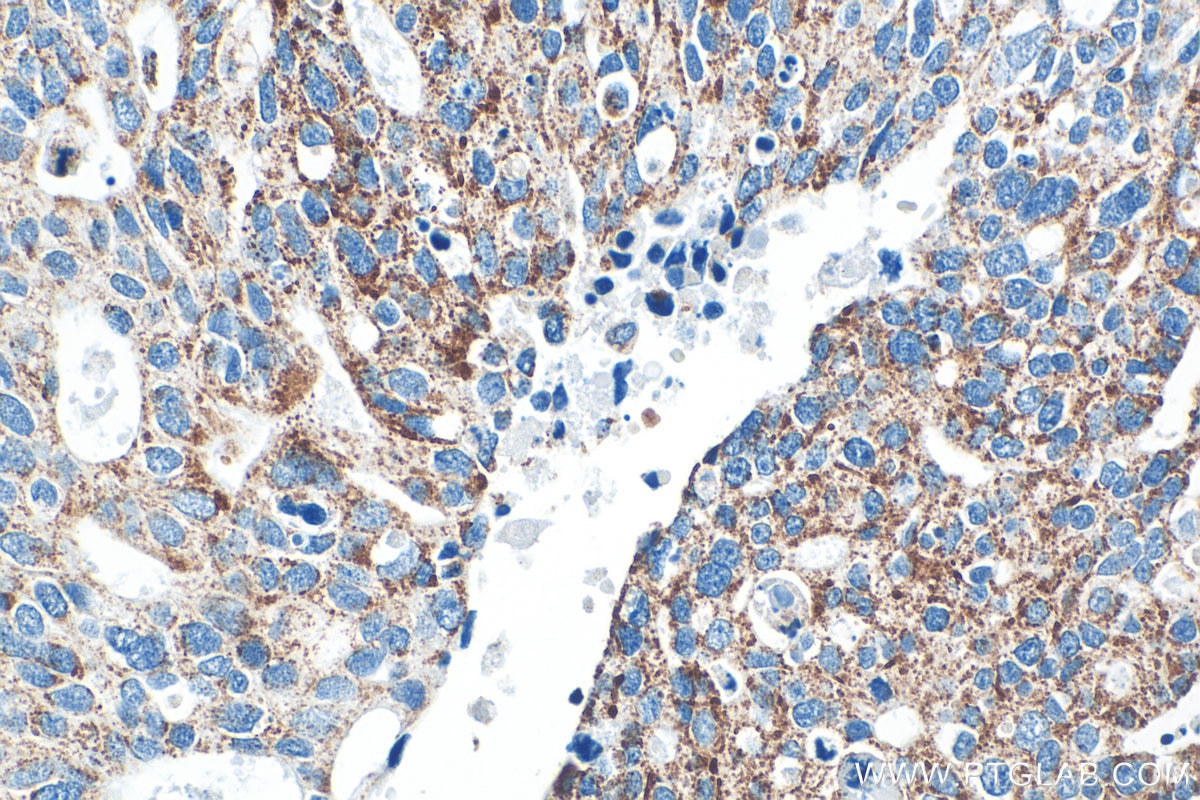
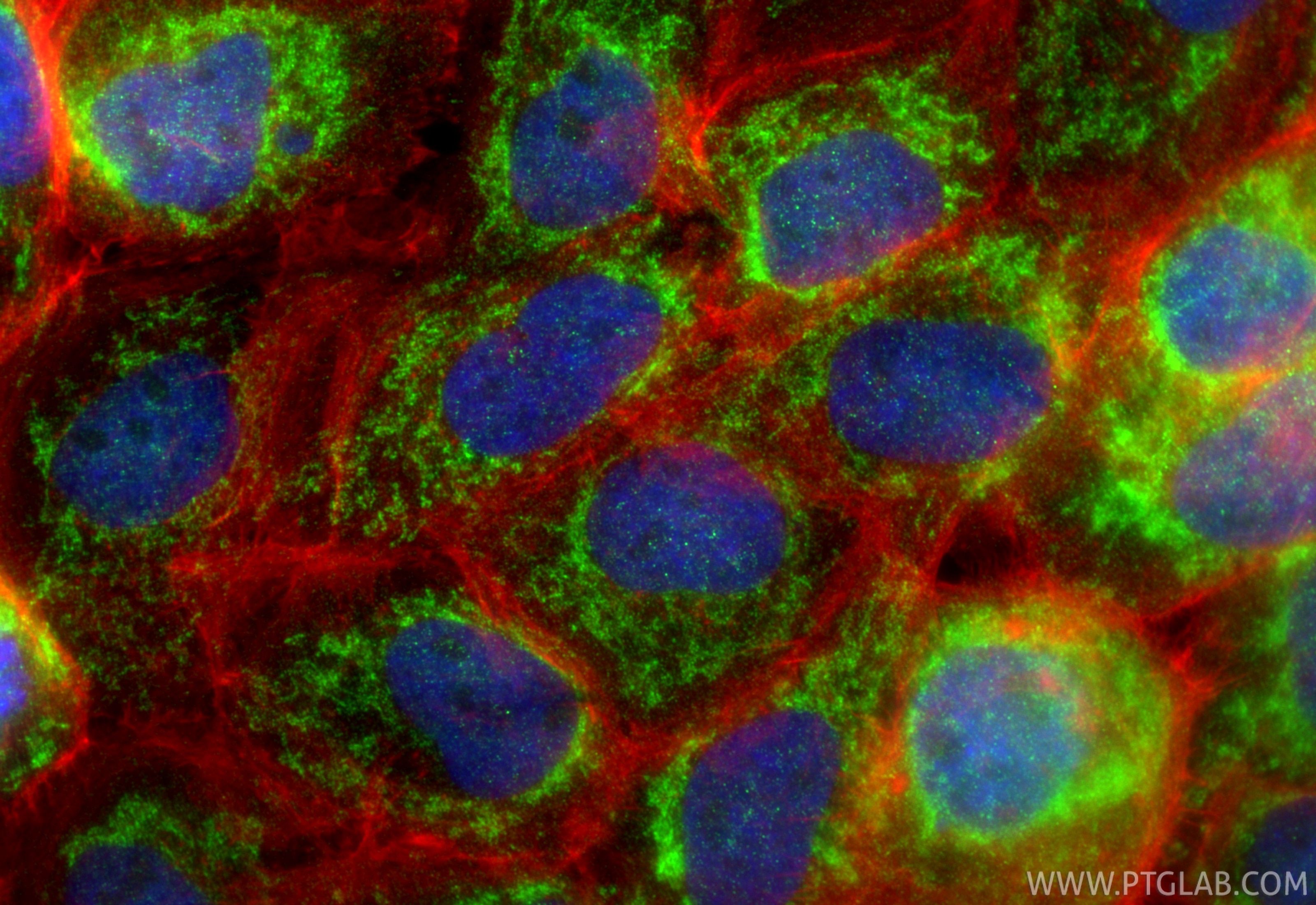
32947-1-PBS targets NDUFA10 in WB, IHC, IF/ICC, Indirect ELISA applications and shows reactivity with human, mouse samples.
| Tested Reactivity | human, mouse |
| Host / Isotype | Rabbit / IgG |
| Class | Polyclonal |
| Type | Antibody |
| Immunogen |
CatNo: Ag37576 Product name: Recombinant human NDUFA10 protein Source: e coli.-derived, PET28a Tag: 6*His Domain: 1-355 aa of BC003417 Sequence: MALRLLKLAATSASARVVAAGAQRVRGIHSSVQCKLRYGMWHFLLGDKASKRLTERSRVITVDGNICTGKGKLAKEIAEKLGFKHFPEAGIHYPDSTTGDGKPLATDYNGNCSLEKFYDDPRSNDGNSYRLQSWLYSSRLLQYSDALEHLLTTGQGVVLERSIFSDFVFLEAMYNQGFIRKQCVDHYNEVKSVTICDYLPPHLVIYIDVPVPEVQRRIQKKGDPHEMKITSAYLQDIENAYKKTFLPEMSEKCEVLQYSAREAQDSKKVVEDIEYLKFDKGPWLKQDNRTLYHLRLLVQDKFEVLNYTSIPIFLPEVTIGAHQTDRVLHQFRELPGRKYSPGYNTEVGDKWIWLK 相同性解析による交差性が予測される生物種 |
| Full Name | NADH dehydrogenase (ubiquinone) 1 alpha subcomplex, 10, 42kDa |
| Calculated molecular weight | 41 kDa |
| Observed molecular weight | 40 kDa |
| GenBank accession number | BC003417 |
| Gene Symbol | NDUFA10 |
| Gene ID (NCBI) | 4705 |
| RRID | AB_3742801 |
| Conjugate | Unconjugated |
| Form | |
| Form | Liquid |
| Purification Method | Antigen affinity Purification |
| UNIPROT ID | O95299 |
| Storage Buffer | PBS only{{ptg:BufferTemp}}7.3 |
| Storage Conditions | Store at -80°C. |
Background Information
NDUFA10 (NADH:ubiquinone oxidoreductase subunit A10) is a subunit of mitochondrial complex I of the electron transport chain, encoding a protein with NADH dehydrogenase and oxidoreductase activity. This protein transfers electrons from NADH to the respiratory chain. Mutations in the NDUFA10 gene are associated with Leigh syndrome, a common mitochondrial energy metabolism disorder in children. Additionally, the expression levels of NDUFA10 are related to the occurrence and prognosis of various diseases. For example, in Alzheimer's disease, its low expression is associated with increased dementia severity. In prostate cancer, low expression of NDUFA10 predicts a poor prognosis.