
Validation Data Gallery
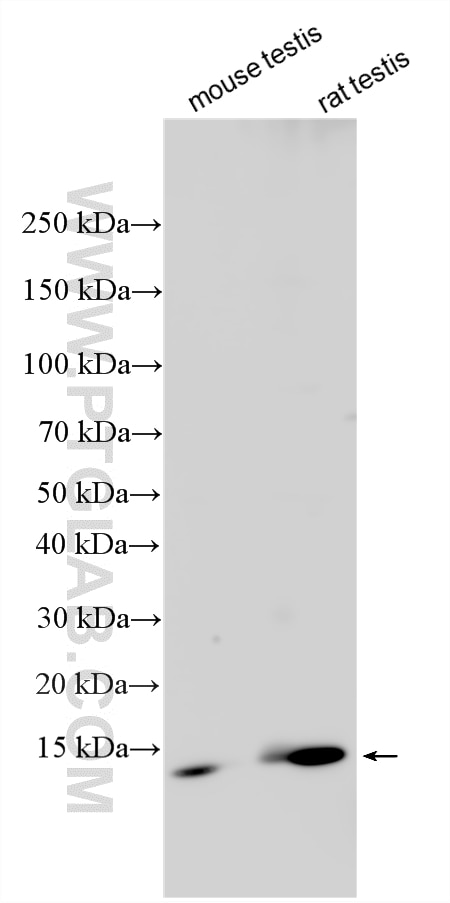
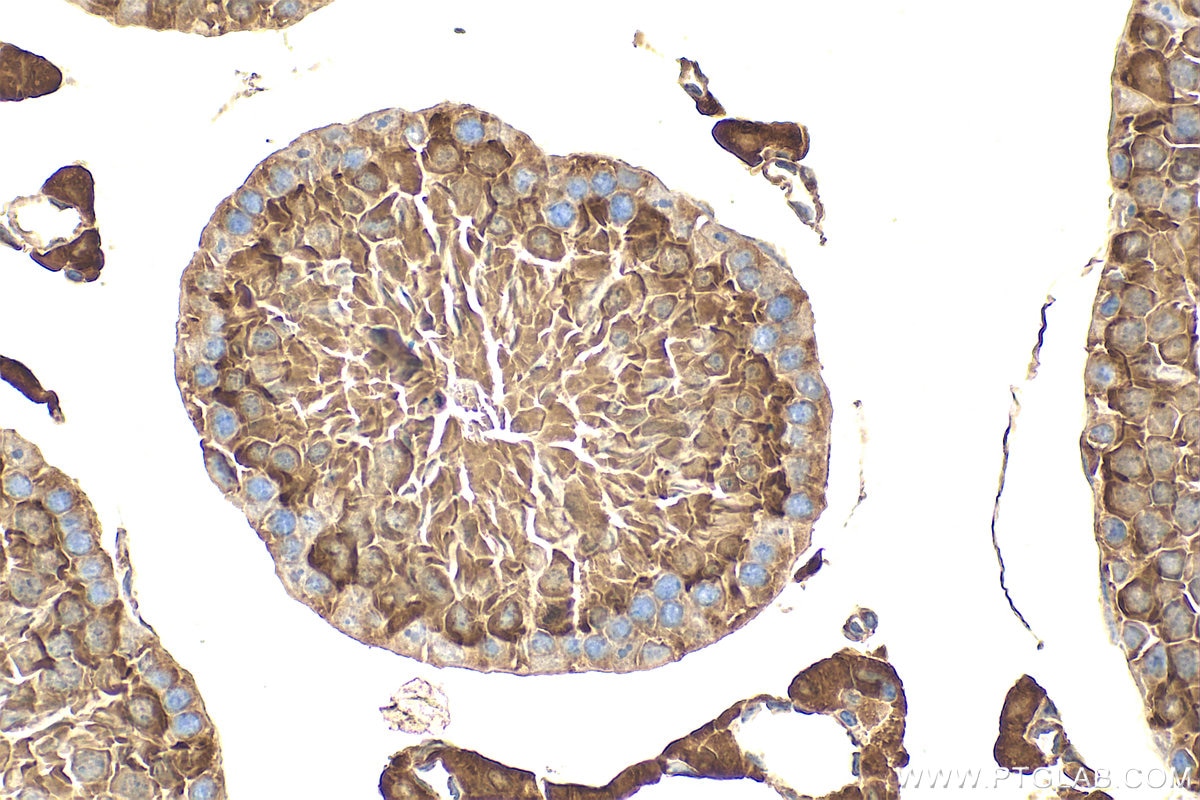
Tested Applications
Recommended dilution
| Application | Dilution |
|---|---|
| It is recommended that this reagent should be titrated in each testing system to obtain optimal results. | |
Product Information
31896-1-PBS targets FABP9 in WB, IHC, Indirect ELISA applications and shows reactivity with human, mouse, rat samples.
| Tested Reactivity | human, mouse, rat |
| Host / Isotype | Rabbit / IgG |
| Class | Polyclonal |
| Type | Antibody |
| Immunogen |
CatNo: Ag35224 Product name: Recombinant human FABP9 protein Source: e coli.-derived, PGEX-4T Tag: GST Domain: 18-100 aa of NM_001080526 Sequence: EDYMKELGVNFAARNMAGLVKPTVTISVDGKMMTIRTESSFQDTKISFKLGEEFDETTADNRKVKSTITLENGSMIHVQKWLG 相同性解析による交差性が予測される生物種 |
| Full Name | fatty acid binding protein 9, testis |
| Calculated molecular weight | 15 kDa |
| Observed molecular weight | 15 kDa |
| GenBank accession number | NM_001080526 |
| Gene Symbol | FABP9 |
| Gene ID (NCBI) | 646480 |
| RRID | AB_3742489 |
| Conjugate | Unconjugated |
| Form | |
| Form | Liquid |
| Purification Method | Antigen affinity Purification |
| UNIPROT ID | Q0Z7S8 |
| Storage Buffer | PBS only{{ptg:BufferTemp}}7.3 |
| Storage Conditions | Store at -80°C. |
Background Information
FABP9 (Fatty Acid-Binding Protein 9) is a cytoplasmic protein and a member of the fatty acid-binding protein superfamily. It is specifically and highly expressed in testicular tissue and plays a critical role in the differentiation of male germ cells. This protein reversibly binds hydrophobic ligands such as fatty acids and retinol, mediating intracellular lipid transport and metabolic regulation. During spermatogenesis, FABP9 maintains the attachment of the acrosome to the sperm nucleus, which is essential for fertilization. Recent studies have revealed that FABP9 is significantly overexpressed in various tumors, including prostate cancer and breast cancer, where it promotes tumor progression through lipid metabolism reprogramming and regulation of the G2/M checkpoint. Its expression is associated with poor patient prognosis, making it a potential diagnostic biomarker and therapeutic target.