
Validation Data Gallery
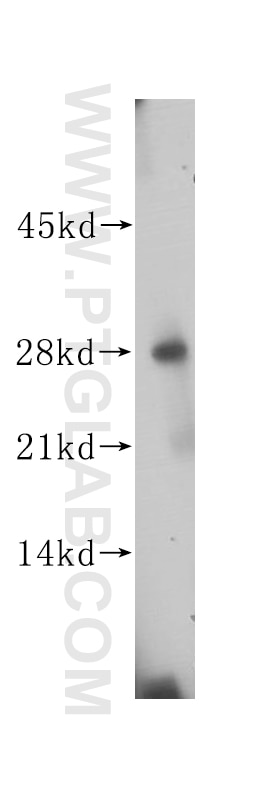
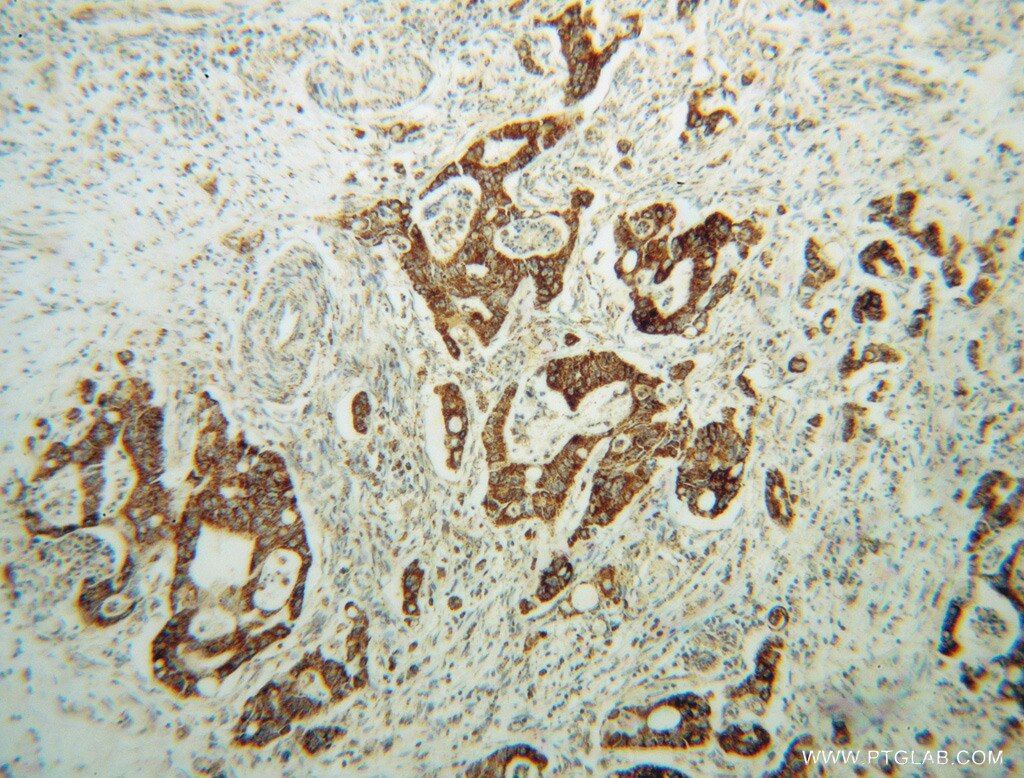
Tested Applications
Recommended dilution
| Application | Dilution |
|---|---|
| It is recommended that this reagent should be titrated in each testing system to obtain optimal results. | |
Product Information
14694-1-PBS targets AMN1 in WB, IHC, Indirect ELISA applications and shows reactivity with human, mouse, rat samples.
| Tested Reactivity | human, mouse, rat |
| Host / Isotype | Rabbit / IgG |
| Class | Polyclonal |
| Type | Antibody |
| Immunogen |
CatNo: Ag6257 Product name: Recombinant human AMN1 protein Source: e coli.-derived, PGEX-4T Tag: GST Domain: 1-213 aa of BC067906 Sequence: MQGQITDSNISEILHPEVQTLDLRSCDISDAALLHLSNCRKLKKLNLNASKGNRVSVTSEGIKAVASSCSYLHEASLKRCCNLTDEGVVALALNCQLLKIIDLGGCLSITDVSLHALGKNCPFLQCVDFSATQVSDSGVIALVSGPCAKKLEEIHMGHCVNLTDGAVEAVLTYCPQIRILLFHGCPLITDHSREVLEQLVGPNKLKQVTWTVY 相同性解析による交差性が予測される生物種 |
| Full Name | antagonist of mitotic exit network 1 homolog (S. cerevisiae) |
| Calculated molecular weight | 28 kDa |
| Observed molecular weight | 28 kDa |
| GenBank accession number | BC067906 |
| Gene Symbol | AMN1 |
| Gene ID (NCBI) | 196394 |
| RRID | AB_2226647 |
| Conjugate | Unconjugated |
| Form | |
| Form | Liquid |
| Purification Method | Antigen affinity purification |
| UNIPROT ID | Q8IY45 |
| Storage Buffer | PBS only{{ptg:BufferTemp}}7.3 |
| Storage Conditions | Store at -80°C. |
Background Information
AMN1, also known as the antagonist of mitotic exit network 1 homolog, is a protein-coding gene that plays a significant role in regulating cell division and mitotic exit in Saccharomyces cerevisiae (baker's yeast). AMN1 is an atypical F-box protein involved in the regulation of the MEN pathway. It acts as an antagonist by disrupting the formation of the Tem1/Cdc15 complex, which is crucial for mitotic exit. Specifically, AMN1 competes with Cdc15 for binding to Tem1, thereby turning off the MEN pathway. AMN1 is essential for cell separation after cytokinesis. It inhibits the transcription factor Ace2, leading to the downregulation of Ace2 target genes. This inhibition prevents septum cleavage and results in post-mitotic cell separation inhibition, causing cell clumping.