
Validation Data Gallery
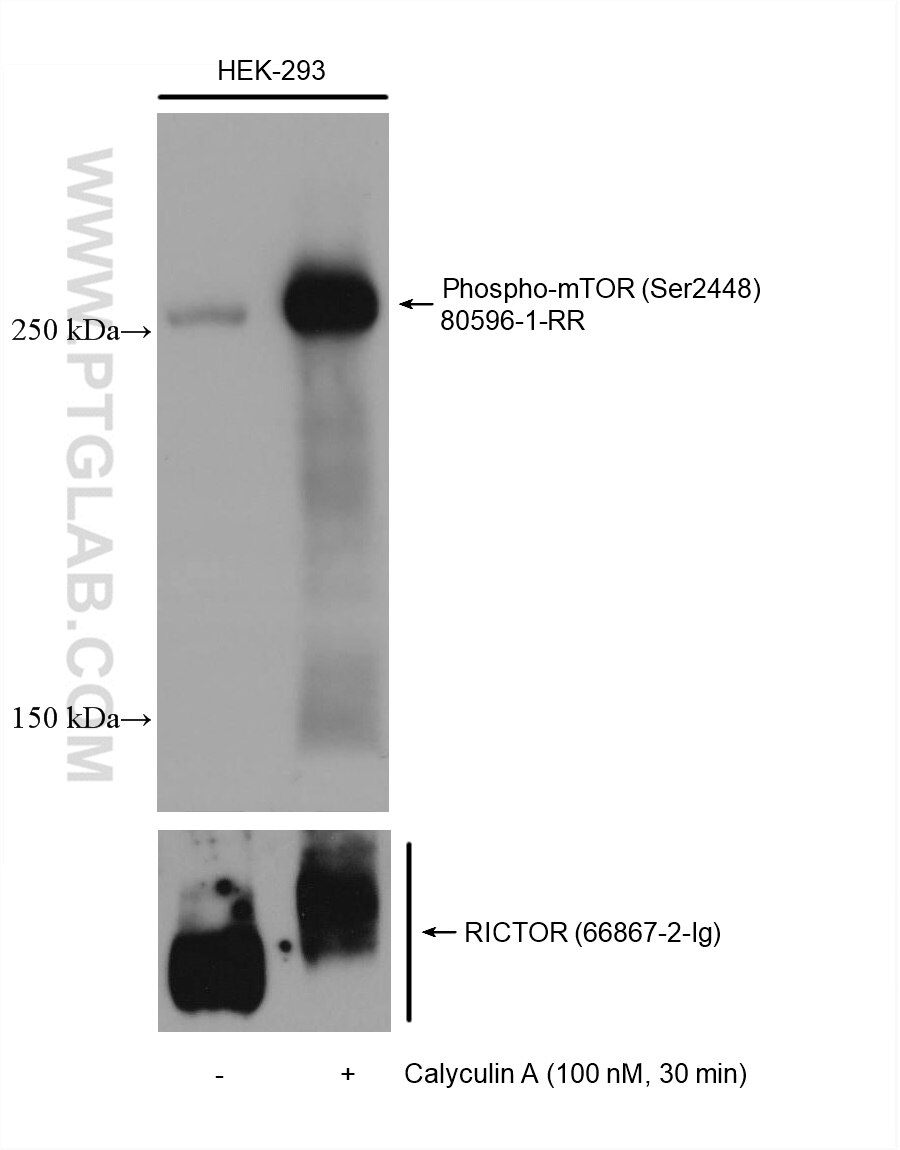
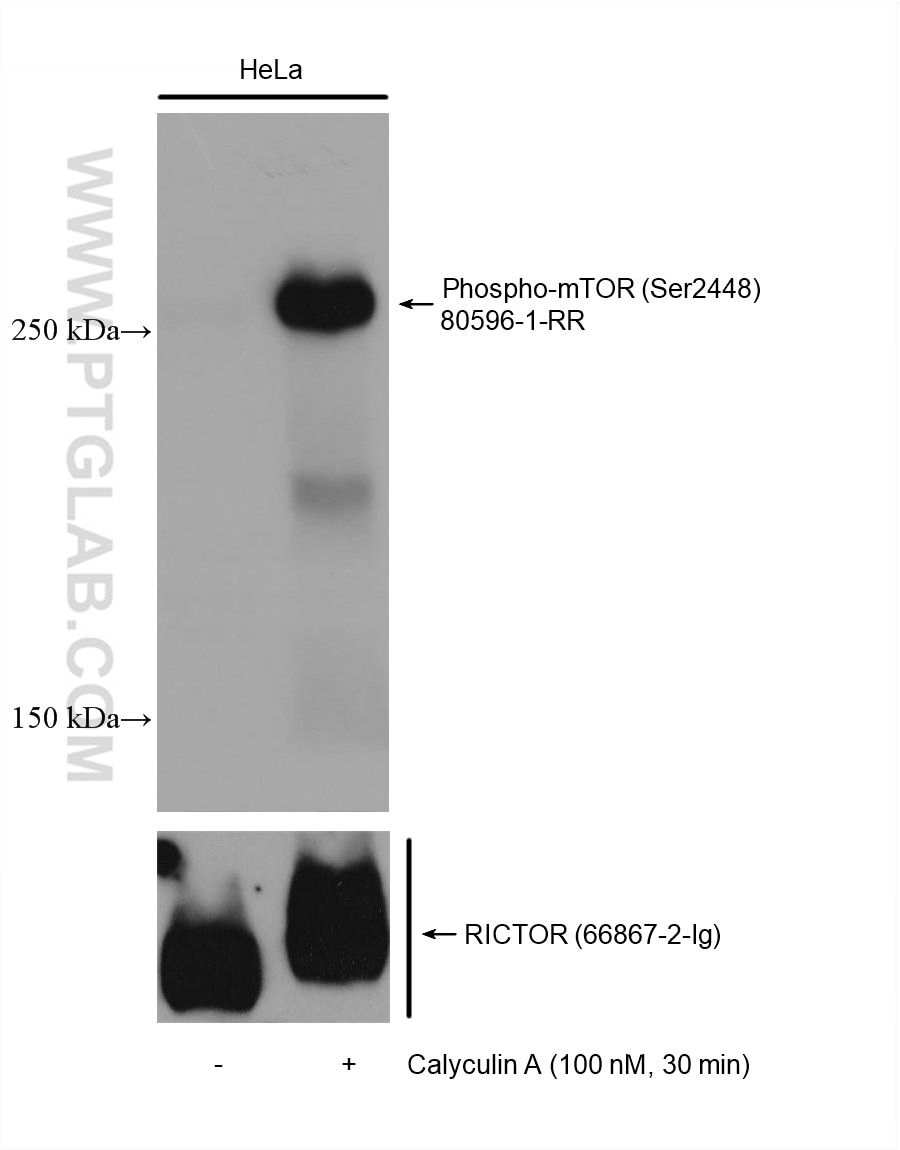
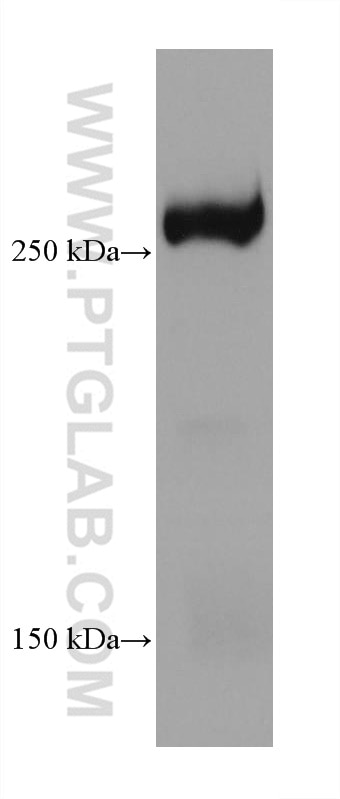
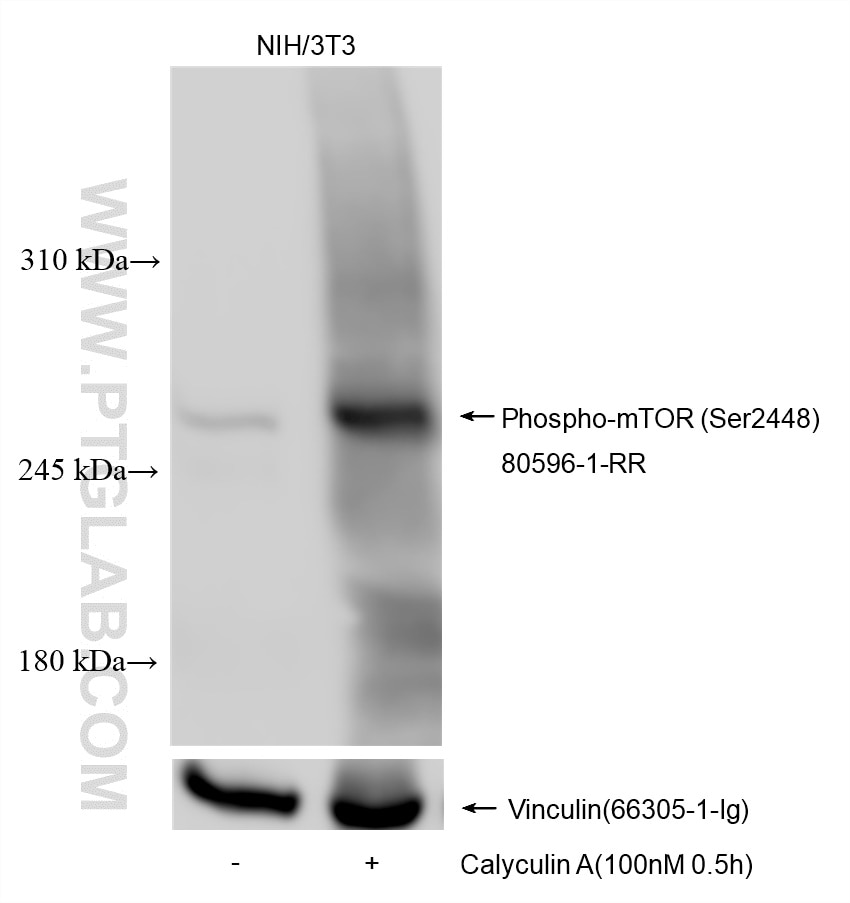
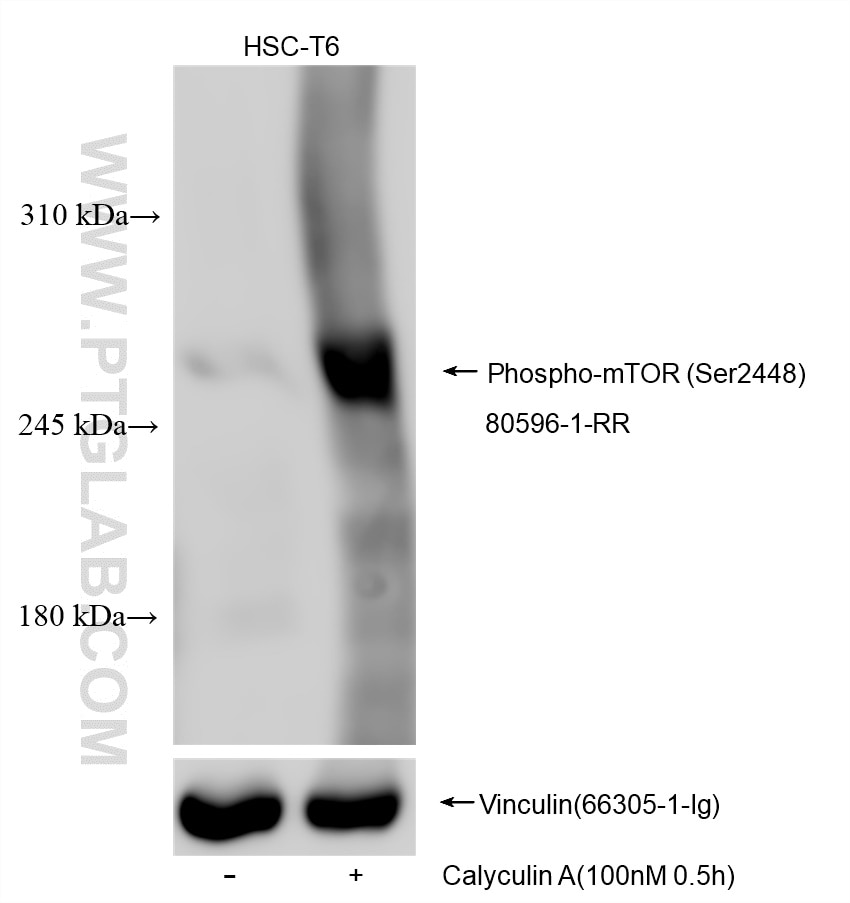
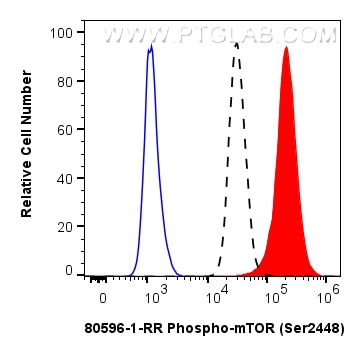
Tested Applications
| Positive WB detected in | HEK-293 cells, HeLa cells, Calyculin A treated HSC-T6 cells, Calyculin A treated NIH/3T3 cells, Calyculin A treated HEK-293 cells, Calyculin A treated HeLa cells |
| Positive FC (Intra) detected in | Calyculin A treated HEK-293 cells |
Recommended dilution
| Application | Dilution |
|---|---|
| Western Blot (WB) | WB : 1:5000-1:50000 |
| Flow Cytometry (FC) (INTRA) | FC (INTRA) : 0.13 ug per 10^6 cells in a 100 µl suspension |
| It is recommended that this reagent should be titrated in each testing system to obtain optimal results. | |
| Sample-dependent, Check data in validation data gallery. | |
Published Applications
| WB | See 66 publications below |
| IHC | See 5 publications below |
| IF | See 4 publications below |
Product Information
80596-1-RR targets Phospho-mTOR (Ser2448) in WB, IHC, IF, FC (Intra), ELISA applications and shows reactivity with human, mouse, rat samples.
| Tested Reactivity | human, mouse, rat |
| Cited Reactivity | human, mouse, rat, bovine |
| Host / Isotype | Rabbit / IgG |
| Class | Recombinant |
| Type | Antibody |
| Immunogen |
Peptide 相同性解析による交差性が予測される生物種 |
| Full Name | FK506 binding protein 12-rapamycin associated protein 1 |
| Calculated molecular weight | 289 kDa |
| Observed molecular weight | 250-289 kDa |
| GenBank accession number | BC117166 |
| Gene Symbol | mTOR |
| Gene ID (NCBI) | 2475 |
| RRID | AB_2918905 |
| Conjugate | Unconjugated |
| Form | |
| Form | Liquid |
| Purification Method | Protein A purification |
| UNIPROT ID | P42345 |
| Storage Buffer | PBS with 0.02% sodium azide and 50% glycerol{{ptg:BufferTemp}}7.3 |
| Storage Conditions | Store at -20°C. Stable for one year after shipment. Aliquoting is unnecessary for -20oC storage. |
Background Information
MTOR, also named as FRAP1, FRAP, FRAP2 and RAPT1, belongs to the PI3/PI4-kinase family. MTOR is a Ser/Thr protein kinase that functions as an ATP and amino acid sensor to balance nutrient availability and cell growth. MTOR is kinase subunit of both mTORC1 and mTORC2, which regulate cell growth and survival in response to nutrient and hormonal signals. mTORC1 is activated in response to growth factors or amino-acids. mTORC2 is also activated by growth factors, but seems to be nutrient-insensitive. mTORC2 seems to function upstream of Rho GTPases to regulate the actin cytoskeleton, probably by activating one or more Rho-type guanine nucleotide exchange factors. mTORC2 promotes the serum-induced formation of stress-fibers or F-actin. mTOR is phosphorylated at Ser2448 via the PI3 kinase/Akt signaling pathway and autophosphorylated at Ser2481. mTOR plays a key role in cell growth and homeostasis and may be abnormally regulated in tumors.
Protocols
| Product Specific Protocols | |
|---|---|
| WB protocol for Phospho-mTOR (Ser2448) antibody 80596-1-RR | Download protocol |
| Standard Protocols | |
|---|---|
| Click here to view our Standard Protocols |
Publications
| Species | Application | Title |
|---|---|---|
Nat Cancer Low-protein diet enhances antitumor immunity in pancreatic cancer through microbiota-derived UDP-galactose | ||
Drug Resist Updat Host-directed novel mechanistic insights of doxorubicin reveal its efficacy against drug-resistant HSV-1 underscoring risks with oncolytic virotherapy. | ||
Autophagy FASN mediates crosstalk between autophagy and lipid metabolism via the AMPK-MTOR pathway in early age-related macular degeneration. | ||
Theranostics Branched-chain amino acids deficiency promotes diabetic cardiomyopathy by activating autophagy of cardiac fibroblasts | ||
Adv Sci (Weinh) Ascites circRNA ASCOR Drives Platinum Resistance of High-Grade Serous Ovarian Cancer by Facilitating RPA1 Nuclear Translocation. | ||
J Control Release Copper ionophore-autophagy interference nanoregulators for tumor self-defense reprograming to amplify cuproptotic stress and antitumor immunity. |