
Recombinant Human PD-L1/CD274 protein (Myc Tag, His Tag)
Species
Human
Purity
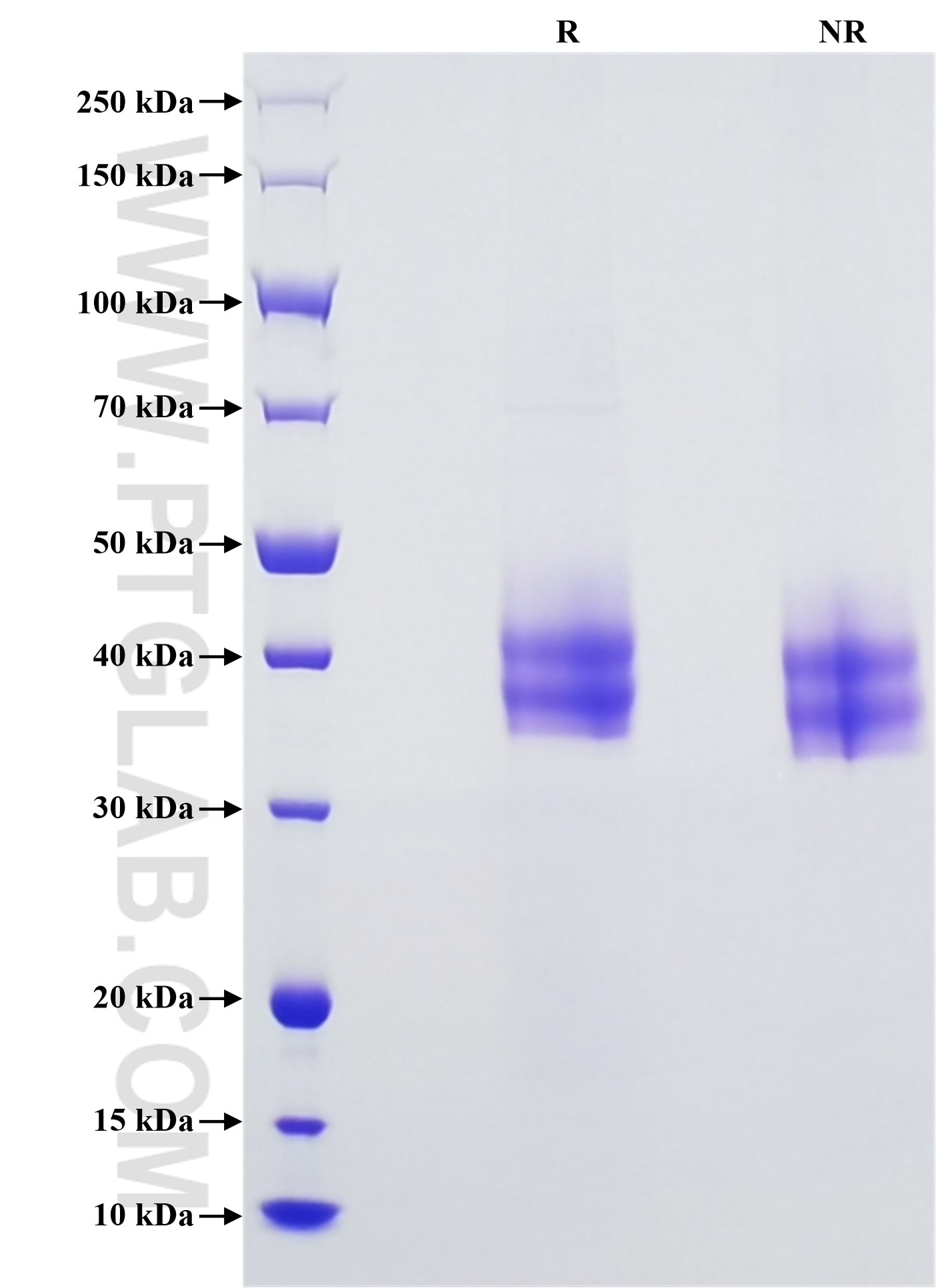
>90 %, SDS-PAGE
Tag
Myc Tag, His Tag
Activity
not tested
Cat no : Eg31414
Validation Data Gallery
Product Information
| Purity | >90 %, SDS-PAGE |
| Endotoxin | <0.1 EU/μg protein, LAL method |
| Activity |
Not tested |
| Expression | HEK293-derived Human PD-L1 protein Phe19-Arg238 (Accession# Q9NZQ7-1) with a Myc tag and a His tag at the C-terminus. |
| GeneID | 29126 |
| Accession | Q9NZQ7-1 |
| PredictedSize | 30.8 kDa |
| SDS-PAGE | 35-44 kDa, reducing (R) conditions |
| Formulation | Lyophilized from 0.22 μm filtered solution in PBS, pH 7.4. Normally 5% trehalose and 5% mannitol are added as protectants before lyophilization. |
| Reconstitution | Briefly centrifuge the tube before opening. Reconstitute at 0.1-0.5 mg/mL in sterile water. |
| Storage Conditions |
It is recommended that the protein be aliquoted for optimal storage. Avoid repeated freeze-thaw cycles.
|
| Shipping | The product is shipped at ambient temperature. Upon receipt, store it immediately at the recommended temperature. |
Background
PD-L1 (Programmed Death-Ligand 1), encoded by the CD274 gene, is a crucial immune checkpoint transmembrane protein. It is primarily expressed on the surfaces of antigen-presenting cells, epithelial cells, and tumor cells. By binding to the PD-1 receptor on T cells, it transmits inhibitory signals, negatively regulating T cell activation and function, thereby maintaining immune tolerance and preventing excessive immune responses. In the tumor microenvironment, cancer cells often aberrantly overexpress PD-L1 to "hijack" this pathway, suppressing the anti-tumor immune response of T cells and facilitating immune escape. This mechanism establishes PD-L1 as a core target for cancer immunotherapy. Inhibitors targeting the PD-1/PD-L1 pathway, such as monoclonal antibodies, can block this signaling axis, restoring the tumor-killing function of T cells. These inhibitors have achieved revolutionary breakthroughs in the treatment of various cancers and have led to the development of companion diagnostic strategies based on PD-L1 expression.
References:
1. Gou, Qian et al. Cell death & disease vol. 11,11 (2020): 955. 2. Wang, Huina et al. Autophagy vol. 21,12 (2025): 2670-2689. 3. Klümper, Niklas et al. Oncoimmunology vol. 12,1 (2023): 2267744. 4. Inaguma, Shingo et al. The journal of pathology. Clinical research vol. 9,3 (2023): 195-207.