
Validation Data Gallery
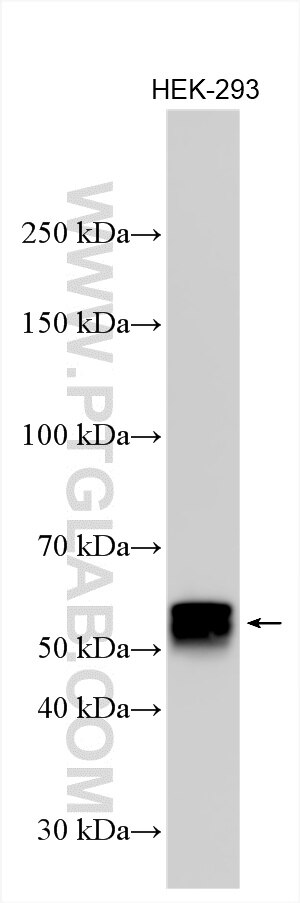
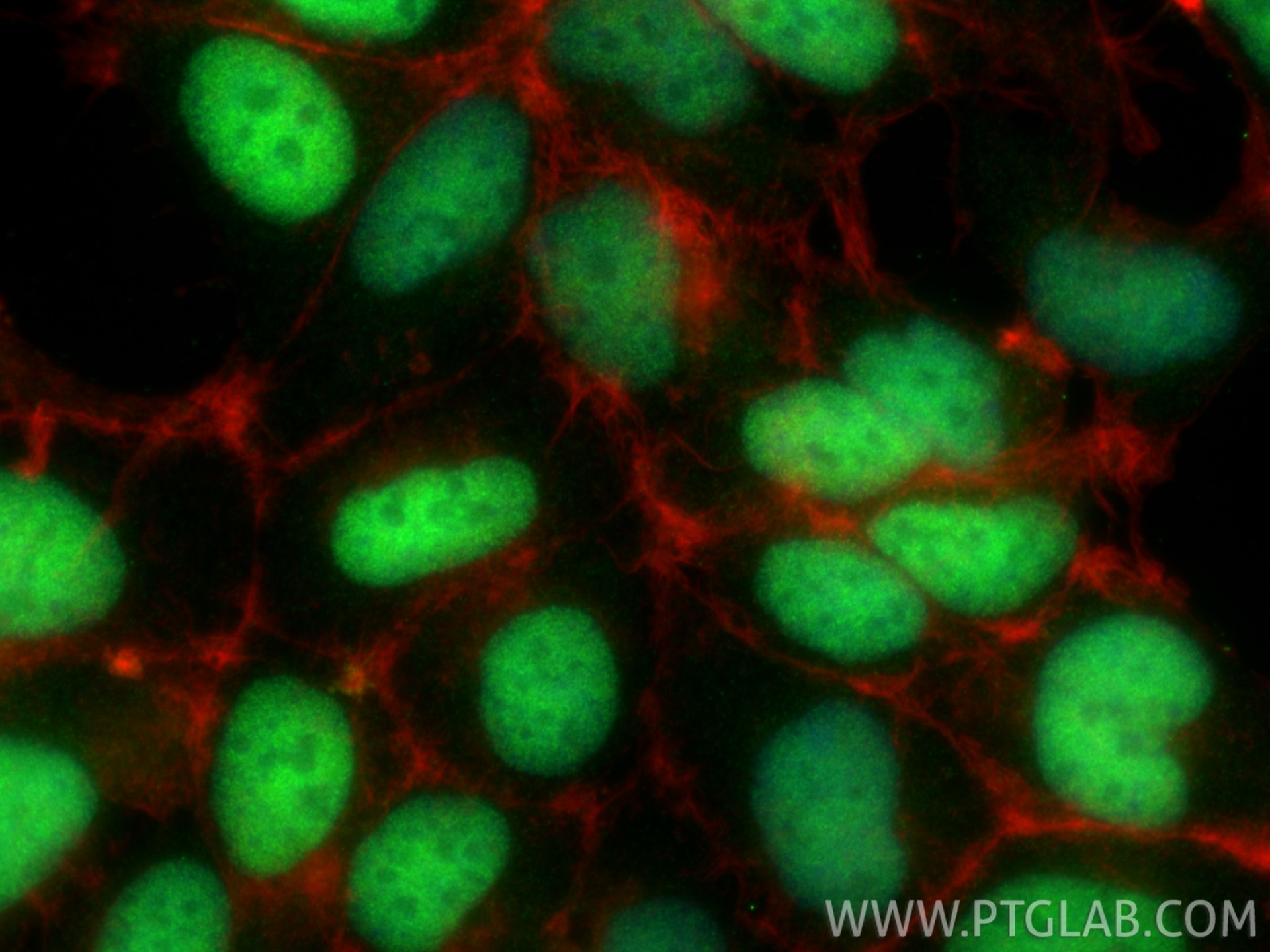
Tested Applications
Recommended dilution
| Application | Dilution |
|---|---|
| It is recommended that this reagent should be titrated in each testing system to obtain optimal results. | |
Product Information
34277-1-PBS targets ZIC5 in WB, Indirect ELISA applications and shows reactivity with human samples.
| Tested Reactivity | human |
| Host / Isotype | Rabbit / IgG |
| Class | Polyclonal |
| Type | Antibody |
| Immunogen |
CatNo: Ag41531 Product name: Recombinant huma ZIC5 protein Source: e coli.-derived, PGEX-4T Tag: GST Domain: 550-639 aa of NM_033132 Sequence: IHCKSPPPSPGPLGYSSVGTPVGAPLSPVLDPARSHSSTLSPQVTNLNEWYVCQASGAPSHLHTPSSNGTTSETEDEEIYGNPEVVRTIH 相同性解析による交差性が予測される生物種 |
| Full Name | Zic family member 5 (odd-paired homolog, Drosophila) |
| Calculated molecular weight | 639aa, 66 kDa |
| Observed molecular weight | 57 kDa |
| GenBank accession number | NM_033132 |
| Gene Symbol | ZIC5 |
| Gene ID (NCBI) | 85416 |
| RRID | AB_3743183 |
| Conjugate | Unconjugated |
| Form | |
| Form | Liquid |
| Purification Method | Antigen affinity Purification |
| UNIPROT ID | Q96T25 |
| Storage Buffer | PBS only{{ptg:BufferTemp}}7.3 |
| Storage Conditions | Store at -80°C. |
Background Information
ZIC5 (Zinc Finger of the Cerebellum 5) is a C2H2-type zinc finger protein belonging to the ZIC family. This protein plays an important role in neural development, participating in neural crest cell differentiation, neural tube formation, and the establishment of the left-right axis. Recent studies have found that ZIC5 is significantly overexpressed in various malignant tumors, including colon cancer, prostate cancer, cervical cancer, lung cancer, hepatocellular carcinoma, and melanoma. It promotes tumor cell proliferation, invasion, migration, and epithelial-mesenchymal transition (EMT) by activating the Wnt/β-catenin signaling pathway. ZIC5 enhances cancer stem cell properties and is positively correlated with the expression of stemness markers. It serves as an independent prognostic marker for colon cancer, and its high expression is closely associated with poor patient survival.