
Validation Data Gallery
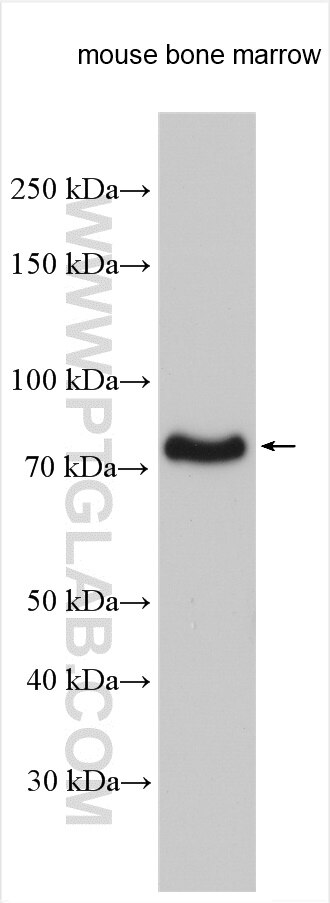
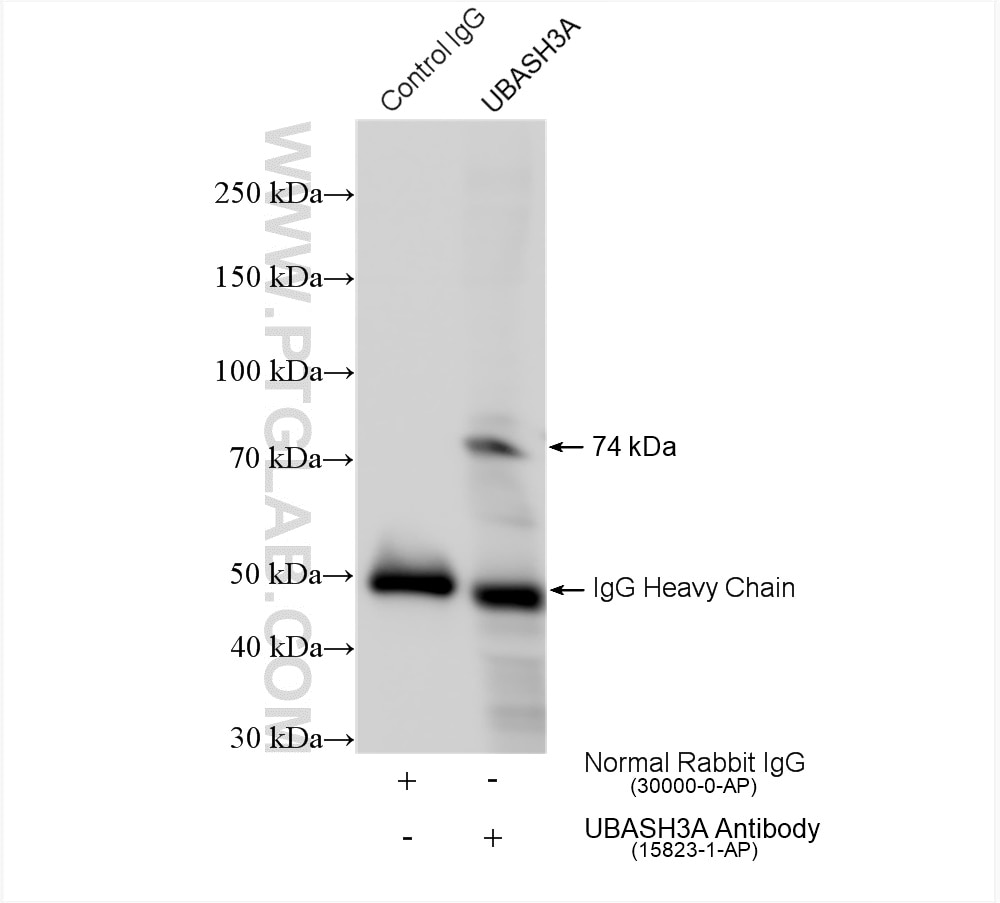
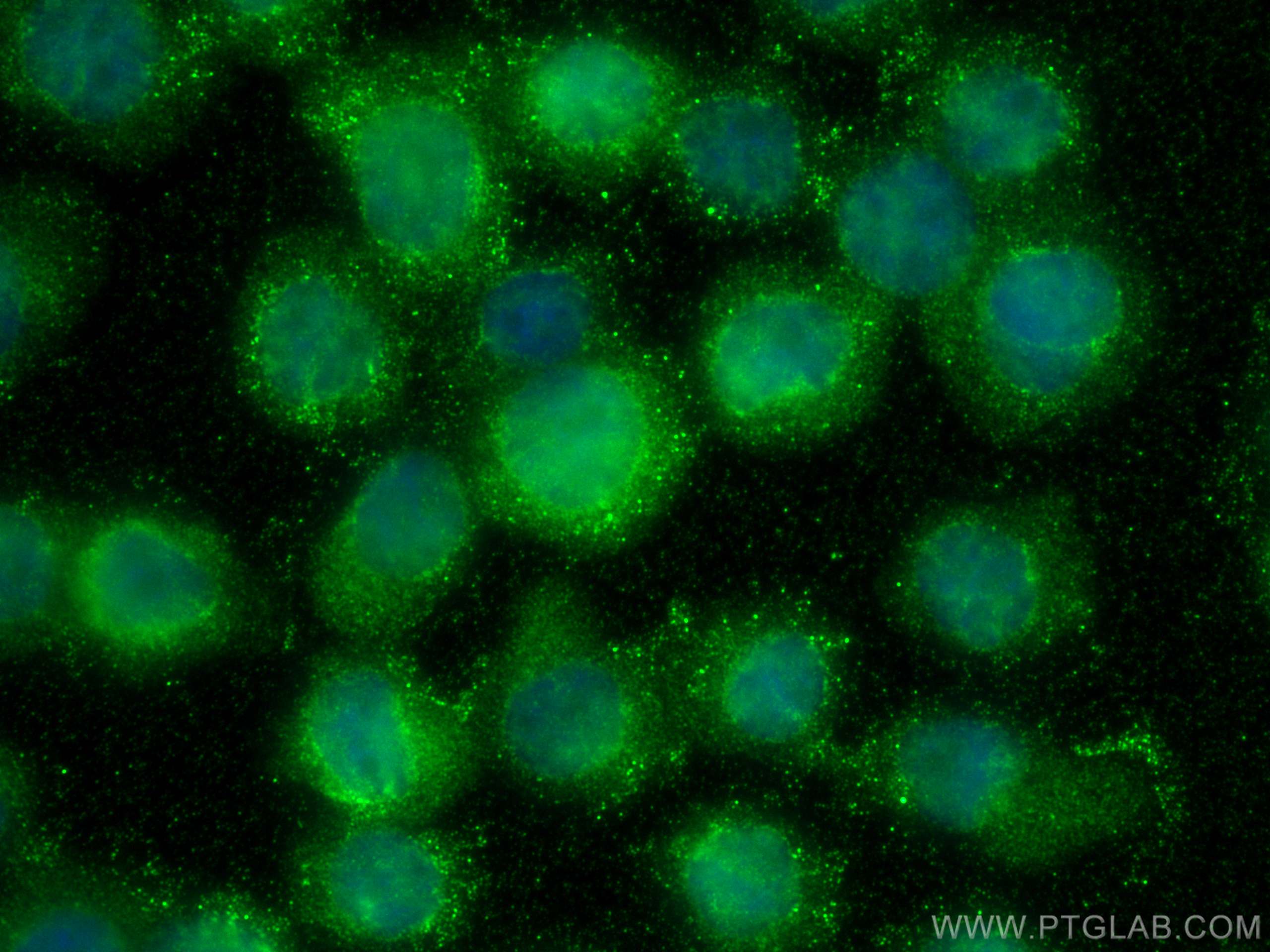
Tested Applications
Recommended dilution
| Application | Dilution |
|---|---|
| It is recommended that this reagent should be titrated in each testing system to obtain optimal results. | |
Product Information
15823-1-PBS targets UBASH3A-Specific in WB, IF/ICC, IP, Indirect ELISA applications and shows reactivity with human, mouse, rat samples.
| Tested Reactivity | human, mouse, rat |
| Host / Isotype | Rabbit / IgG |
| Class | Polyclonal |
| Type | Antibody |
| Immunogen |
Peptide 相同性解析による交差性が予測される生物種 |
| Full Name | ubiquitin associated and SH3 domain containing, A |
| Calculated molecular weight | 74 kDa |
| Observed molecular weight | 70-74 kDa |
| GenBank accession number | NM_018961 |
| Gene Symbol | UBASH3A |
| Gene ID (NCBI) | 53347 |
| RRID | AB_2272584 |
| Conjugate | Unconjugated |
| Form | |
| Form | Liquid |
| Purification Method | Antigen affinity purification |
| UNIPROT ID | P57075 |
| Storage Buffer | PBS only{{ptg:BufferTemp}}7.3 |
| Storage Conditions | Store at -80°C. |
Background Information
UBASH3A gene encodes ubiquitin-associated and SH3 domain-containing protein A (UBASH3A) also known as T-cell ubiquitin ligand 1 (TULA1) which is one of two family members belonging to the T-cell ubiquitin ligand (TULA) family. UBASH3A gene expression is limited to only a few tissues, with its highest expression in spleen, peripheral blood leukocytes, and bone marrow. UBASH3A protein is associated with c-Cbl and ubiquitylated proteins and has been implicated in the regulation of signaling mediated by protein-tyrosine kinases oth family members can negatively regulate T-cell signaling. UBASH3A can facilitate growth factor withdrawal-induced apoptosis in T cells via its interaction with apoptosis-inducing factor (AIF). This antibody is UBASH3A-specific.