
Validation Data Gallery
Tested Applications
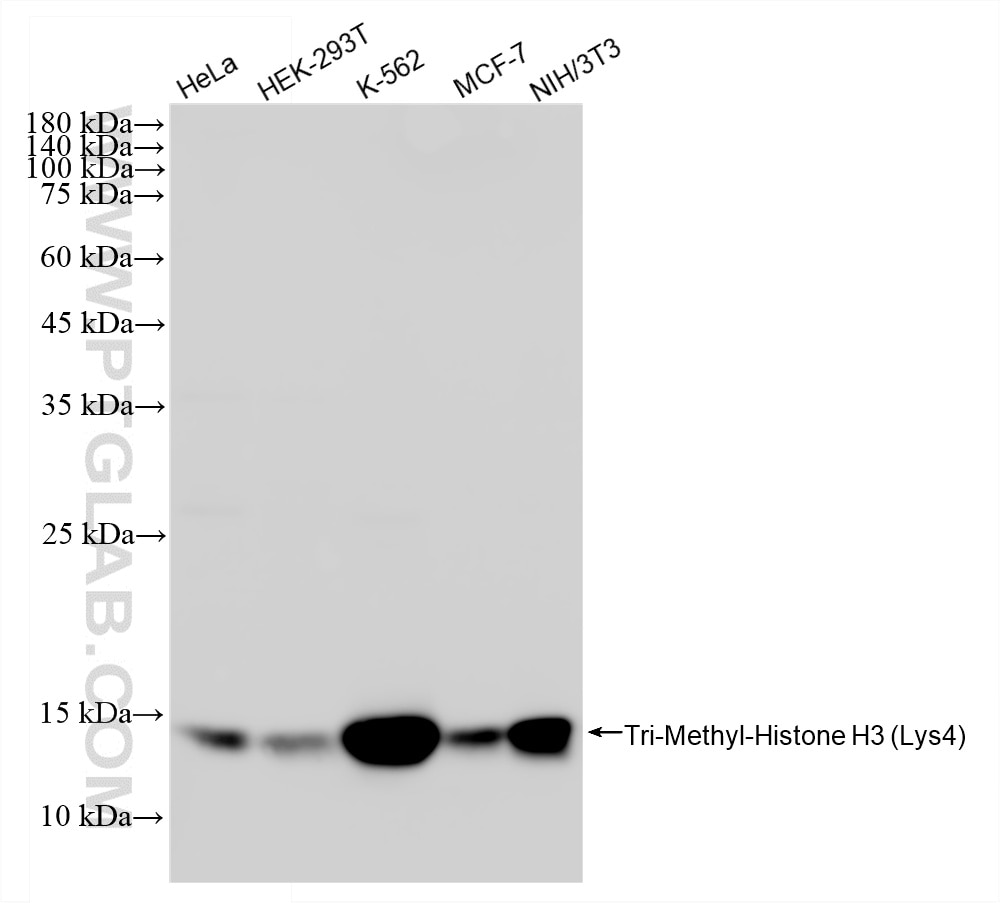
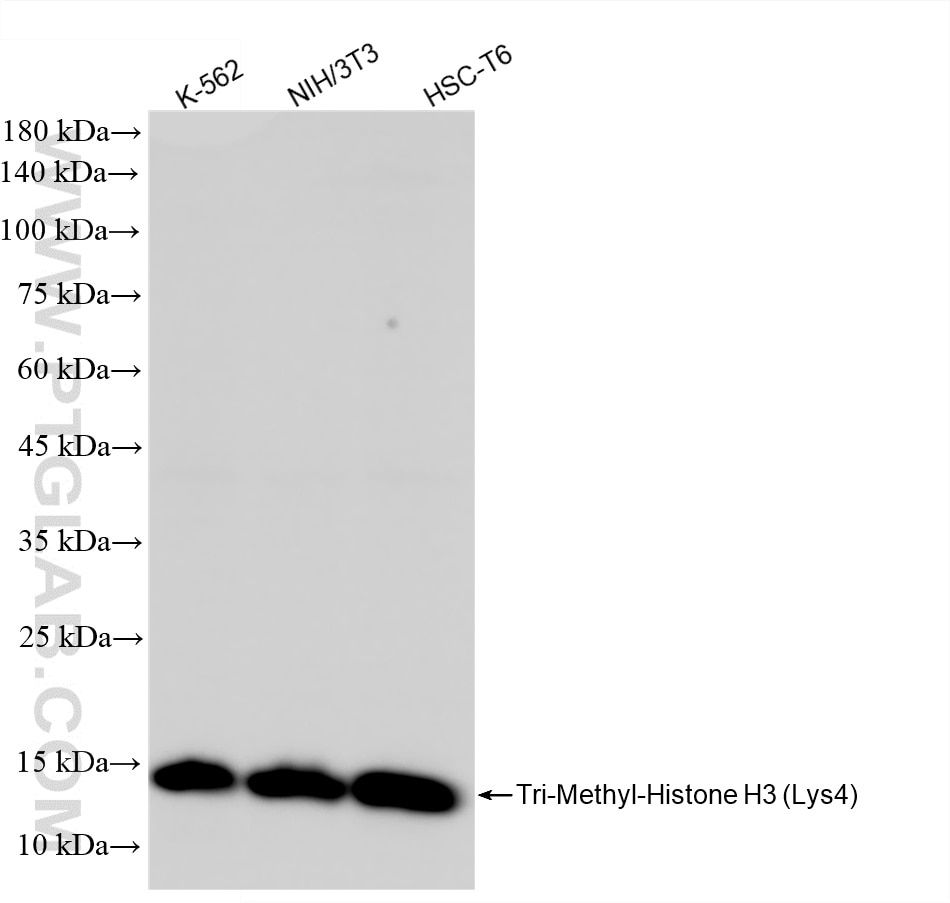
| Positive WB detected in | HeLa cells, K-562 cells, HEK-293T cells, MCF-7 cells, NIH/3T3 cells, HSC-T6 cells |
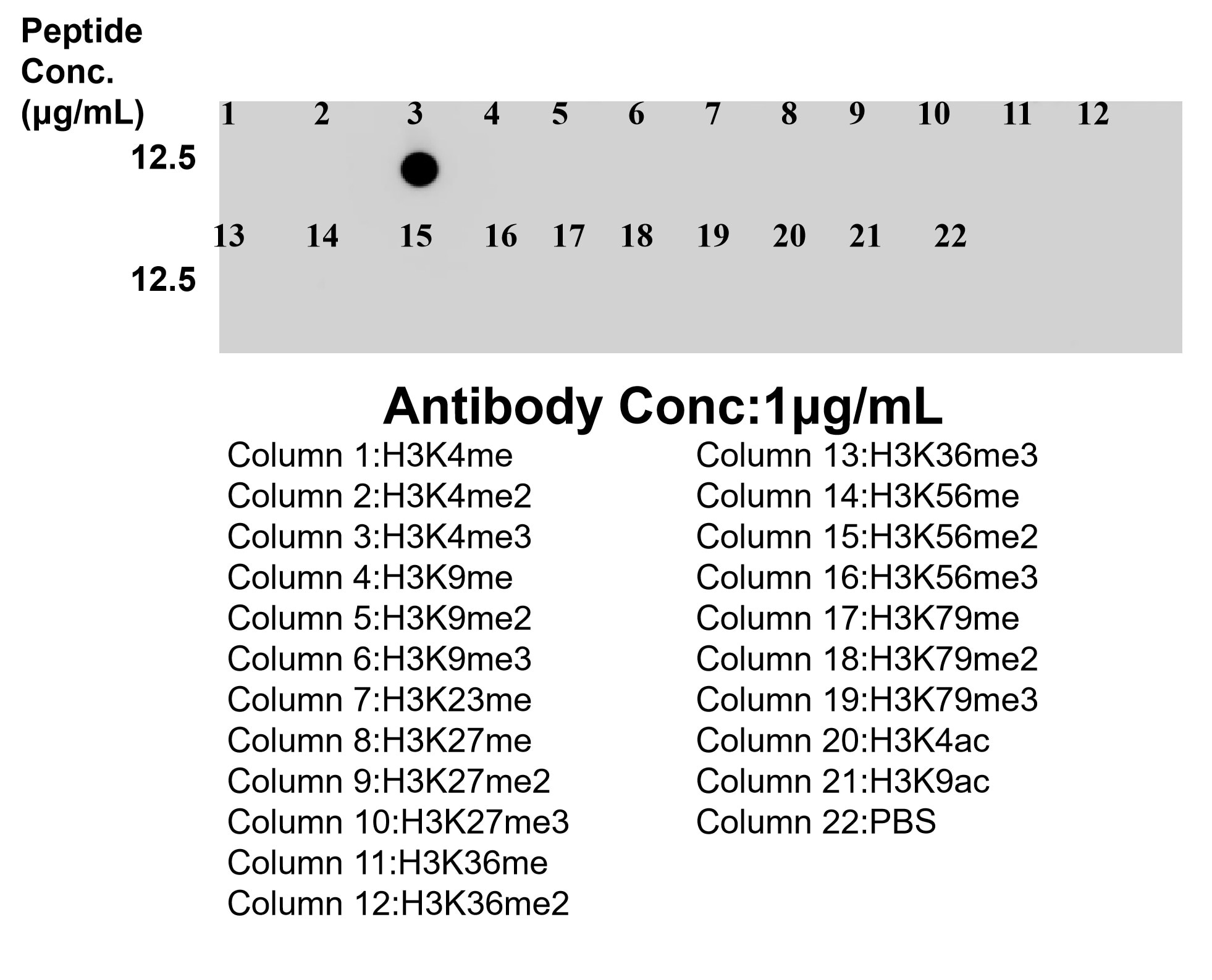
| Positive Dot Blot detected in | / / |
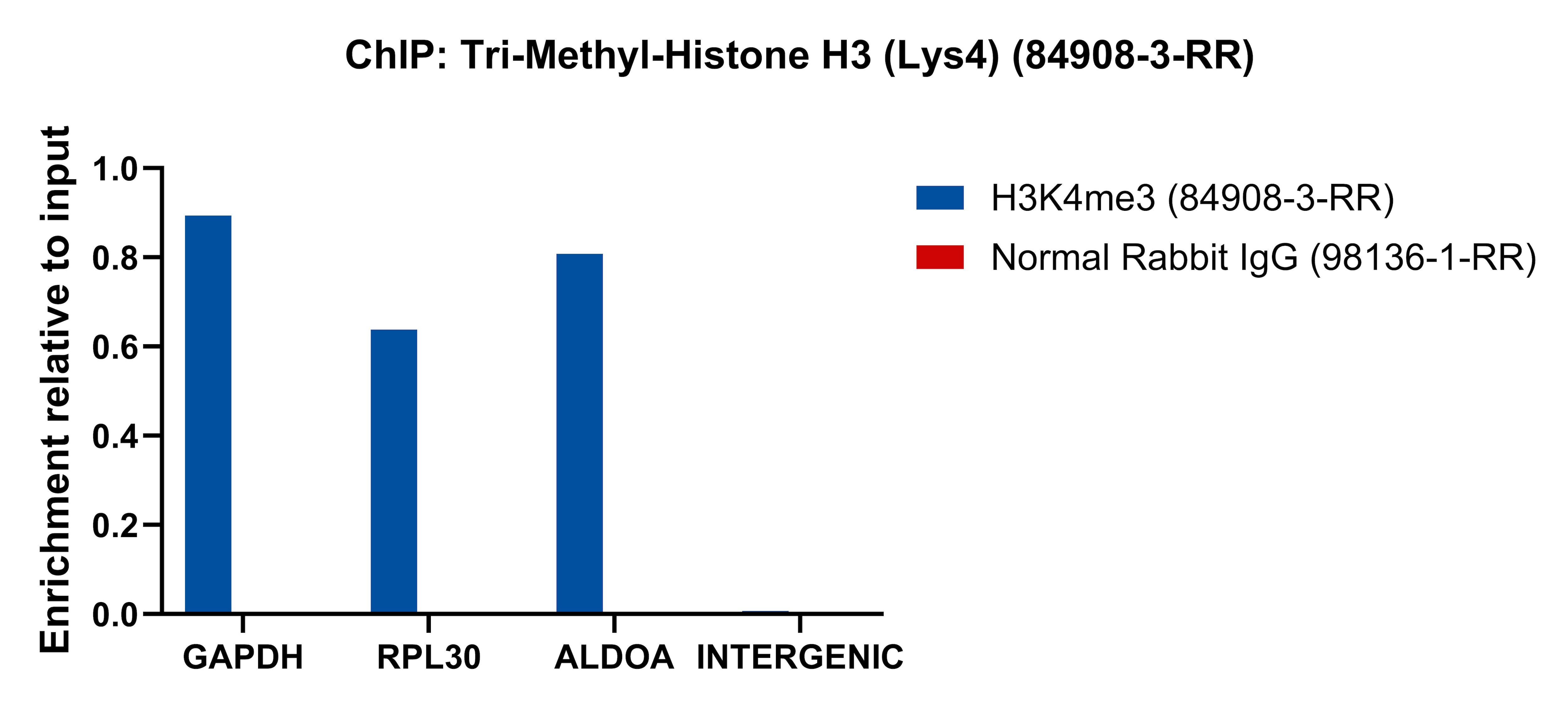
| Positive ChIP-qPCR detected in | HeLa cells |
Recommended dilution
| Application | Dilution |
|---|---|
| Western Blot (WB) | WB : 1:5000-1:50000 |
| DOT BLOT | DOT BLOT : 1:500-1:2000 |
| CHIP-QPCR | CHIP-QPCR : 1:10-1:100 |
| It is recommended that this reagent should be titrated in each testing system to obtain optimal results. | |
| Sample-dependent, Check data in validation data gallery. | |
Published Applications
| WB | See 3 publications below |
| ChIP | See 3 publications below |
Product Information
84908-3-RR targets Tri-Methyl-Histone H3 (Lys4) in WB, Dot Blot, ELISA, ChIP-qPCR applications and shows reactivity with human, mouse, rat samples.
| Tested Reactivity | human, mouse, rat |
| Cited Reactivity | human, mouse, rat |
| Host / Isotype | Rabbit / IgG |
| Class | Recombinant |
| Type | Antibody |
| Immunogen |
Peptide 相同性解析による交差性が予測される生物種 |
| Full Name | histone cluster 1, H3a |
| Observed molecular weight | 15 kDa |
| GenBank accession number | BC066245 |
| Gene Symbol | HIST1H3A |
| Gene ID (NCBI) | 8350 |
| RRID | AB_3743833 |
| Conjugate | Unconjugated |
| Form | |
| Form | Liquid |
| Purification Method | Protein A purification |
| UNIPROT ID | P68431 |
| Storage Buffer | PBS with 0.02% sodium azide and 50% glycerol{{ptg:BufferTemp}}7.3 |
| Storage Conditions | Store at -20°C. Stable for one year after shipment. Aliquoting is unnecessary for -20oC storage. |
Background Information
Histones are small, highly basic proteins that consist of a globular domain with unstructured N- and C-terminal tails protruding from the main structure. Histone H3 is one of the five main histones that are responsible for the nucleosome structure of the chromosomal fiber in eukaryotes. Two molecules of each of the four core histones (H2A, H2B, H3, and H4) form an octamer, around which approximately 146 bp of DNA is wrapped in repeating units, called nucleosomes. In addition to their role in DNA compartmentalization, histones also play crucial roles in various biologic processes, including gene expression and regulation, DNA repair, chromatin condensation, cell cycle progression, chromosome segregation, and apoptosis. The ability of histones to regulate chromatin dynamics primarily originates from various posttranslational modifications carried out by histone-modifying enzymes.
Protocols
| Product Specific Protocols | |
|---|---|
| WB protocol for Tri-Methyl-Histone H3 (Lys4) antibody 84908-3-RR | Download protocol |
| Standard Protocols | |
|---|---|
| Click here to view our Standard Protocols |
Publications
| Species | Application | Title |
|---|---|---|
Int J Mol Sci H3K4me3 and H3K27ac Promote ccRCC Proliferation Through the CDC6-EXOSC5 Axis. | ||
Elife A conserved mycobacterial nucleomodulin hijacks the host COMPASS complex to reprogram pro-inflammatory transcription and promote intracellular survival. | ||
J Adv Res Trained immunity-primed DLL3-targeted CAR macrophages for the eradication of small cell lung cancer. | ||
Biochem Pharmacol Baimaside, a flavonoid glycoside from Apocynum venetum, ameliorates sepsis by allosterically inhibiting NF-κB p50-mediated IL-6 transcription. | ||
BMC Cancer Epigenetic activation of VEGFA by SMARCD1 mediates tumor progression and bevacizumab resistance in clear cell renal cell carcinoma. |