
Validation Data Gallery
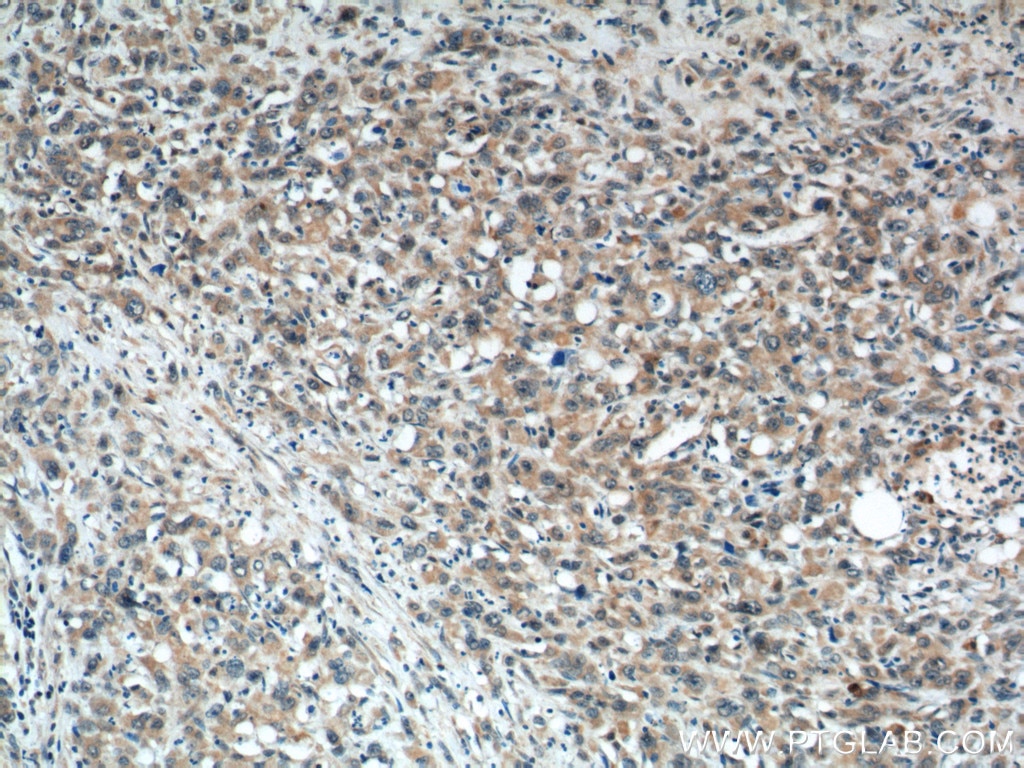
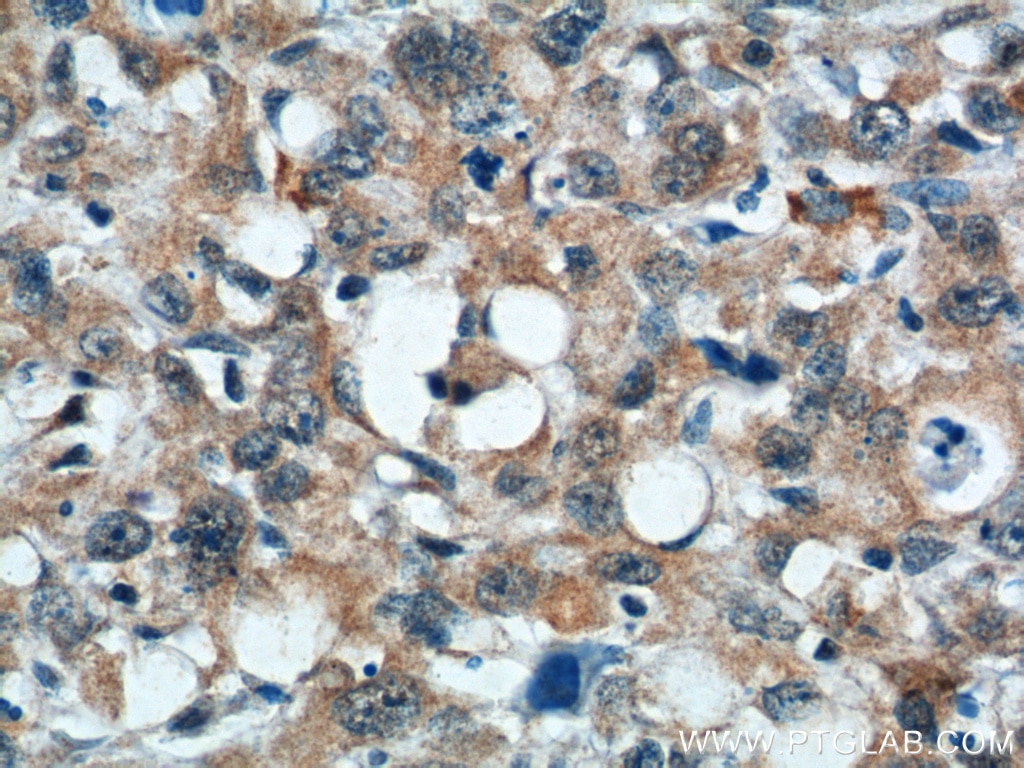
Tested Applications
| Positive IHC detected in | human stomach cancer tissue Note: suggested antigen retrieval with TE buffer pH 9.0; (*) Alternatively, antigen retrieval may be performed with citrate buffer pH 6.0 |
Recommended dilution
| Application | Dilution |
|---|---|
| Immunohistochemistry (IHC) | IHC : 1:50-1:500 |
| It is recommended that this reagent should be titrated in each testing system to obtain optimal results. | |
| Sample-dependent, Check data in validation data gallery. | |
Product Information
20460-1-AP targets TMEM106A in IHC, ELISA applications and shows reactivity with human samples.
| Tested Reactivity | human |
| Host / Isotype | Rabbit / IgG |
| Class | Polyclonal |
| Type | Antibody |
| Immunogen |
CatNo: Ag14294 Product name: Recombinant human TMEM106A protein Source: e coli.-derived, PGEX-4T Tag: GST Domain: 143-262 aa of BC012139 Sequence: TNILNISNGNYYPIMVTQLTLEVLHLSLVVGQVSNNLLLHIGPLASEQMFYAVATKIRDENTYKICTWLEIKVHHVLLHIQGTLTCSYLSHSEQLVFQSYEYVDCRGNASVPHQLTPHPP 相同性解析による交差性が予測される生物種 |
| Full Name | transmembrane protein 106A |
| Calculated molecular weight | 262 aa, 29 kDa |
| GenBank accession number | BC012139 |
| Gene Symbol | TMEM106A |
| Gene ID (NCBI) | 113277 |
| RRID | AB_2878690 |
| Conjugate | Unconjugated |
| Form | |
| Form | Liquid |
| Purification Method | Antigen affinity purification |
| UNIPROT ID | Q96A25 |
| Storage Buffer | PBS with 0.02% sodium azide and 50% glycerol{{ptg:BufferTemp}}7.3 |
| Storage Conditions | Store at -20°C. Stable for one year after shipment. Aliquoting is unnecessary for -20oC storage. |
Background Information
TMEM106A (Transmembrane Protein 106A) is a lysosomal/late endosomal membrane protein and a member of the TMEM106 family. It contains a single transmembrane domain and a cytoplasmic C-terminal region, and is involved in the maintenance of lysosomal morphology, vesicle trafficking, and the regulation of intracellular protein degradation. Dysfunction of TMEM106A may lead to lysosomal dysfunction and protein aggregation. Another member of this family, TMEM106B, is closely associated with the genetic risk of frontotemporal dementia (FTD) and amyotrophic lateral sclerosis (ALS), suggesting that TMEM106A may play a similar role in neurodegenerative diseases. Furthermore, TMEM106A is involved in the regulation of the autophagy-lysosome pathway, influencing cellular stress responses and survival.
Protocols
| Product Specific Protocols | |
|---|---|
| IHC protocol for TMEM106A antibody 20460-1-AP | Download protocol |
| Standard Protocols | |
|---|---|
| Click here to view our Standard Protocols |