
Validation Data Gallery
Tested Applications
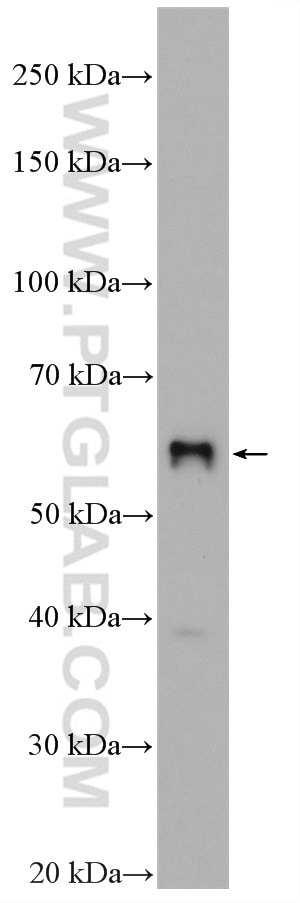
| Positive WB detected in | mouse liver tissue |
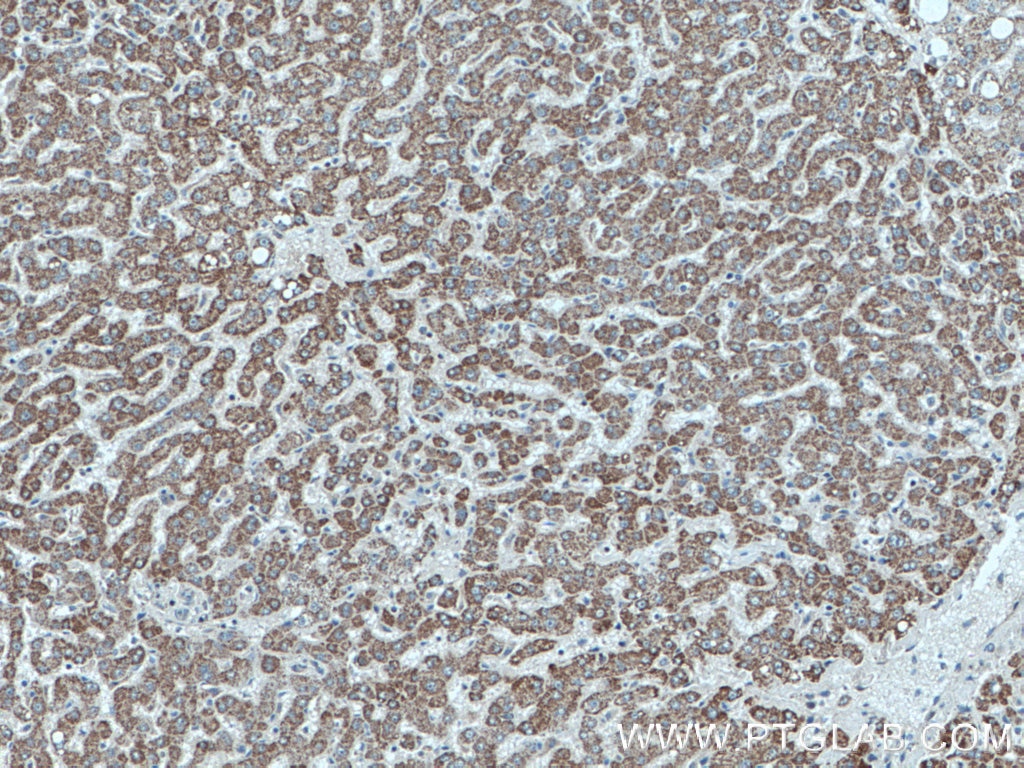
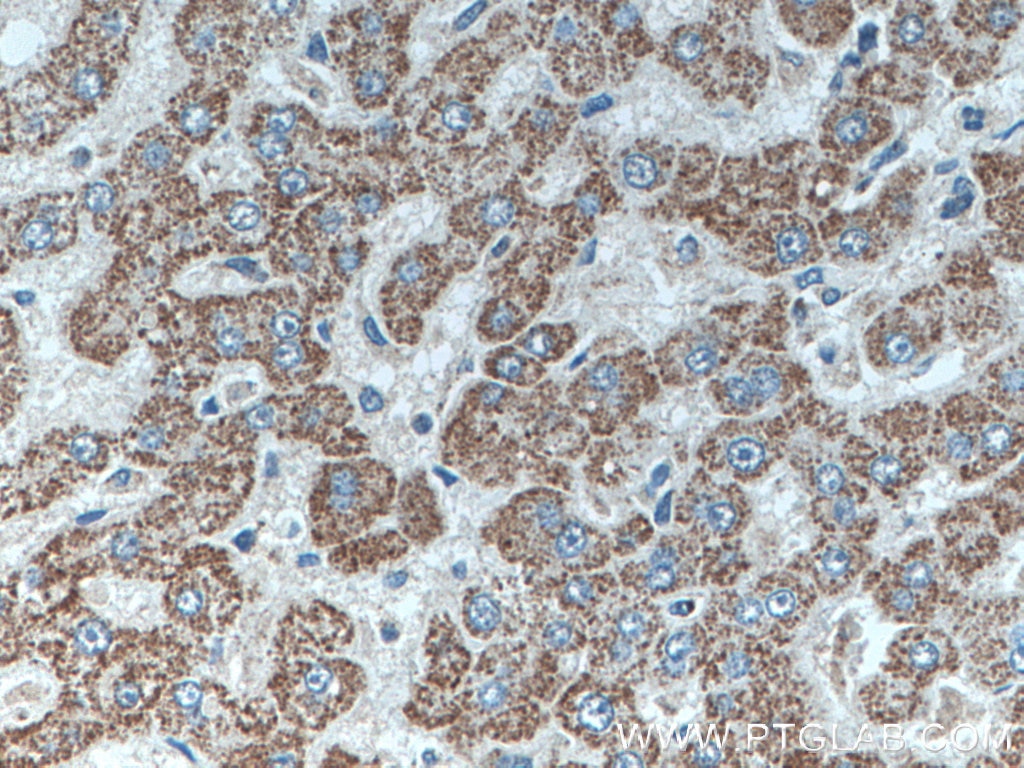
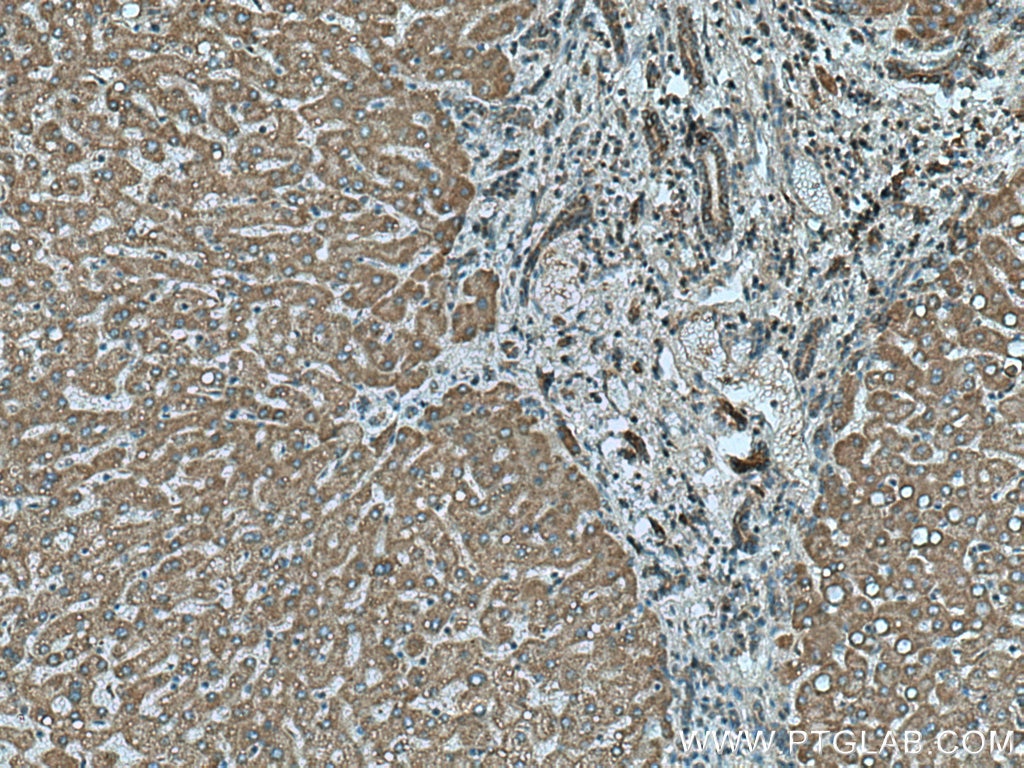
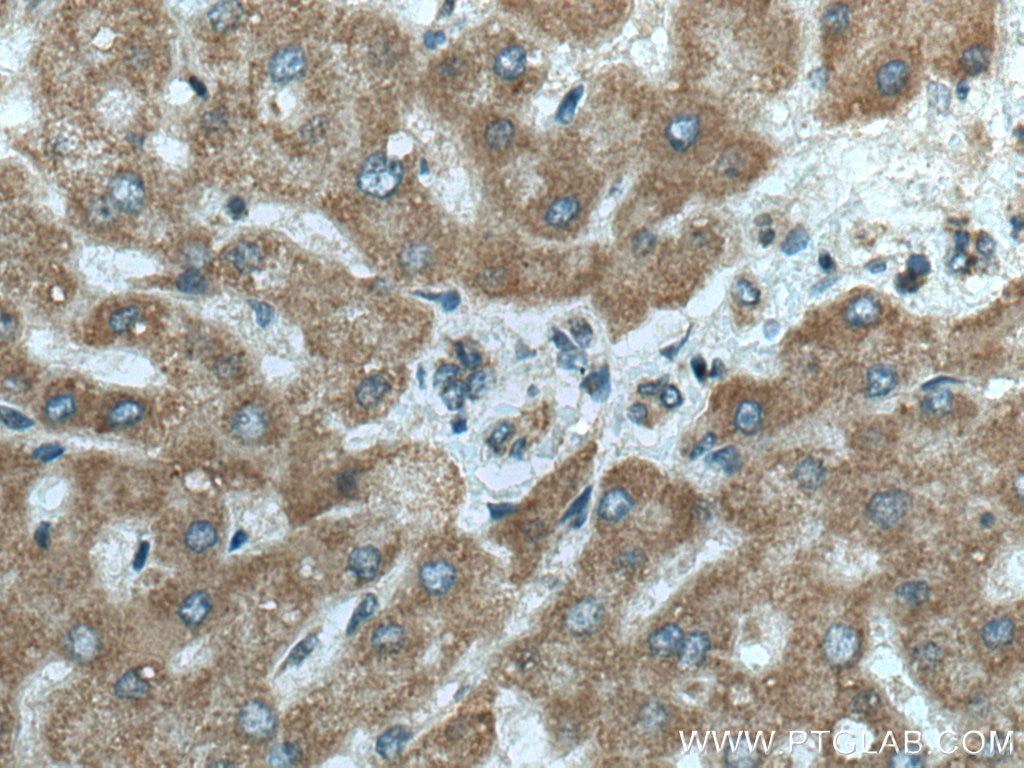
| Positive IHC detected in | human liver tissue, human hepatocirrhosis tissue Note: suggested antigen retrieval with TE buffer pH 9.0; (*) Alternatively, antigen retrieval may be performed with citrate buffer pH 6.0 |
Recommended dilution
| Application | Dilution |
|---|---|
| Western Blot (WB) | WB : 1:500-1:1000 |
| Immunohistochemistry (IHC) | IHC : 1:50-1:500 |
| It is recommended that this reagent should be titrated in each testing system to obtain optimal results. | |
| Sample-dependent, Check data in validation data gallery. | |
Published Applications
| WB | See 59 publications below |
| IHC | See 9 publications below |
| IF | See 8 publications below |
Product Information
26486-1-AP targets SLC2A9 in WB, IHC, IF, ELISA applications and shows reactivity with human, mouse samples.
| Tested Reactivity | human, mouse |
| Cited Reactivity | human, mouse, rat |
| Host / Isotype | Rabbit / IgG |
| Class | Polyclonal |
| Type | Antibody |
| Immunogen |
CatNo: Ag24135 Product name: Recombinant human SLC2A9 protein Source: e coli.-derived, PET28a Tag: 6*His Domain: 443-511 aa of BC018897 Sequence: IQKSLDTYCFLVFATICITGAIYLYFVLPETKNRTYAEISQAFSKRNKAYPPEEKIDSAVTDGKINGRP 相同性解析による交差性が予測される生物種 |
| Full Name | solute carrier family 2 (facilitated glucose transporter), member 9 |
| Calculated molecular weight | 540 aa, 59 kDa |
| Observed molecular weight | 60 kDa |
| GenBank accession number | BC018897 |
| Gene Symbol | SLC2A9 |
| Gene ID (NCBI) | 56606 |
| RRID | AB_2880532 |
| Conjugate | Unconjugated |
| Form | |
| Form | Liquid |
| Purification Method | Antigen affinity purification |
| UNIPROT ID | Q9NRM0 |
| Storage Buffer | PBS with 0.02% sodium azide and 50% glycerol{{ptg:BufferTemp}}7.3 |
| Storage Conditions | Store at -20°C. Stable for one year after shipment. Aliquoting is unnecessary for -20oC storage. |
Background Information
SLC2A9, also known as GLUT9, is a member of the SLC2A facilitative glucose transporter family. SLC2A9 is mainly expressed in the liver and the kidneys. In the latter organ, SLC2A9 is expressed in the basolateral membranes of proximal renal tubular cells. SLC2A9 is a high-affinity urate transporter and functions in renal urate reabsorption. Mutations in SLC2A9 cause hypouricemia in human subjects.
Protocols
| Product Specific Protocols | |
|---|---|
| IHC protocol for SLC2A9 antibody 26486-1-AP | Download protocol |
| WB protocol for SLC2A9 antibody 26486-1-AP | Download protocol |
| Standard Protocols | |
|---|---|
| Click here to view our Standard Protocols |
Publications
| Species | Application | Title |
|---|---|---|
Exp Mol Med Impaired Na+-K+-ATPase signaling in renal proximal tubule contributes to hyperuricemia-induced renal tubular injury. | ||
J Adv Res Punicalagin attenuates hyperuricemia via restoring hyperuricemia-induced renal and intestinal dysfunctions | ||
Pharmacol Res A multi-component intervention enhances intestinal urate excretion and improves metabolic and immune homeostasis in diet-induced hyperuricemia. | ||
NPJ Biofilms Microbiomes Lactobacillus rhamnosus GG ameliorates hyperuricemia in a novel model | ||
Phytomedicine Cinchonain Ia inhibits uric acid reabsorption by binding to the TRP-459 residue of the GLUT9 protein. | ||
Phytomedicine Paeonia × suffruticosa Andrews leaf extract and its main component apigenin 7-O-glucoside ameliorate hyperuricemia by inhibiting xanthine oxidase activity and regulating renal urate transporters |