
Validation Data Gallery
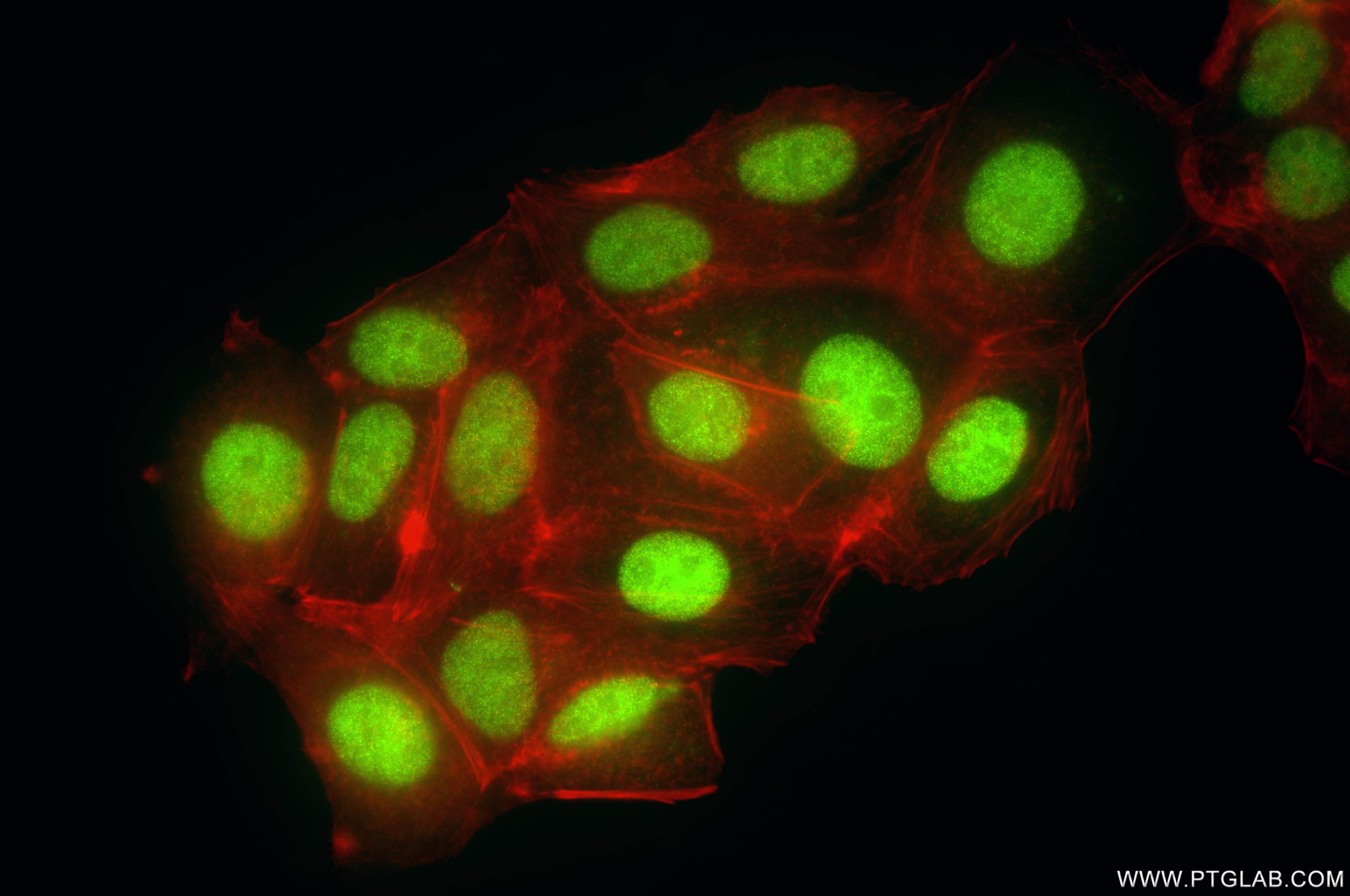
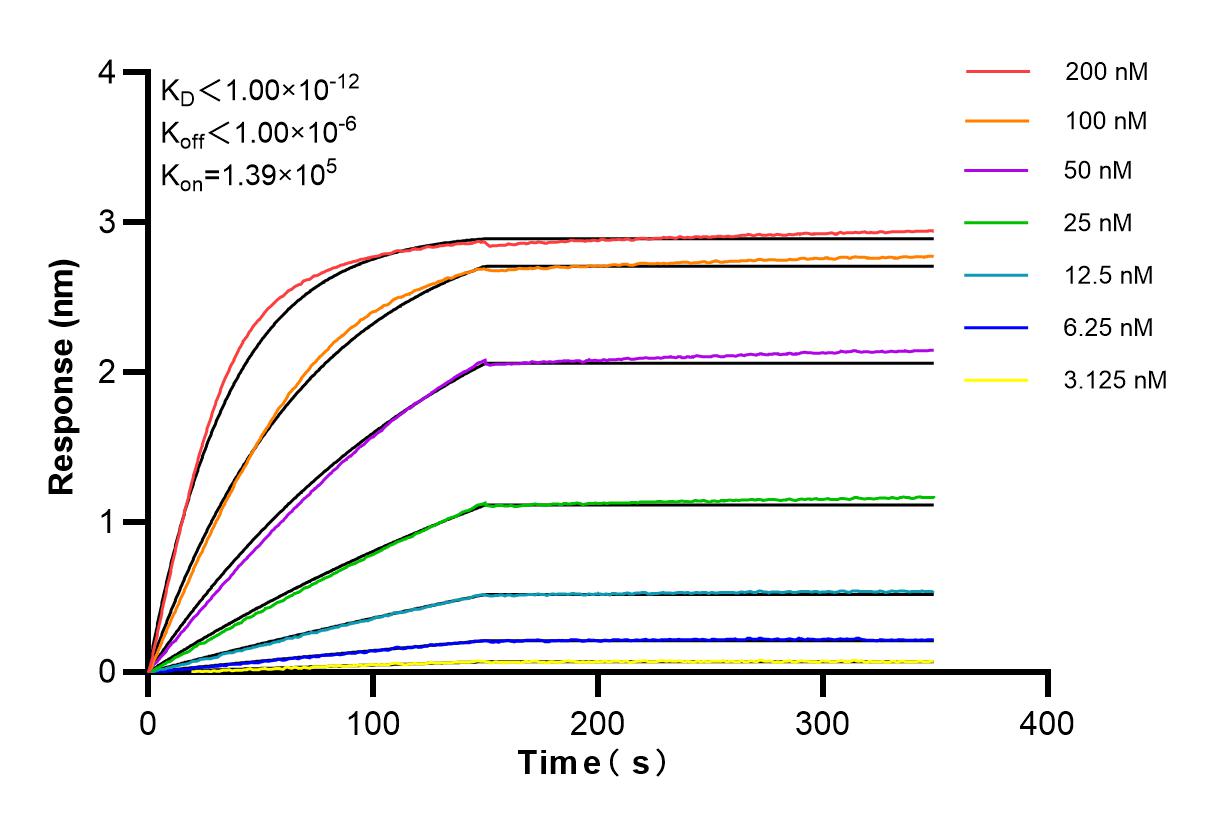
Tested Applications
Recommended dilution
| Application | Dilution |
|---|---|
| It is recommended that this reagent should be titrated in each testing system to obtain optimal results. | |
Product Information
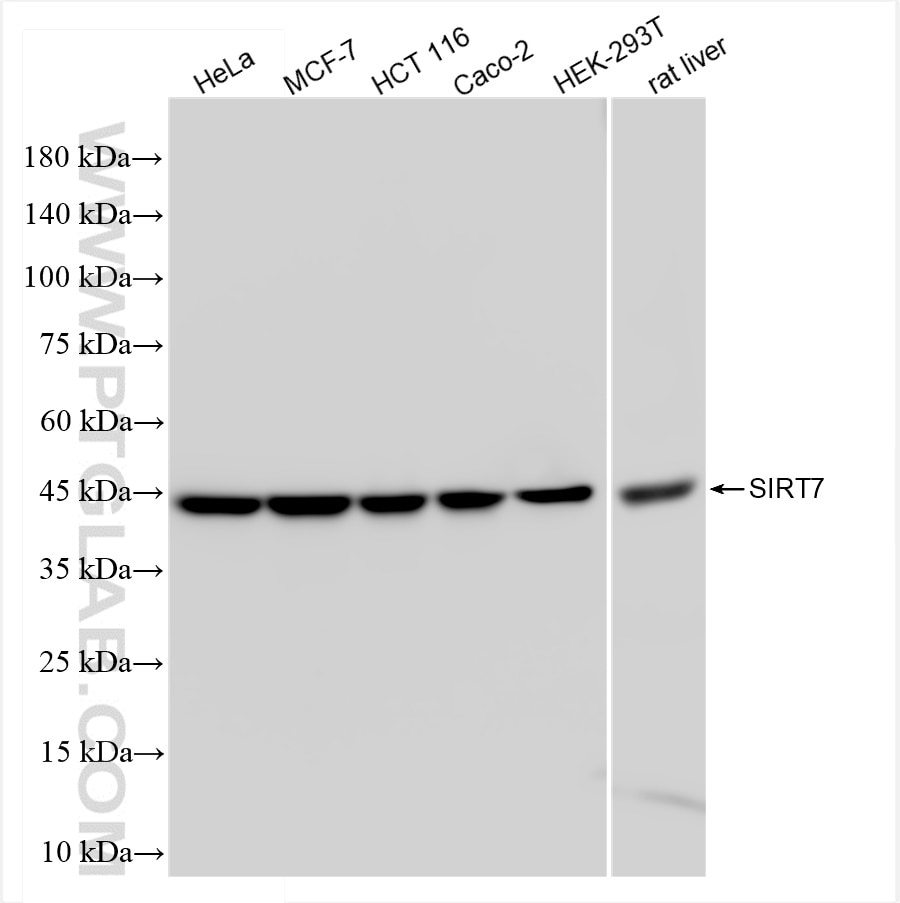
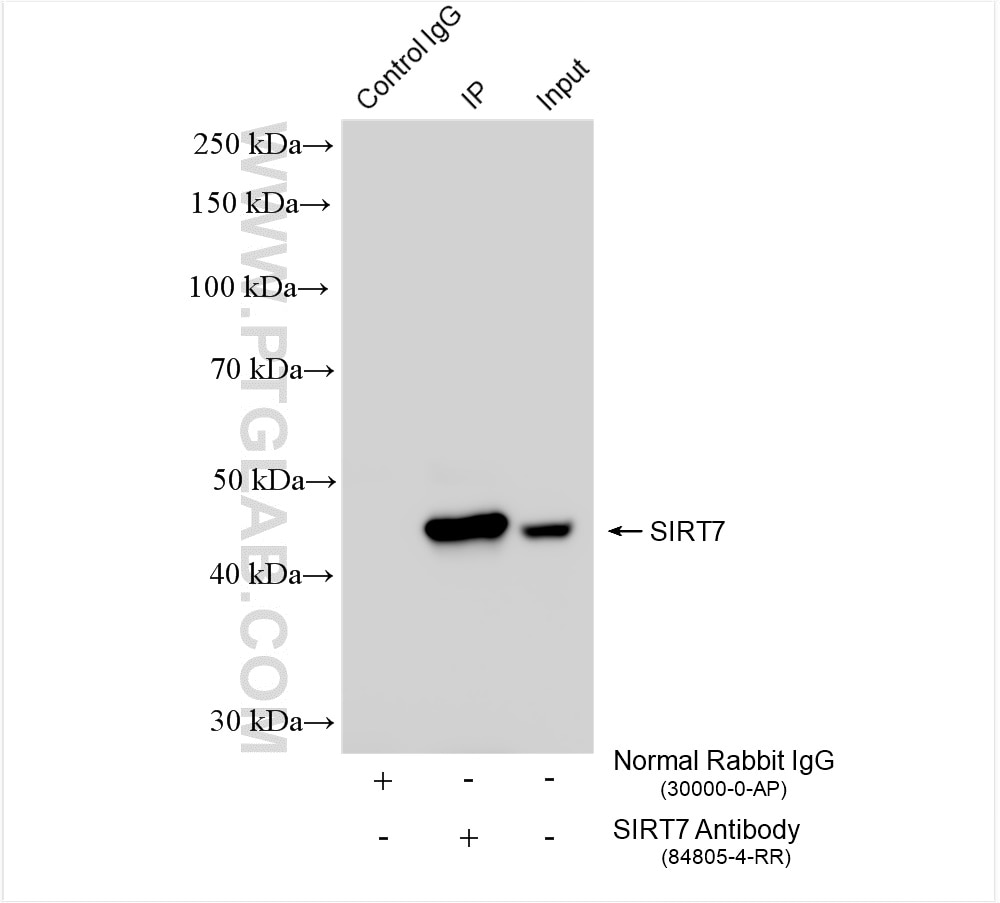
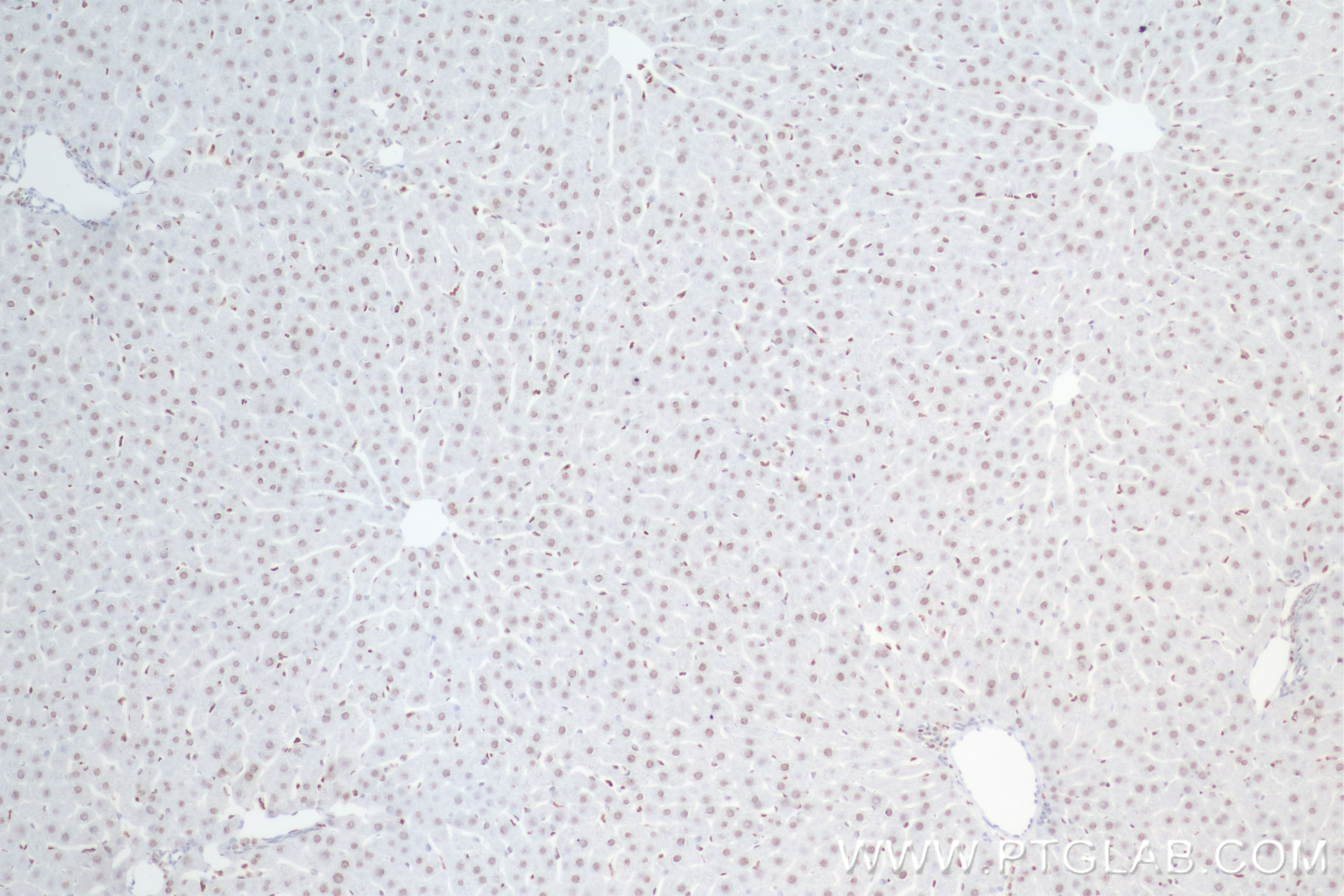
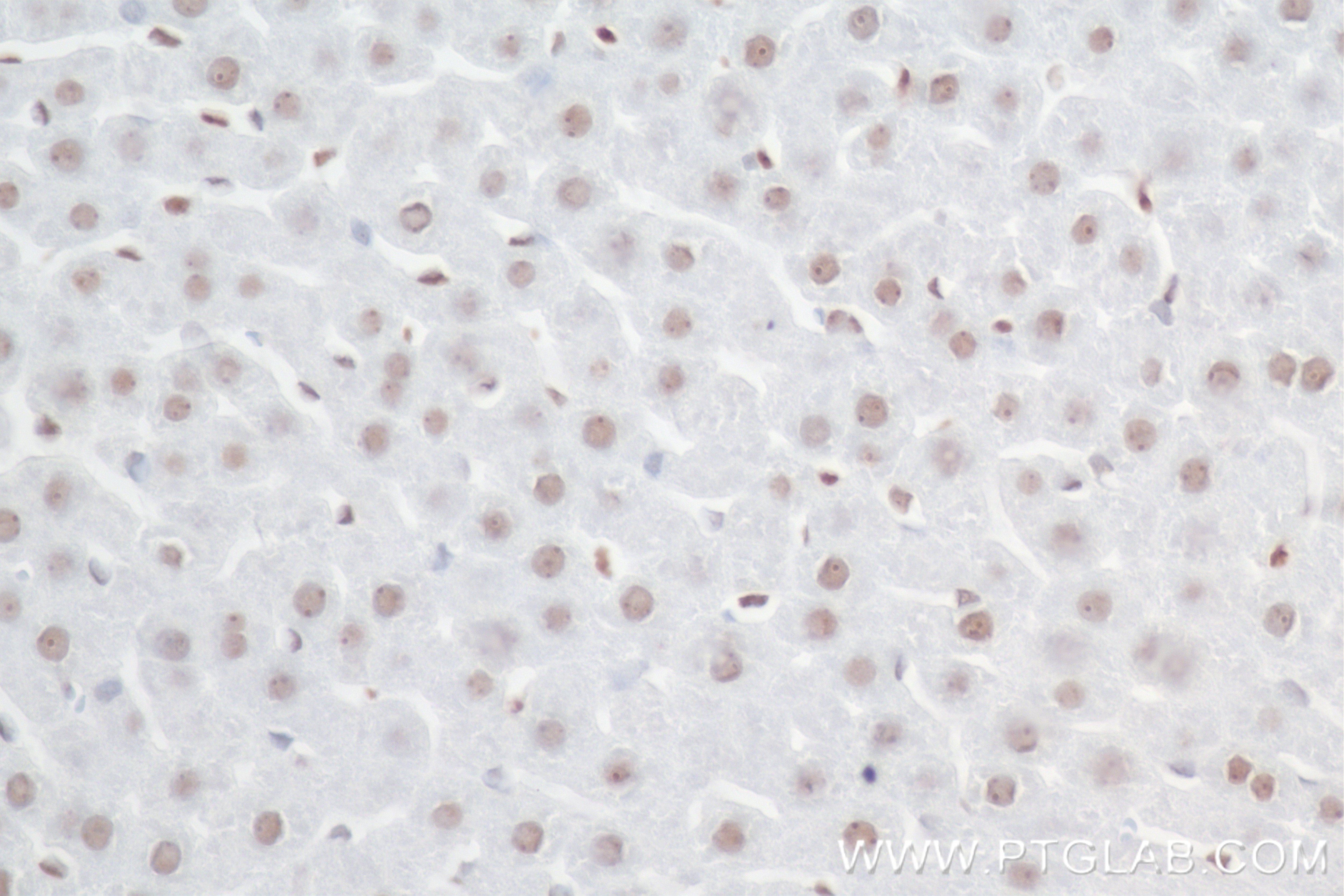
84805-4-PBS targets SIRT7 in WB, IHC, IF/ICC, IP, Indirect ELISA applications and shows reactivity with human, rat samples.
| Tested Reactivity | human, rat |
| Host / Isotype | Rabbit / IgG |
| Class | Recombinant |
| Type | Antibody |
| Immunogen |
CatNo: Ag31794 Product name: Recombinant human SIRT7 protein Source: e coli.-derived, PGEX-4T Tag: GST Domain: 1-400 aa of NM_016538 Sequence: MAAGGLSRSERKAAERVRRLREEQQRERLRQVSRILRKAAAERSAEEGRLLAESADLVTELQGRSRRREGLKRRQEEVCDDPEELRGKVRELASAVRNAKYLVVYTGAGISTAASIPDYRGPNGVWTLLQKGRSVSAADLSEAEPTLTHMSITRLHEQKLVQHVVSQNCDGLHLRSGLPRTAISELHGNMYIEVCTSCVPNREYVRVFDVTERTALHRHQTGRTCHKCGTQLRDTIVHFGERGTLGQPLNWEAATEAASRADTILCLGSSLKVLKKYPRLWCMTKPPSRRPKLYIVNLQWTPKDDWAALKLHGKCDDVMRLLMAELGLEIPAYSRWQDPIFSLATPLRAGEEGSHSRKSLCRSREEAPPGDRGAPLSSAPILGGWFGRGCTKRTKRKKVT 相同性解析による交差性が予測される生物種 |
| Full Name | sirtuin (silent mating type information regulation 2 homolog) 7 (S. cerevisiae) |
| Calculated molecular weight | 45KD |
| Observed molecular weight | 45 kDa |
| GenBank accession number | NM_016538 |
| Gene Symbol | SIRT7 |
| Gene ID (NCBI) | 51547 |
| RRID | AB_3743750 |
| Conjugate | Unconjugated |
| Form | |
| Form | Liquid |
| Purification Method | Protein A purfication |
| UNIPROT ID | Q9NRC8 |
| Storage Buffer | PBS only{{ptg:BufferTemp}}7.3 |
| Storage Conditions | Store at -80°C. |
Background Information
SIRT7 (NAD-dependent deacetylase sirtuin-7), also known as SIR2L7, is a member of the class IV sirtuin family and is localized to the nucleolus. Expressed throughout the body, SIRT7 associates with rDNA genes where it interacts with histones and acts as a positive regulator of RNA polymerase I (Pol I). SIRT7 is a probable NAD-dependent deacetylase whose expression is upregulated in thyroid carcinoma cells. Overexpression of SIRT7 increases Pol I-mediated transcription, thereby speeding cell growth and contributing to the development of cancer.