
Validation Data Gallery
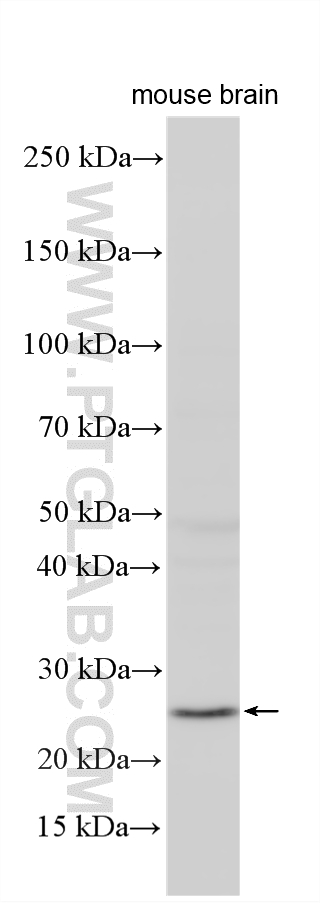
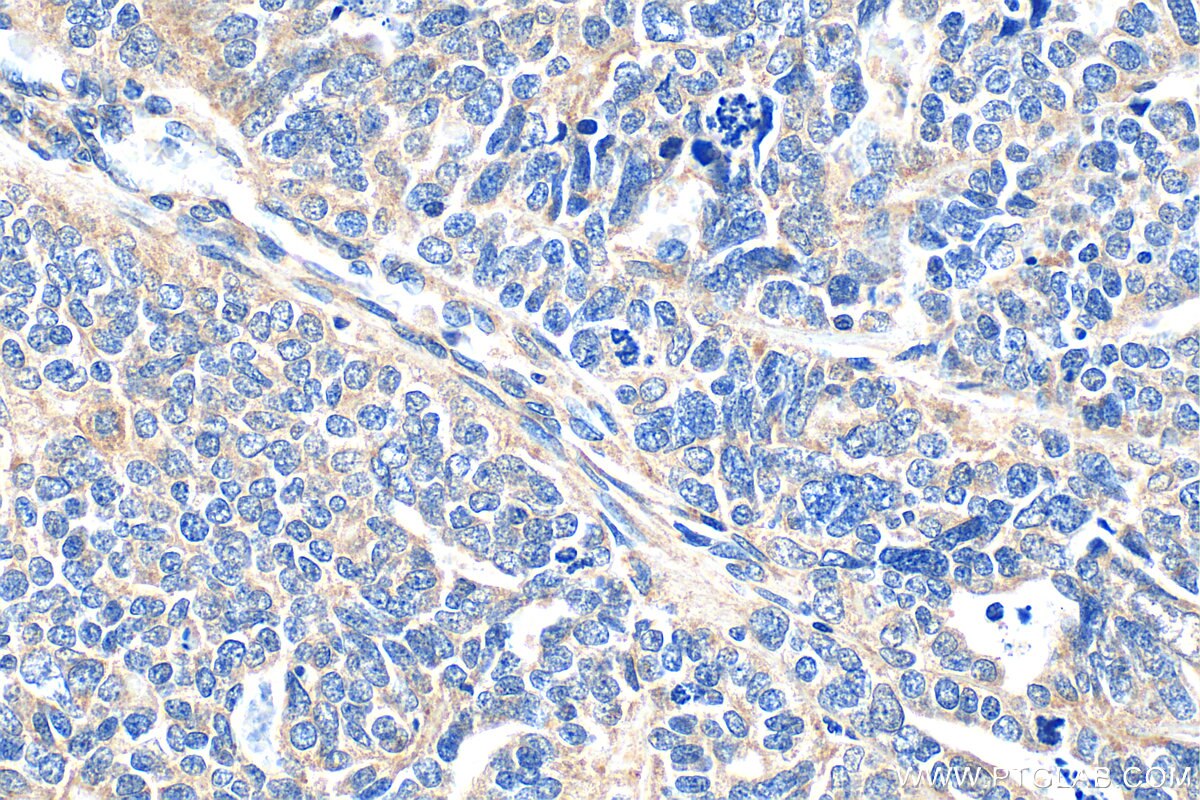
Tested Applications
Recommended dilution
| Application | Dilution |
|---|---|
| It is recommended that this reagent should be titrated in each testing system to obtain optimal results. | |
Product Information
24347-1-PBS targets SHLD1 in WB, IHC, Indirect ELISA applications and shows reactivity with human, mouse samples.
| Tested Reactivity | human, mouse |
| Host / Isotype | Rabbit / IgG |
| Class | Polyclonal |
| Type | Antibody |
| Immunogen |
CatNo: Ag19727 Product name: Recombinant human C20orf196 protein Source: e coli.-derived, PGEX-4T Tag: GST Domain: 1-141 aa of BC035800 Sequence: MAARDATSGSLSEESSALDLPSACDIRDYVLQGPSQEANSEAFSSLEFHSFPYSSDVDPDTSNLNIEQNNSWTAENFWLDPAVKGQSEKEEDDGLRKSLDRFYEMFGHPQPGSANSLSASVCKCLSQKITQLRGQESQKYA 相同性解析による交差性が予測される生物種 |
| Full Name | chromosome 20 open reading frame 196 |
| Calculated molecular weight | 205 aa, 23 kDa |
| Observed molecular weight | 25 kDa |
| GenBank accession number | BC035800 |
| Gene Symbol | C20orf196 |
| Gene ID (NCBI) | 149840 |
| Conjugate | Unconjugated |
| Form | |
| Form | Liquid |
| Purification Method | Antigen affinity purification |
| UNIPROT ID | Q8IYI0 |
| Storage Buffer | PBS only{{ptg:BufferTemp}}7.3 |
| Storage Conditions | Store at -80°C. |
Background Information
SHLD1, also known as FAM35A, is a key protein in the field of DNA damage repair. As a core component of the Shieldin complex, SHLD1 plays a critical role in maintaining genomic stability. Its primary function is to inhibit the resection of DNA double-strand break ends, directing repair toward the non-homologous end joining pathway while suppressing accurate homologous recombination repair. This function makes SHLD1 an important target for cancer therapy. In BRCA-mutant tumors, the expression level of SHLD1 directly affects the efficacy of PARP inhibitors-intact SHLD1 function renders cancer cells sensitive to the drugs, while its loss leads to drug resistance. Therefore, SHLD1 is not only a fundamental element in basic research on DNA damage response mechanisms but also a highly valuable tumor biomarker and prognostic indicator, offering new directions for personalized cancer treatment.