
Recombinant Rhesus Monkey VCAM-1/CD106 protein (rFc Tag) (HPLC verified)
Species
Rhesus Monkey
Purity
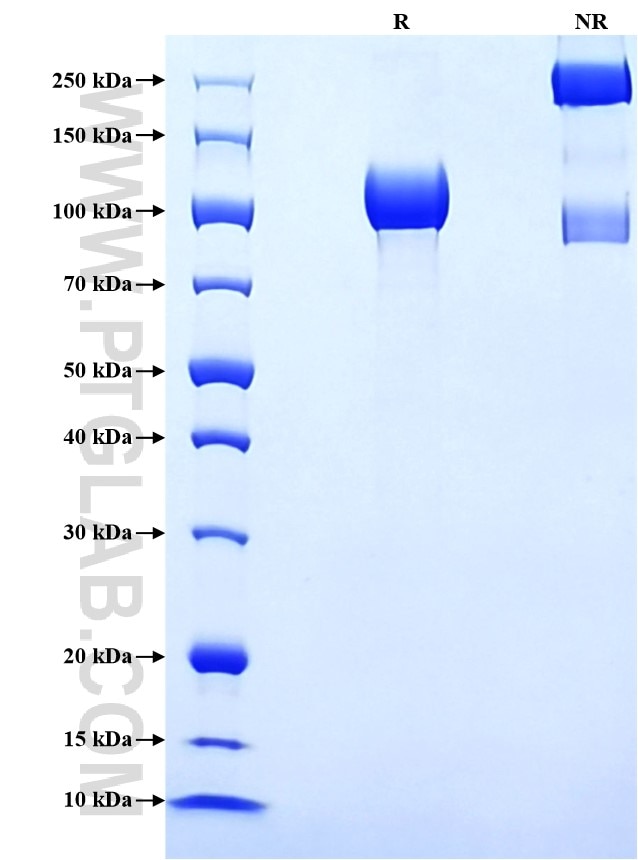
>90 %, SDS-PAGE
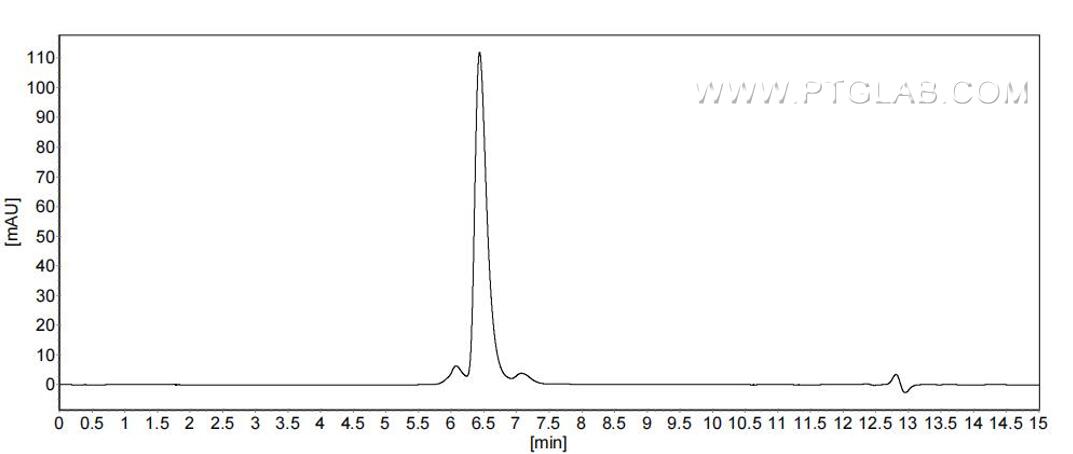
>90 %, SEC-HPLC
Tag
rFc Tag
Activity
not tested
Cat no : Eg4594
Validation Data Gallery
Product Information
| Purity | >90 %, SDS-PAGE >90 %, SEC-HPLC |
| Endotoxin | <0.1 EU/μg protein, LAL method |
| Activity |
Not tested |
| Expression | HEK293-derived Rhesus Monkey VCAM-1 protein Phe25-Glu698 (Accession# F6W7X9) with a rabbit IgG Fc tag at the C-terminus. |
| GeneID | 712036 |
| Accession | F6W7X9 |
| PredictedSize | 100.5 kDa |
| SDS-PAGE | 100-120 kDa, reducing (R) conditions |
| Formulation | Lyophilized from 0.22 μm filtered solution in PBS, pH 7.4. Normally 5% trehalose and 5% mannitol are added as protectants before lyophilization. |
| Reconstitution | Briefly centrifuge the tube before opening. Reconstitute at 0.1-0.5 mg/mL in sterile water. |
| Storage Conditions |
It is recommended that the protein be aliquoted for optimal storage. Avoid repeated freeze-thaw cycles.
|
| Shipping | The product is shipped at ambient temperature. Upon receipt, store it immediately at the recommended temperature. |
Background
Vascular cell adhesion molecule 1 (VCAM-1), also known as CD106, is a transmembrane glycoprotein belonging to the immunoglobulin gene superfamily. VCAM-1 is expressed by cytokine-activated endothelium, interacts with integrin VLA4 (α4β1) present on the surface of leukocytes, and mediates both adhesion and signal transduction. It is also expressed either constitutively or inducibly in a variety of other cell types, including vascular smooth muscle cells, differentiating skeletal muscle cells, renal and neural epithelial cells, macrophages (Kupffer cells), dendritic cells, and bone marrow stromal cells. Soluble VCAM-1 (sVCAM-1) has been found in addition to membrane-bound VCAM-1. Increased sVCAM-1 has been shown to correlate with disease activity in various entities including rheumatoid arthritis, systemic lupus erythematosus, and lupus nephritis.
References:
1. Elices MJ. et al. (1990). Cell. 60(4):577-584.
2. Pigott R. et al. (1992). Biochem Biophys Res Commun. 187(2):584-589.
3. Cybulsky MI. et al. (1993). Genomics.18(2):387-391.
4. Tu Z. et al. (2001). J Immunol. 166(11):6839-6846.