
Recombinant Rat TNFSF12 protein (rFc Tag)
Species
Rat
Purity
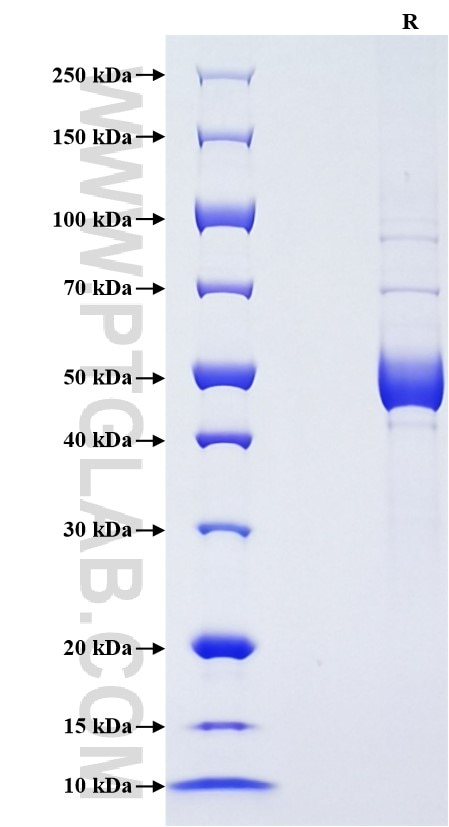
>90 %, SDS-PAGE
Tag
rFc Tag
Activity
not tested
Cat no : Eg3887
Validation Data Gallery
Product Information
| Purity | >90 %, SDS-PAGE |
| Endotoxin | <0.1 EU/μg protein, LAL method |
| Activity |
Not tested |
| Expression | HEK293-derived Rat TNFSF12 protein Arg105-His249 (Accession# Q6AYC1) with a rabbit IgG Fc tag at the N-terminus. |
| GeneID | 360548 |
| Accession | Q6AYC1 |
| PredictedSize | 43.2 kDa |
| SDS-PAGE | 45-50 kDa, reducing (R) conditions |
| Formulation | Lyophilized from 0.22 μm filtered solution in PBS, pH 7.4. Normally 5% trehalose and 5% mannitol are added as protectants before lyophilization. |
| Reconstitution | Briefly centrifuge the tube before opening. Reconstitute at 0.1-0.5 mg/mL in sterile water. |
| Storage Conditions |
It is recommended that the protein be aliquoted for optimal storage. Avoid repeated freeze-thaw cycles.
|
| Shipping | The product is shipped at ambient temperature. Upon receipt, store it immediately at the recommended temperature. |
Background
TNFSF12, also known as tumor necrosis factor superfamily member 12 or TWEAK (TNF-like weak inducer of apoptosis), is a protein that belongs to the tumor necrosis factor (TNF) ligand family. This cytokine is a ligand for the FN14/TWEAKR receptor and shares overlapping signaling functions with TNF, yet it exhibits a broader tissue distribution. Additionally, TNFSF12 has been found to promote the proliferation and migration of endothelial cells, acting as a regulator of angiogenesis. This cytokine is also implicated in the modulation of chronic inflammation and has been studied for its role in various diseases, including its potential as a therapeutic target. TNFSF12 in rats, similar to its human counterpart, exists in both membrane-bound and secreted forms and can induce apoptosis through multiple cell death pathways in a cell type-specific manner.
References:
1. Carlos Matellan. et al. (2024). J Immunol. 212(12):1958-1970.
2. Yale Liu. et al.(2017). J Invest Dermatol.137(7):1512-1522.
3. Crina Claudia Rusu. et al. (2016). Med Ultrason. 18(1):57-63.