
Recombinant Rat IL-9 protein (rFc Tag)(HPLC verified)
Species
Rat
Purity
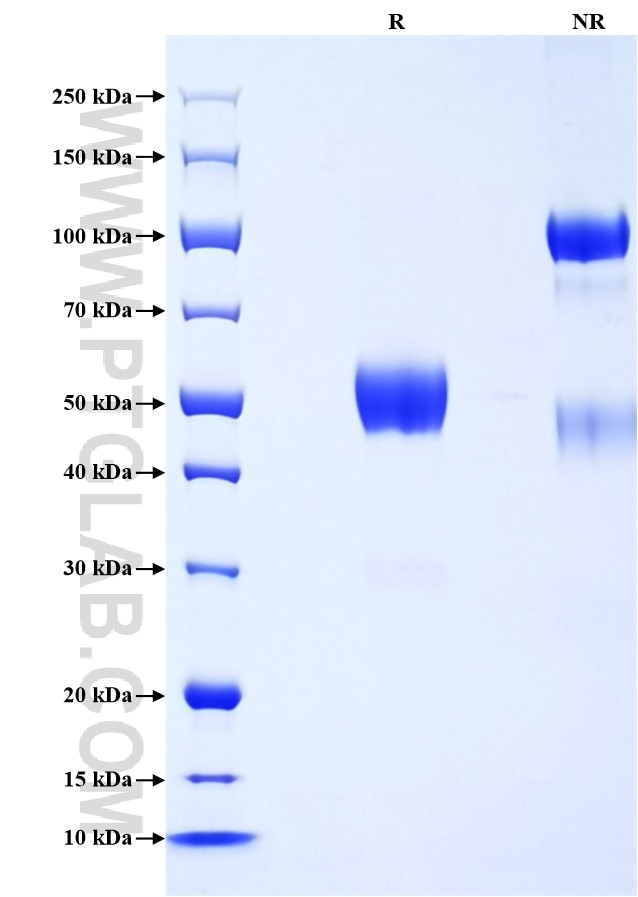
>90 %, SDS-PAGE
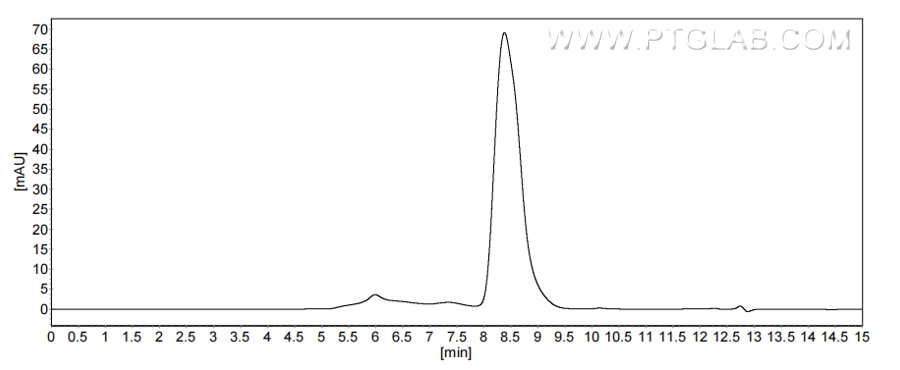
>90 %, SEC-HPLC
Tag
rFc Tag
Activity
not tested
Cat no : Eg2608
Validation Data Gallery
Product Information
| Purity | >90 %, SDS-PAGE >90 %, SEC-HPLC |
| Endotoxin | <0.1 EU/μg protein, LAL method |
| Activity |
Not tested |
| Expression | HEK293-derived Rat IL-9 protein Gln19-Ala144 (Accession# A6KAN0) with a rabbit IgG Fc tag at the C-terminus. |
| GeneID | 116558 |
| Accession | A6KAN0 |
| PredictedSize | 40.2 kDa |
| SDS-PAGE | 55-60 kDa, reducing (R) conditions |
| Formulation | Lyophilized from 0.22 μm filtered solution in PBS, pH 7.4. Normally 5% trehalose and 5% mannitol are added as protectants before lyophilization. |
| Reconstitution | Briefly centrifuge the tube before opening. Reconstitute at 0.1-0.5 mg/mL in sterile water. |
| Storage Conditions |
It is recommended that the protein be aliquoted for optimal storage. Avoid repeated freeze-thaw cycles.
|
| Shipping | The product is shipped at ambient temperature. Upon receipt, store it immediately at the recommended temperature. |
Background
Interleukin 9 (IL-9) is a γc-family cytokine that is highly produced by T-helper 9 (Th9) cells. IL-9 could promote the survival and activation of various cellular targets, including mast cells, B cells, T cells, and structural cells. Its expression is considered a hallmark of Th2-lineage cells. Primarily studied in Th2-type immunity, IL-9 was shown to be involved in asthma, allergy, and host defense against helminth infections. IL-9 also stimulates cell proliferation and prevents apoptosis. It functions through the interleukin 9 receptor (IL9R), which activates different signal transducer and activator (STAT) proteins and thus connects this cytokine to various biological processes.
References:
1.Khokhar M, et al. (2024) Int Rev Immunol. 43(6):341-360.
2.Lin JX, et al. (2018) Cold Spring Harb Perspect Biol. 4;10(9):a028449.
3.Demoulin JB, et al. (1998) Int Rev Immunol. 16(3-4):345-64.
4.Yazdani R, et al. (2019) Allergol Immunopathol (Madr). 47(1):90-104.