
Recombinant Rat Fas protein (mFc Tag)
Species
Rat
Purity
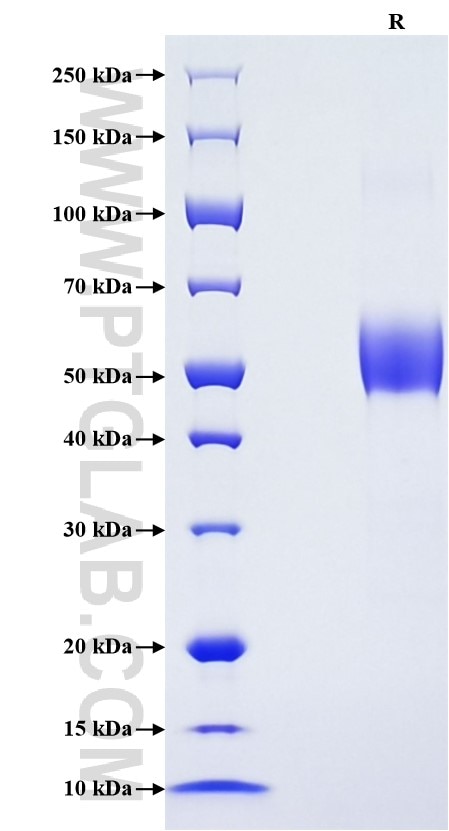
>90 %, SDS-PAGE
Tag
C-mFc
Activity
not tested
Cat no : Eg3884
Validation Data Gallery
Product Information
| Purity | >90 %, SDS-PAGE |
| Endotoxin | <0.1 EU/μg protein, LAL method |
| Activity |
Not tested |
| Expression | HEK293-derived Rat Fas protein Gln22-Lys170 (Accession# Q63199) with a mouse IgG Fc tag at the C-terminus. |
| GeneID | 246097 |
| Accession | Q63199 |
| PredictedSize | 43.4 kDa |
| SDS-PAGE | 46-60 kDa, reducing (R) condition |
| Formulation | Lyophilized from 0.22 μm filtered solution in PBS, pH 7.4. Normally 5% trehalose and 5% mannitol are added as protectants before lyophilization. |
| Reconstitution | Briefly centrifuge the tube before opening. Reconstitute at 0.1-0.5 mg/mL in sterile water. |
| Storage Conditions |
It is recommended that the protein be aliquoted for optimal storage. Avoid repeated freeze-thaw cycles.
|
| Shipping | The product is shipped at ambient temperature. Upon receipt, store it immediately at the recommended temperature. |
Background
FASN (fatty acid synthase, also named Fas) is a multi-enzyme protein that serves as the key regulator in lipid metabolism, especially fatty acid synthesis. Upregulated FASN expression has been reported to be associated with cancer progression in multiple cancer types, such as prostate cancer, ovarian cancer, breast cancer, and liver cancer. FASN may serve as an oncogenic factor due to its role in regulating cancer cell fatty acid synthesis or driving aberrant lipogenesis in cancer cells. In cervical cancer, studies have utilized gene expression analysis to identify FASN as a potential prognostic or therapeutic target.
References:
1. Flavin R, et al. (2010). Future Oncol. 6:551–562.
2. Che L, et al.(2020). Gut. 69:177–186.
3. Roszik J, et al. (2018). Front Immunol. 9:2102.
4. Xia L, et al. (2018). Front Oncol. 8:368.