
Recombinant Rat CXCL7 protein (mFc Tag)
Species
Rat
Purity
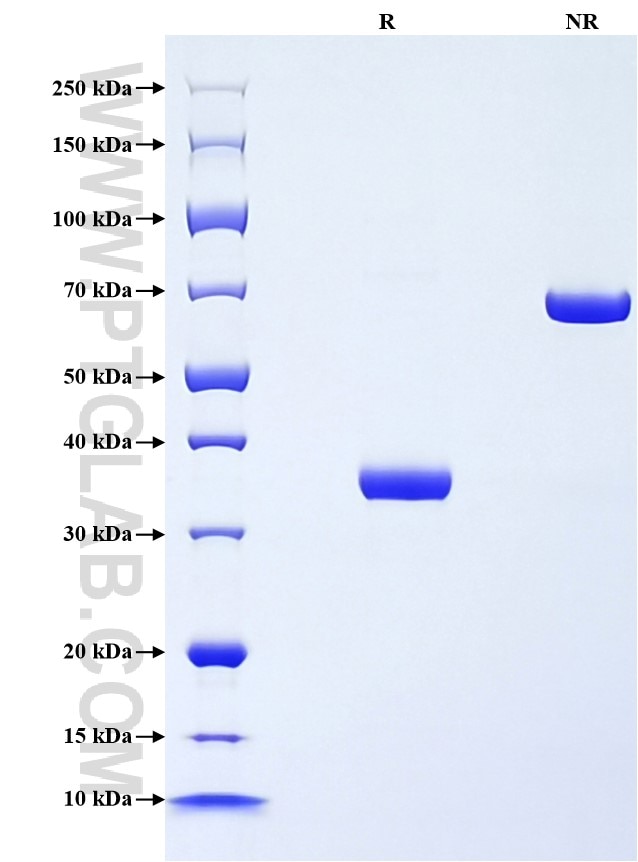
>90 %, SDS-PAGE
Tag
mFc Tag
Activity
not tested
Cat no : Eg3404
Validation Data Gallery
Product Information
| Purity | >90 %, SDS-PAGE |
| Endotoxin | <0.1 EU/μg protein, LAL method |
| Activity |
Not tested |
| Expression | HEK293-derived Rat CXCL7 protein Ile46-Ile107 (Accession# A6KKE5) with a mouse IgG Fc tag at the N-terminus. |
| GeneID | 246358 |
| Accession | A6KKE5 |
| PredictedSize | 34.5 kDa |
| SDS-PAGE | 34-37 kDa, reducing (R) conditions |
| Formulation | Lyophilized from 0.22 μm filtered solution in PBS, pH 7.4. Normally 5% trehalose and 5% mannitol are added as protectants before lyophilization. |
| Reconstitution | Briefly centrifuge the tube before opening. Reconstitute at 0.1-0.5 mg/mL in sterile water. |
| Storage Conditions |
It is recommended that the protein be aliquoted for optimal storage. Avoid repeated freeze-thaw cycles.
|
| Shipping | The product is shipped at ambient temperature. Upon receipt, store it immediately at the recommended temperature. |
Background
CXCL7 is a platelet-derived growth factor that belongs to the CXC chemokine family, functioning as a potent chemo-attractant and activator of neutrophils through binding to its receptor CXCR2. CXCL7 has been demonstrated to participate in a variety of cellular processes, such as DNA synthesis, glycolysis, mitosis, intracellular cAMP accumulation, prostaglandin E2 secretion, as well as the synthesis of hyaluronic acid and plasminogen activator. In cancer cells, CXCL7 exerts promotion of cancer development in a variety of different cancer types, including renal cell carcinoma, lung cancer, and breast cancer.
References:
1.Yu M, et al. (2010) J Oncol. 2010:939407.
2.Guo Q, et al. (2017) Oncol Rep. 37(2):1114-1122.
3.Kinouchi T, et al. (2017) Cancer Sci. 108(12):2495-2502.
4.Wang YH, et al. (2021) Cell Death Dis. 12(12):1090.