
Recombinant Rat CTGF protein (rFc Tag)
Species
Rat
Purity
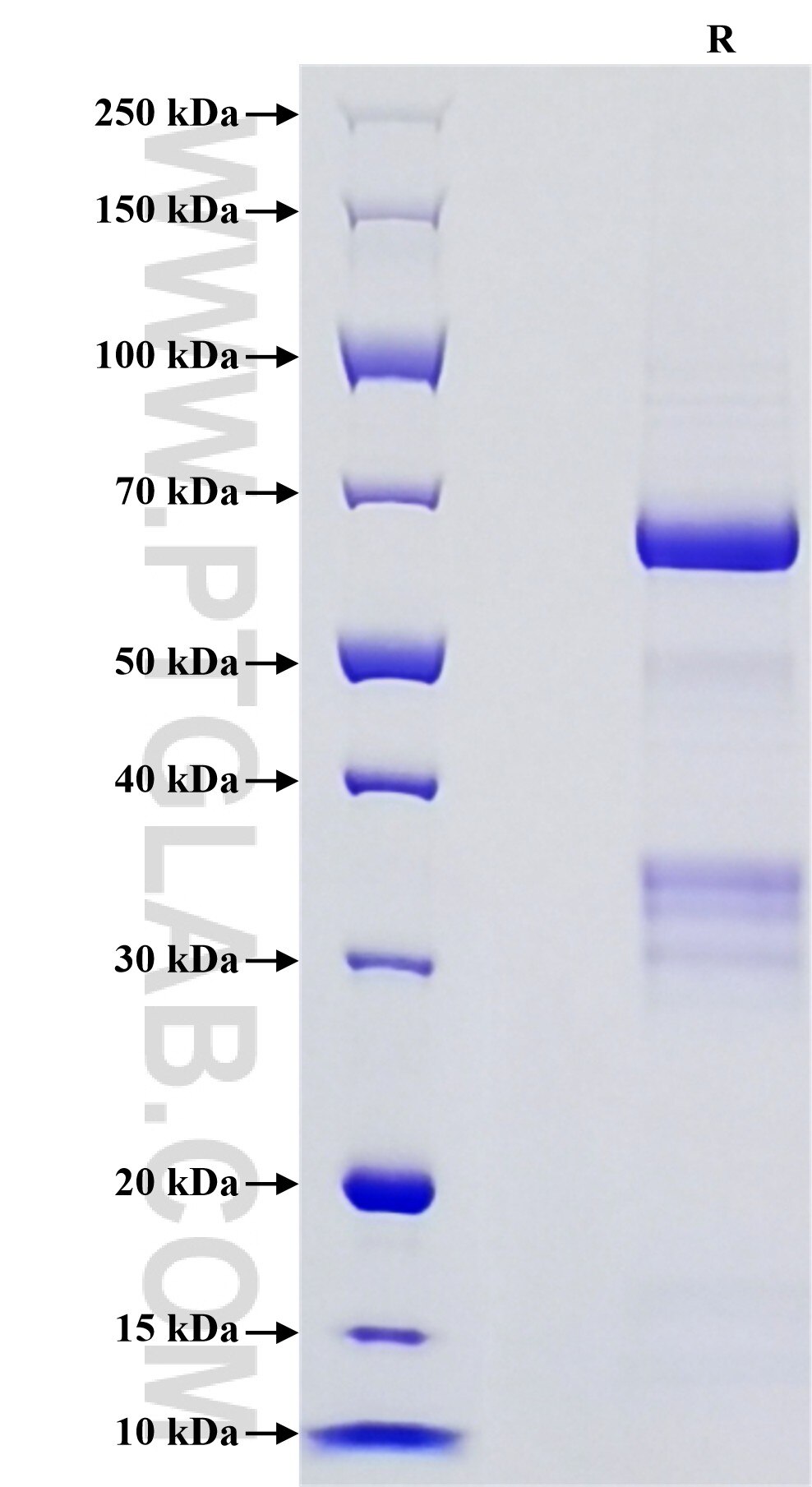
>90 %, SDS-PAGE
Tag
rFc Tag
Activity
not tested
Cat no : Eg3239
Validation Data Gallery
Product Information
| Purity | >90 %, SDS-PAGE |
| Endotoxin | <0.1 EU/μg protein, LAL method |
| Activity |
Not tested |
| Expression | HEK293-derived Rat CTGF protein Gln25-Ala347 (Accession# Q9R1E9) with a rabbit IgG Fc tag at the C-terminus. |
| GeneID | 64032 |
| Accession | Q9R1E9 |
| PredictedSize | 61.4 kDa |
| SDS-PAGE | 30-36 kDa and 62-68 kDa, reducing (R) conditions |
| Formulation | Lyophilized from 0.22 μm filtered solution in PBS, pH 7.4. Normally 5% trehalose and 5% mannitol are added as protectants before lyophilization. |
| Reconstitution | Briefly centrifuge the tube before opening. Reconstitute at 0.1-0.5 mg/mL in sterile water. |
| Storage Conditions |
It is recommended that the protein be aliquoted for optimal storage. Avoid repeated freeze-thaw cycles.
|
| Shipping | The product is shipped at ambient temperature. Upon receipt, store it immediately at the recommended temperature. |
Background
CTGF (Connective Tissue Growth Factor), also known as CCN2, is a core member of the CCN family of secreted proteins. It plays a physiological regulatory role in embryonic development and tissue repair by mediating cell adhesion, migration, and proliferation through receptors such as integrins. However, aberrantly high expression of CTGF is a key driver of pathological fibrosis in multiple organs (e.g., pulmonary fibrosis, liver cirrhosis, and glomerulosclerosis), promoting the activation of myofibroblasts and excessive deposition of extracellular matrix, leading to organ scarring. Furthermore, it also plays significant roles in tumor progression, atherosclerosis, and diabetic complications. As a result, CTGF has emerged as a central therapeutic target for anti-fibrotic treatments (such as the monoclonal antibody Pamrevlumab), with related drugs already in advanced clinical trial stages.
References:
1. Ghosh, Priya et al. Cancer metastasis reviews vol. 44,1 (2025): 32. 2. Shen, Yi-Wen et al. Trends in cancer vol. 7,6 (2021): 511-524. 3. Wang, Bojun et al. Cell reports. Medicine vol. 6,12 (2025): 102480. 4. Neiens, Vanessa et al. Nature communications vol. 16,1 (2025): 3251.