
Recombinant Rat CD90 protein (rFc Tag) (HPLC verified)
Species
Rat
Purity
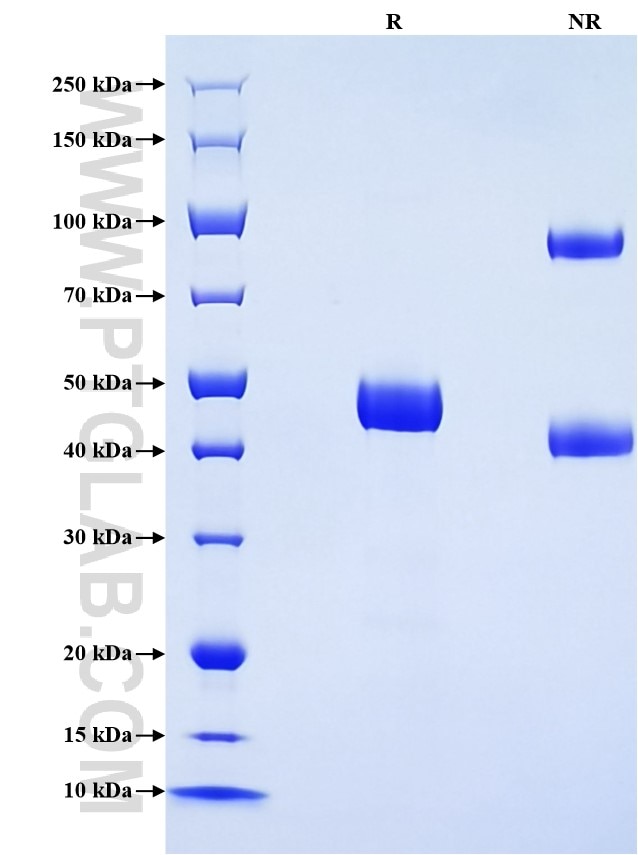
>90 %, SDS-PAGE
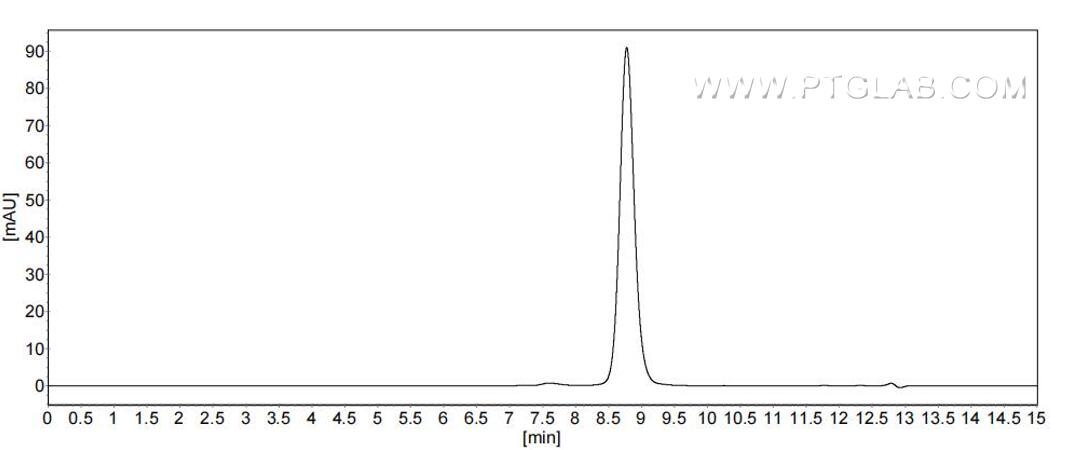
>90 %, SEC-HPLC
Tag
rFc Tag
Activity
not tested
Cat no : Eg3463
Validation Data Gallery
Product Information
| Purity | >90 %, SDS-PAGE >90 %, SEC-HPLC |
| Endotoxin | <0.1 EU/μg protein, LAL method |
| Activity |
Not tested |
| Expression | HEK293-derived Rat CD90 protein Gln20-Cys130 (Accession# P01830) with a rabbit IgG Fc tag at the C-terminus. |
| GeneID | 24832 |
| Accession | P01830 |
| PredictedSize | 39.0 kDa |
| SDS-PAGE | 42-50 kDa, reducing (R) conditions |
| Formulation | Lyophilized from 0.22 μm filtered solution in PBS, pH 7.4. Normally 5% trehalose and 5% mannitol are added as protectants before lyophilization. |
| Reconstitution | Briefly centrifuge the tube before opening. Reconstitute at 0.1-0.5 mg/mL in sterile water. |
| Storage Conditions |
It is recommended that the protein be aliquoted for optimal storage. Avoid repeated freeze-thaw cycles.
|
| Shipping | The product is shipped at ambient temperature. Upon receipt, store it immediately at the recommended temperature. |
Background
THY1 (CD90) is a 25-37-kDa heavily N-glycosylated, glycophosphatidylinositol (GPI) anchored cell surface protein. It is usually expressed on thymocytes, mesenchymal stem cells, hematopoietic stem cells, natural killer cells, neurons, endothelial cells, renal glomerular mesangial cells, follicular dendritic cells, fibroblasts, and myofibroblasts. It has been found to regulate cell adhesion, migration, apoptosis, axon growth, cell-cell and cell-matrix interactions, T-cell activation, and fibrosis. Several reports have shown that CD90 has an important role in cancer in regulating cancer cell proliferation, metastasis, and angiogenesis. CD90 is a pan-innate lymphoid cells (ILC) marker. THY1 is a critical regulator of cell adhesion and communication, cell-ECM interaction and the immune and nervous systems.
References:
1.Kumar A, et al. (2016) Tumour Biol. 37(9):11611-11622.
2.Schroeder JH, et al. (2023) Front Immunol. 14:1113735.
3.Rege TA, Hagood JS. (2006) FASEB J. 20(8):1045-54.
4.Saalbach A, et al. (2005) Oncogene. 24(29):4710-20.