
Recombinant Rat CD68 protein (rFc Tag) (HPLC verified)
Species
Rat
Purity
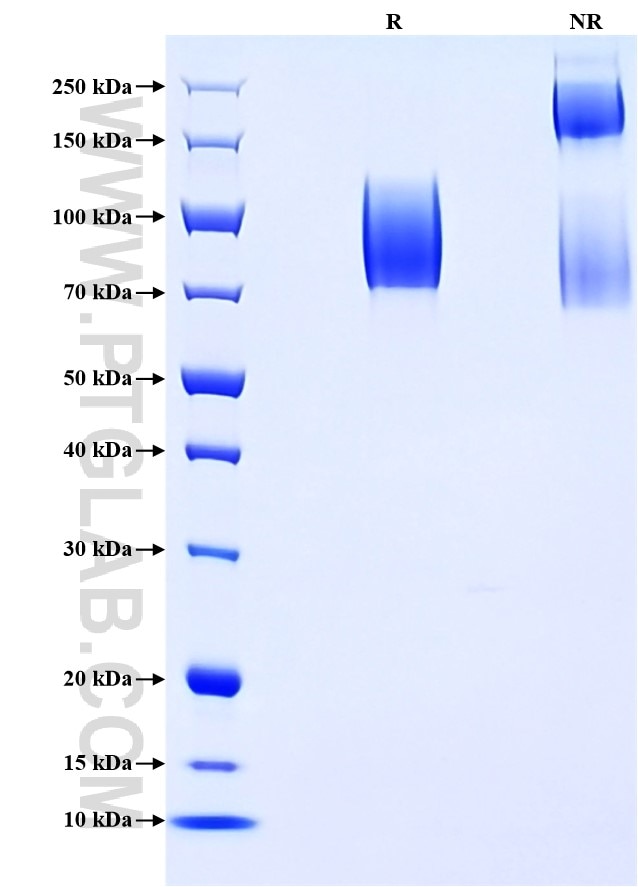
>90 %, SDS-PAGE
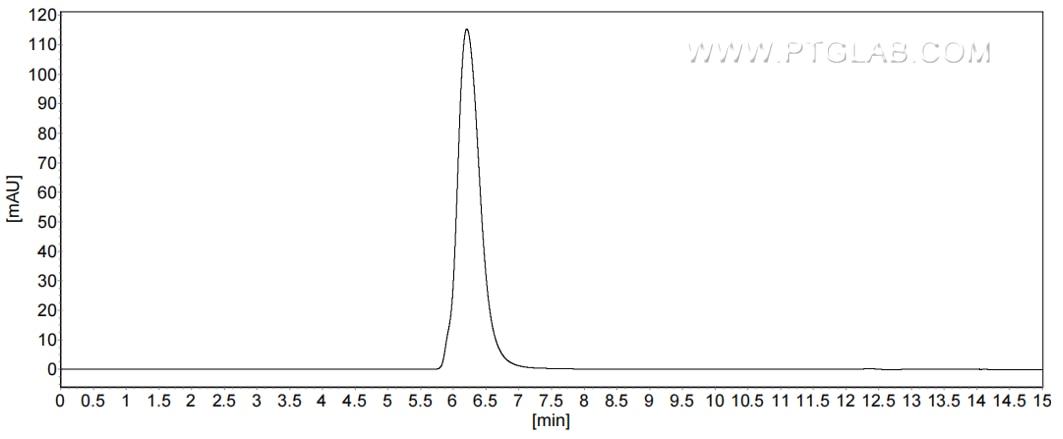
>90 %, SEC-HPLC
Tag
rFc Tag
Activity
not tested
Cat no : Eg1462
Validation Data Gallery
Product Information
| Purity | >90 %, SDS-PAGE >90 %, SEC-HPLC |
| Endotoxin | <0.1 EU/μg protein, LAL method |
| Activity |
Not tested |
| Expression | HEK293-derived Rat CD68 protein Lys20-Ser295 (Accession# Q4FZY1) with a rabbit IgG Fc tag at the C-terminus. |
| GeneID | 287435 |
| Accession | Q4FZY1 |
| PredictedSize | 55.8 kDa |
| SDS-PAGE | 70-125 kDa, reducing (R) conditions |
| Formulation | Lyophilized from 0.22 μm filtered solution in PBS, pH 7.4. Normally 5% trehalose and 5% mannitol are added as protectants before lyophilization. |
| Reconstitution | Briefly centrifuge the tube before opening. Reconstitute at 0.1-0.5 mg/mL in sterile water. |
| Storage Conditions |
It is recommended that the protein be aliquoted for optimal storage. Avoid repeated freeze-thaw cycles.
|
| Shipping | The product is shipped at ambient temperature. Upon receipt, store it immediately at the recommended temperature. |
Background
CD68, also known as GP110, LAMP4, or SCARD1, is widely expressed in monocyte cell types, such as macrophages, microglia, and osteoclasts. CD68 belongs to the lysosome-associated membrane protein (LAMP) family and is involved in various cellular processes such as autophagy, lipid transport, and aging. Additionally, CD68 is also a member of the scavenger receptor family and plays a critical role in promoting phagocytosis, which is essential for the clearance of cellular debris, pathogens, and the maintenance of tissue homeostasis. CD68 is also a pan-macrophage marker and is the most commonly used universal marker for the identification and quantification of tumor-associated macrophages (TAMs) .
References:
1. Zhang J, et al. (2022). Sci Rep. 12(1):7844.
2. Wilke S, et al. (2012). BMC Biol. 10:62.
3. Song J, et al. (2023). Pathol Res Pract. 249:154739.