
Recombinant Rat CD59 protein (rFc Tag)
Species
Rat
Purity
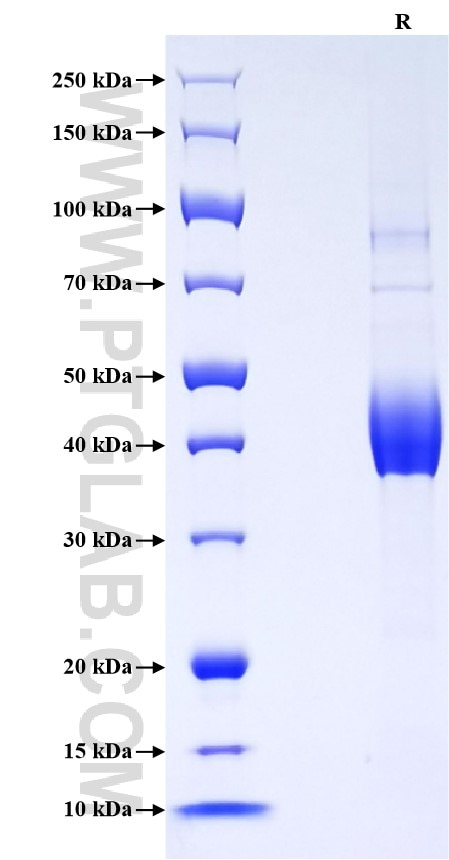
>90 %, SDS-PAGE
Tag
rFc Tag
Activity
not tested
Cat no : Eg3220
Validation Data Gallery
Product Information
| Purity | >90 %, SDS-PAGE |
| Endotoxin | <0.1 EU/μg protein, LAL method |
| Activity |
Not tested |
| Expression | HEK293-derived Rat CD59 protein Asn27-Asn101 (Accession# P27274) with a rabbit IgG Fc tag at the C-terminus. |
| GeneID | 25407 |
| Accession | P27274 |
| PredictedSize | 34.7 kDa |
| SDS-PAGE | 35-45 kDa, reducing (R) conditions |
| Formulation | Lyophilized from 0.22 μm filtered solution in PBS, pH 7.4. Normally 5% trehalose and 5% mannitol are added as protectants before lyophilization. |
| Reconstitution | Briefly centrifuge the tube before opening. Reconstitute at 0.1-0.5 mg/mL in sterile water. |
| Storage Conditions |
It is recommended that the protein be aliquoted for optimal storage. Avoid repeated freeze-thaw cycles.
|
| Shipping | The product is shipped at ambient temperature. Upon receipt, store it immediately at the recommended temperature. |
Background
CD59 is a glycosylphosphatidylinositol (GPI)-anchored cellular receptor that acts as a gatekeeper of protein pore formation. As an immune regulator, CD59 prevents pore formation by the complement membrane attack complex (MAC). It is the only membrane-bound inhibitor of the terminal pathway, abrogating membrane rupture by MAC and further polymerization of the pore. CD59 is widely distributed in normal tissues and cells, such as blood cells, heart, liver, spleen, kidney, endothelia, various epithelial cells, and skeletal muscles.
References:
1. Kimberley FC. et al. (2007) Mol Immunol. 44(1-3):73-81.
2. Iwasa K. et al. (2022) Neurol Neuroimmunol Neuroinflamm. 10(1):e200057.
3. Voisin TB. et al. (2023) Toxins (Basel). 15(7):430.
4. Couves EC. et al. (2023) Nat Commun. 14(1):890.