
Validation Data Gallery
Tested Applications
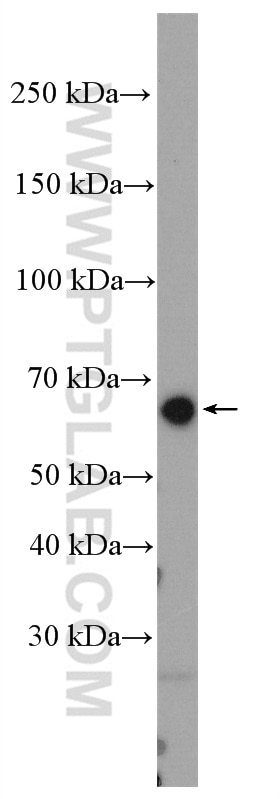
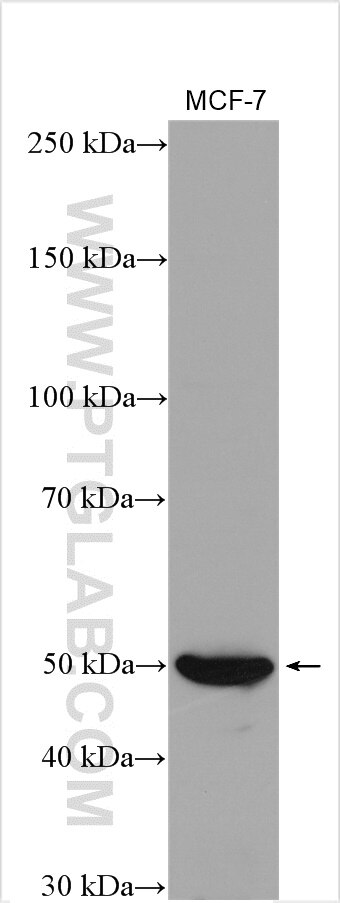
| Positive WB detected in | ROS1728 cells, MCF-7 cells |
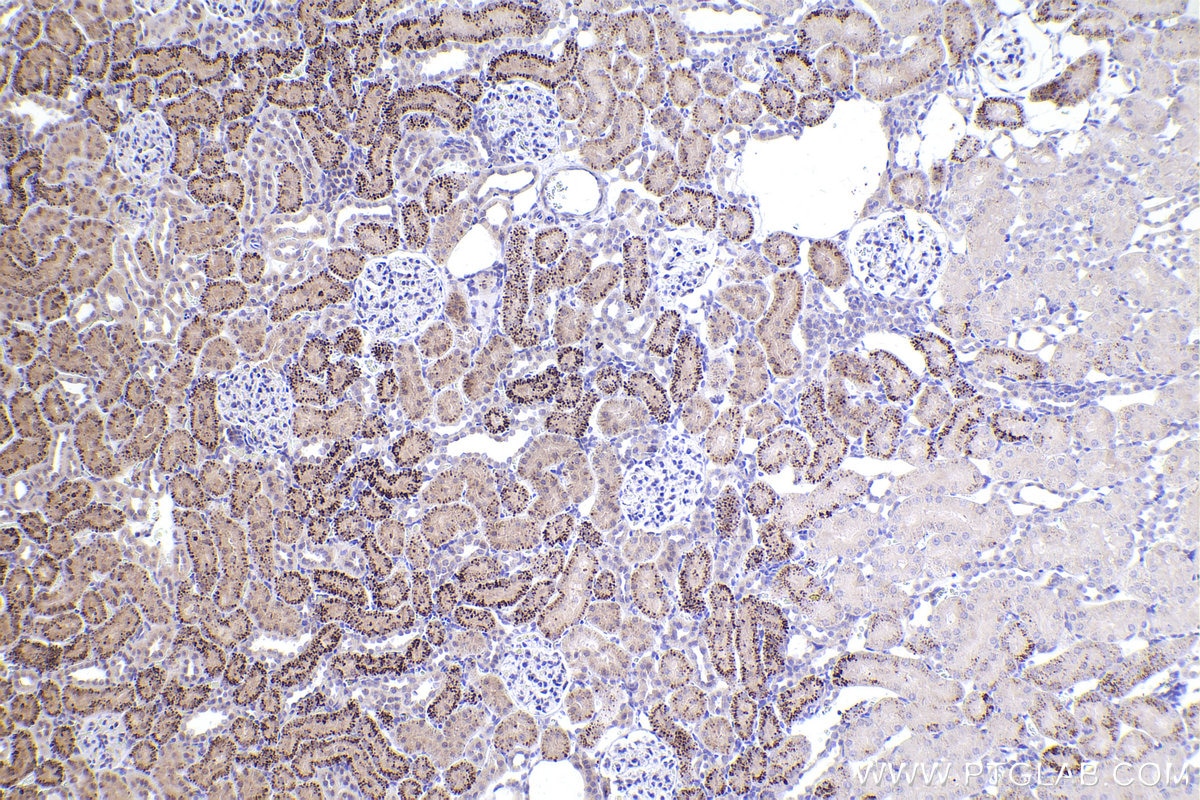
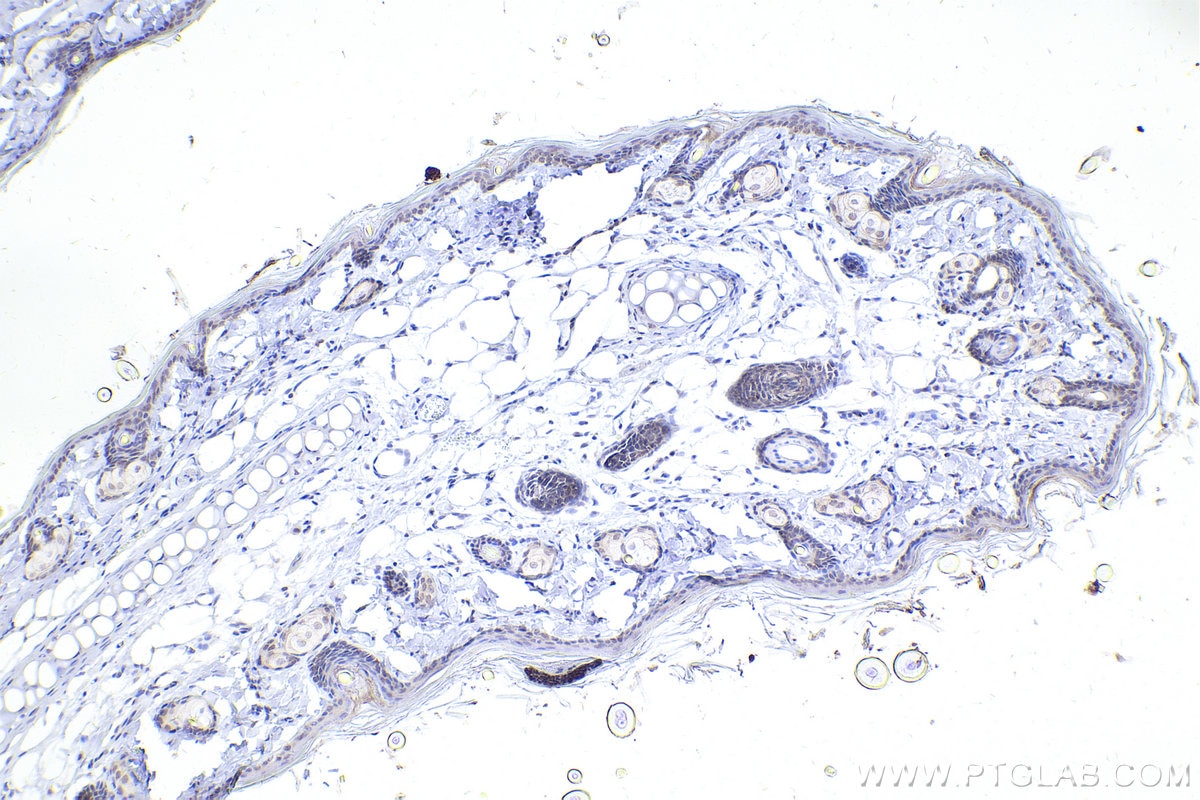
| Positive IHC detected in | rat skin tissue, rat kidney tissue Note: suggested antigen retrieval with TE buffer pH 9.0; (*) Alternatively, antigen retrieval may be performed with citrate buffer pH 6.0 |
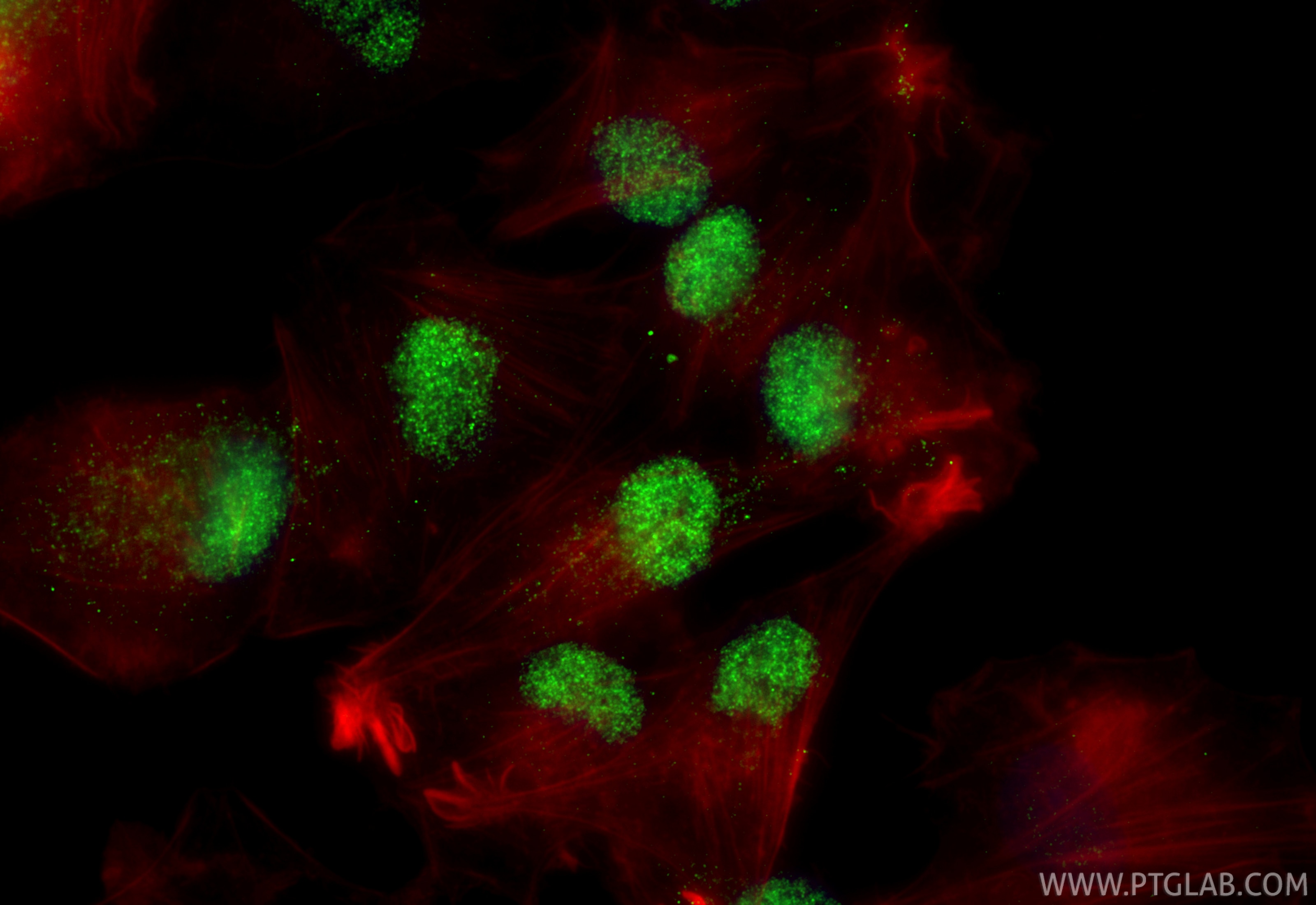
| Positive IF/ICC detected in | ROS1728 cells |
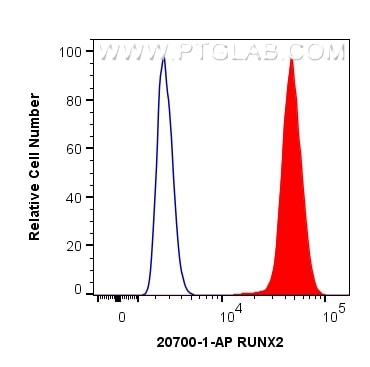
| Positive FC (Intra) detected in | HepG2 cells |
Recommended dilution
| Application | Dilution |
|---|---|
| Western Blot (WB) | WB : 1:200-1:1000 |
| Immunohistochemistry (IHC) | IHC : 1:250-1:1000 |
| Immunofluorescence (IF)/ICC | IF/ICC : 1:200-1:800 |
| Flow Cytometry (FC) (INTRA) | FC (INTRA) : 0.40 ug per 10^6 cells in a 100 ul suspension |
| It is recommended that this reagent should be titrated in each testing system to obtain optimal results. | |
| Sample-dependent, Check data in validation data gallery. | |
Published Applications
| KD/KO | See 4 publications below |
| WB | See 311 publications below |
| IHC | See 56 publications below |
| IF | See 107 publications below |
| IP | See 2 publications below |
| ChIP | See 4 publications below |
Product Information
20700-1-AP targets RUNX2 in WB, IHC, IF/ICC, FC (Intra), IP, ChIP, ELISA, CUT&Tag applications and shows reactivity with human, rat samples.
| Tested Reactivity | human, rat |
| Cited Reactivity | human, mouse, rat, pig, rabbit, canine, chicken |
| Host / Isotype | Rabbit / IgG |
| Class | Polyclonal |
| Type | Antibody |
| Immunogen |
Peptide 相同性解析による交差性が予測される生物種 |
| Full Name | runt-related transcription factor 2 |
| Calculated molecular weight | 57 kDa |
| Observed molecular weight | 57-60 kDa |
| GenBank accession number | NM_004348 |
| Gene Symbol | RUNX2 |
| Gene ID (NCBI) | 860 |
| RRID | AB_2722783 |
| Conjugate | Unconjugated |
| Form | |
| Form | Liquid |
| Purification Method | Antigen affinity purification |
| UNIPROT ID | Q13950 |
| Storage Buffer | PBS with 0.02% sodium azide and 50% glycerol{{ptg:BufferTemp}}7.3 |
| Storage Conditions | Store at -20°C. Stable for one year after shipment. Aliquoting is unnecessary for -20oC storage. |
Background Information
RUNX2, also named as AML3, CBFA1, OSF2 and PEBP2A, is a Transcription factor which involved in osteoblastic differentiation and skeletal morphogenesis. It is essential for the maturation of osteoblasts and both intramembranous and endochondral ossification. CBF binds to the core site, 5'-PYGPYGGT-3', of a number of enhancers and promoters, including murine leukemia virus, polyomavirus enhancer, T-cell receptor enhancers, osteocalcin, osteopontin, bone sialoprotein, alpha 1(I) collagen, LCK, IL-3 and GM-CSF promoters By similarity. RUNX2 inhibits MYST4-dependent transcriptional activation. The antibody is specific to RUNX2.
Protocols
| Product Specific Protocols | |
|---|---|
| FC protocol for RUNX2 antibody 20700-1-AP | Download protocol |
| IF protocol for RUNX2 antibody 20700-1-AP | Download protocol |
| IHC protocol for RUNX2 antibody 20700-1-AP | Download protocol |
| WB protocol for RUNX2 antibody 20700-1-AP | Download protocol |
| Standard Protocols | |
|---|---|
| Click here to view our Standard Protocols |
Publications
| Species | Application | Title |
|---|---|---|
Bioact Mater A multimodal ROS logic-gated therapeutic platform disrupts the vicious cycle of senescence to promote aged bone defect repair. | ||
Bioact Mater Intelligent responsive alloy scaffold temporally regulates the immune-osteogenic axis for the treatment of infectious bone defects. | ||
Bioact Mater Throw out an oligopeptide to catch a protein: Deep learning and natural language processing-screened tripeptide PSP promotes Osteolectin-mediated vascularized bone regeneration | ||
Bioact Mater Nano-assisted dynamically assembled hydrogels with strong tissue adhesion and proactive immunomodulation for bone defect repair | ||
Bioact Mater Sequential construction of vascularized and mineralized bone organoids using engineered ECM-DNA-CPO-based bionic matrix for efficient bone regeneration | ||
Bioact Mater Biomineralization-inspired scaffolds using citrate-based polymers to stabilize amorphous calcium phosphate promote osteogenesis and angiogenesis for bone defect repair. |