
Validation Data Gallery
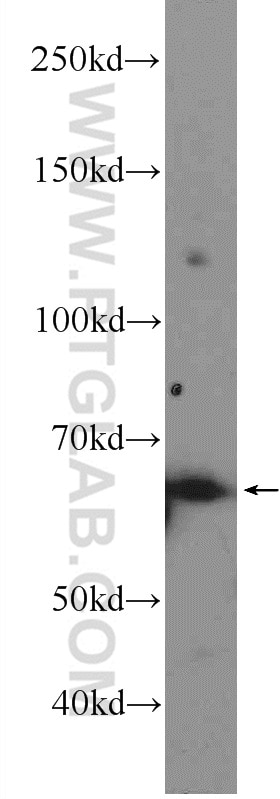
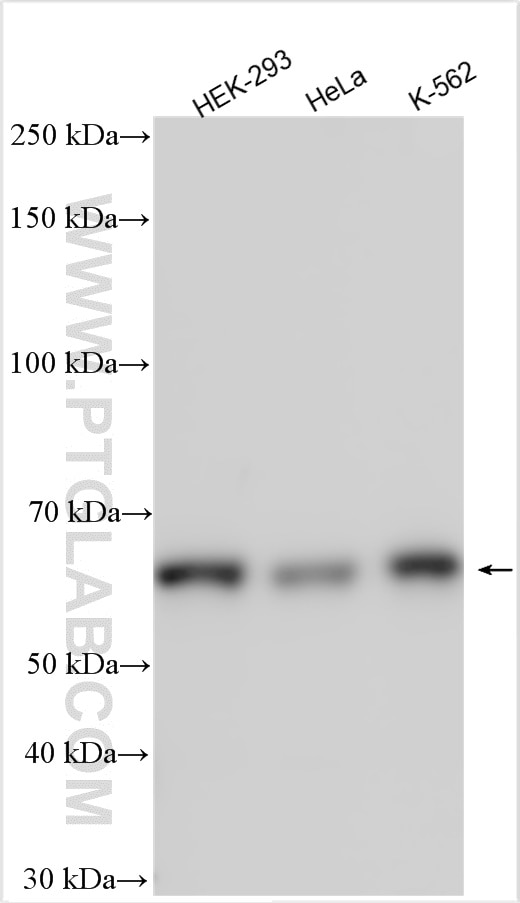
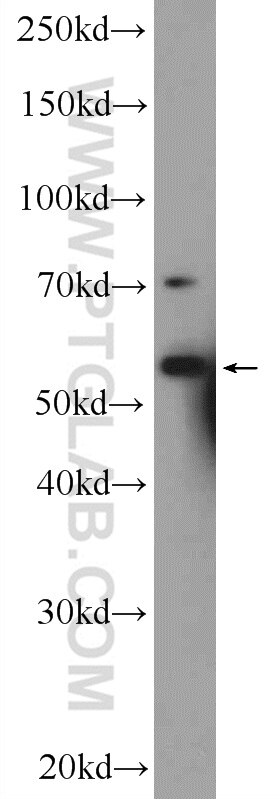
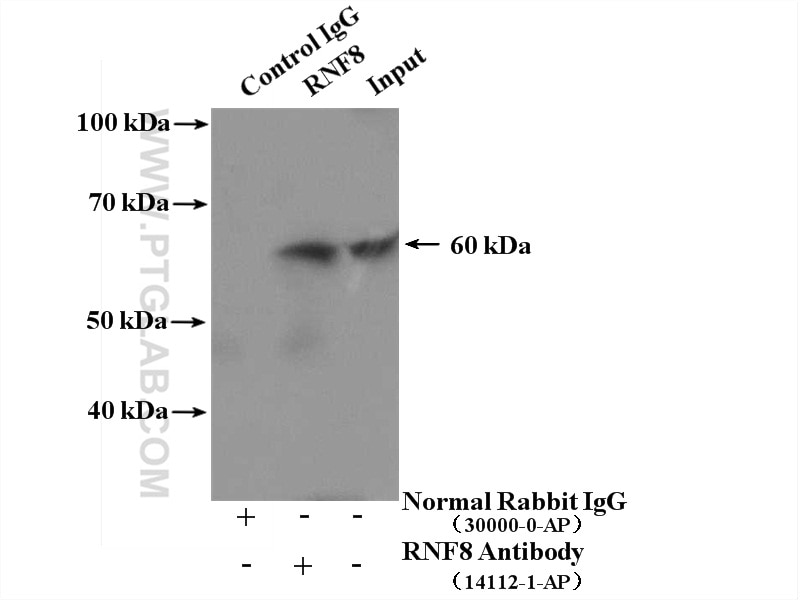
Tested Applications
Recommended dilution
| Application | Dilution |
|---|---|
| It is recommended that this reagent should be titrated in each testing system to obtain optimal results. | |
Product Information
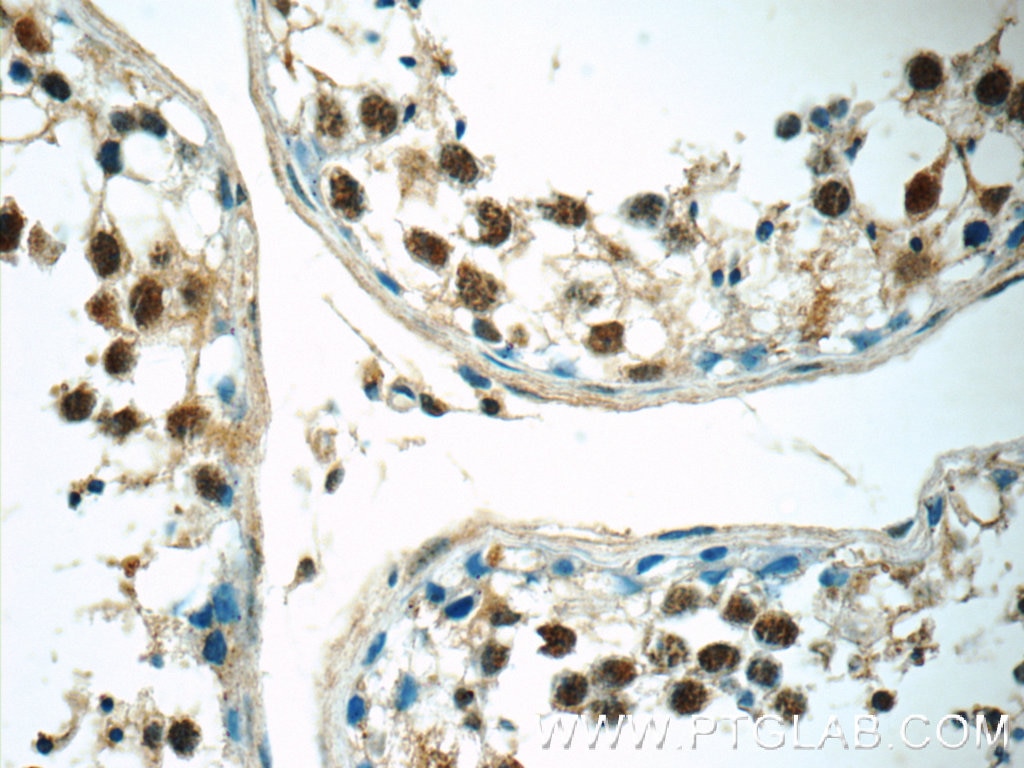
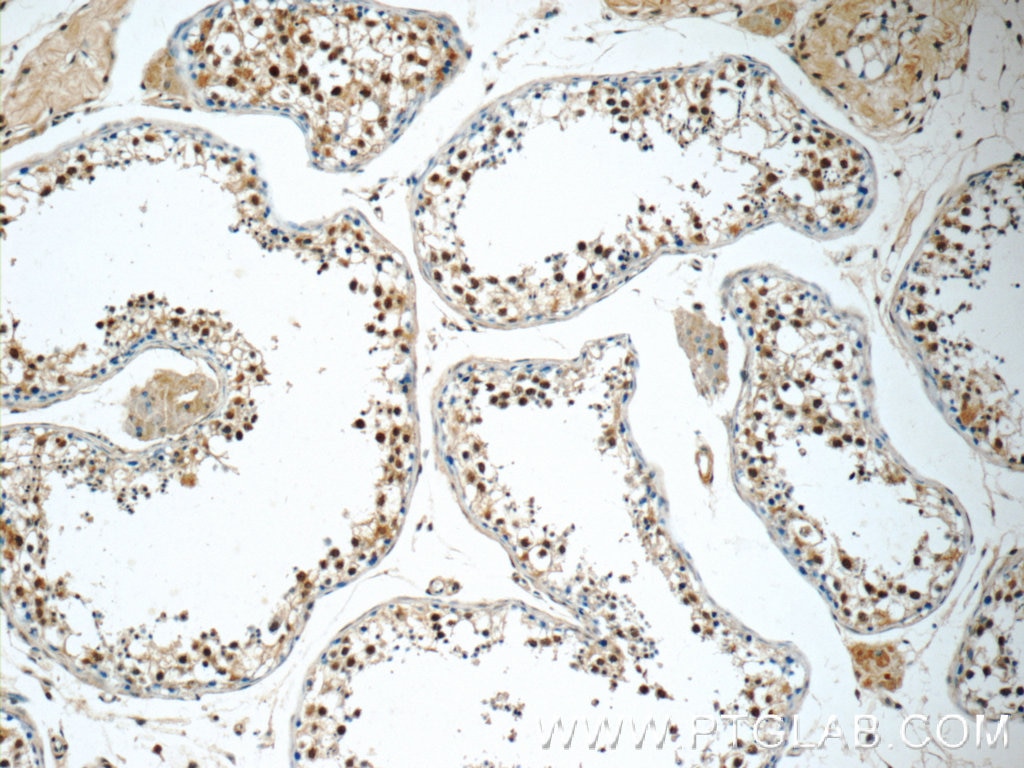
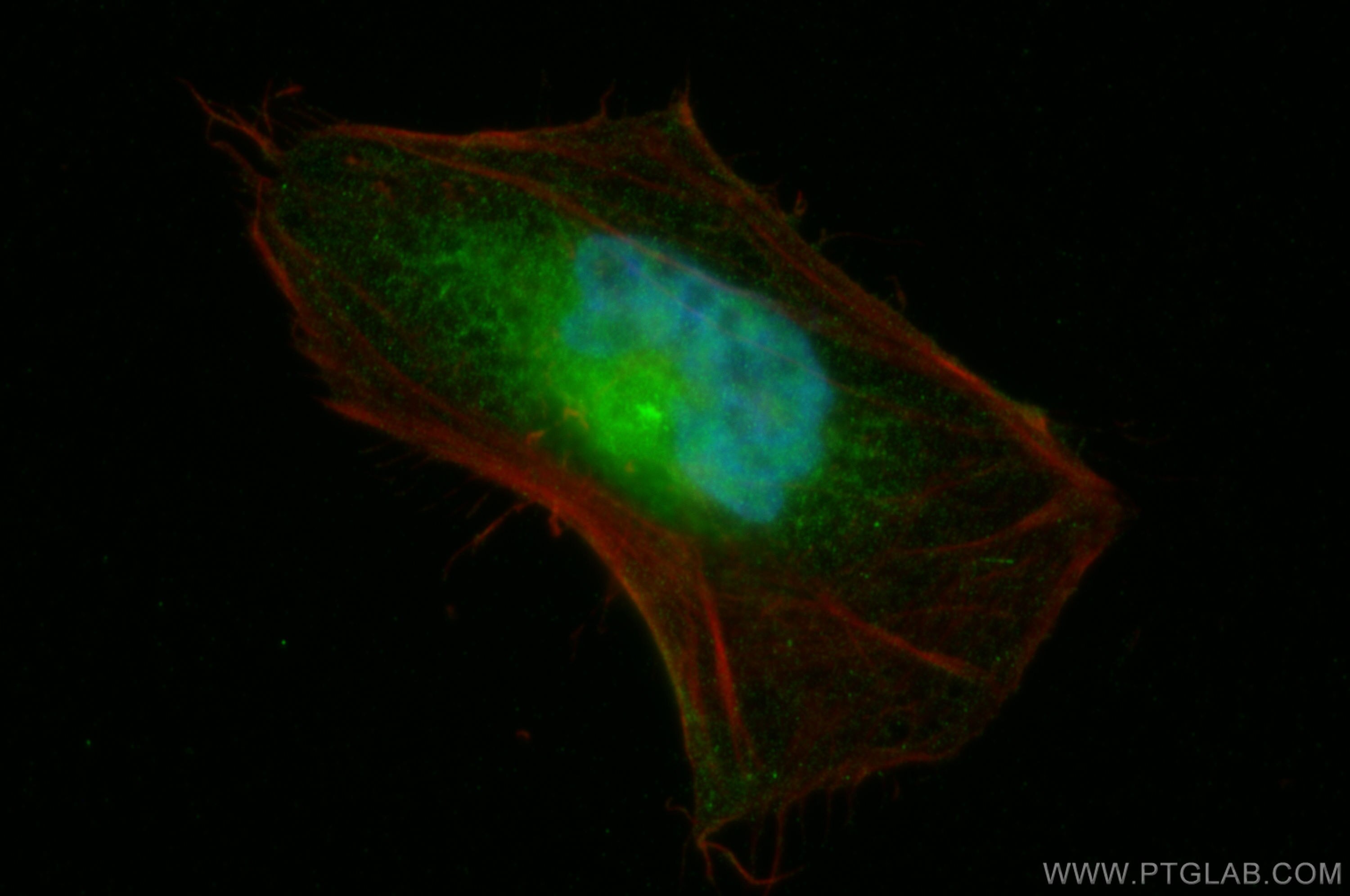
14112-1-PBS targets RNF8 in WB, IHC, IF/ICC, IP, Indirect ELISA applications and shows reactivity with human, mouse, rat samples.
| Tested Reactivity | human, mouse, rat |
| Host / Isotype | Rabbit / IgG |
| Class | Polyclonal |
| Type | Antibody |
| Immunogen |
CatNo: Ag5292 Product name: Recombinant human RNF8 protein Source: e coli.-derived, PET28a Tag: 6*His Domain: 130-485 aa of BC007517 Sequence: ETIYPCLSPKNDQMIEKNKELRTKRKFSLDELAGPGAEGPSNLKSKINKVSCESGQPVKSQGKGEVASTPSDNLDPKLTALEPSKTTGAPIYPGFPKVTEVHHEQKASNSSASQRSLQMFKVTMSRILRLKIQMQEKHEAVMNVKKQTQKGNSKKVVQMEQELQDLQSQLCAEQAQQQARVEQLEKTFQEEEQHLQGLEIAQGEKDLKQQLAQALQEHWALMEELNRSKKDFEAIIQAKNKELEQTKEEKEKMQAQKEEVLSHMNDVLENELQCIICSEYFIEAVTLNCAHSFCSYCINEWMKRKIECPICRKDIKSKTYSLVLDNCINKMVNNLSSEVKERRIVLIRERKAKRLF 相同性解析による交差性が予測される生物種 |
| Full Name | ring finger protein 8 |
| Calculated molecular weight | 485 aa, 56 kDa |
| Observed molecular weight | 56-60 kDa |
| GenBank accession number | BC007517 |
| Gene Symbol | RNF8 |
| Gene ID (NCBI) | 9025 |
| RRID | AB_2878016 |
| Conjugate | Unconjugated |
| Form | |
| Form | Liquid |
| Purification Method | Antigen affinity purification |
| UNIPROT ID | O76064 |
| Storage Buffer | PBS only{{ptg:BufferTemp}}7.3 |
| Storage Conditions | Store at -80°C. |
Background Information
RNF8, also named as KIAA0646 or E3 ubiquitin-protein ligase RNF8, is a 485 amino acid protein, which contains one RING-type zinc finger and one FHA domain. RNF8 localizes in the nucleus and belongs to the RNF8 family. E2-E3 ubiquitin ligase complex is composed of the RNF8 homodimer and a E2 heterodimer of UBE2N and UBE2V2. E3 ubiquitin-protein ligase that plays a key role in DNA damage signaling via 2 distinct roles: by mediating the 'Lys-63'-linked ubiquitination of histones H2A and H2AX and promoting the recruitment of DNA repair proteins at double-strand breaks (DSBs) sites, and by catalyzing 'Lys-48'-linked ubiquitination to remove target proteins from DNA damage sites.