
Validation Data Gallery
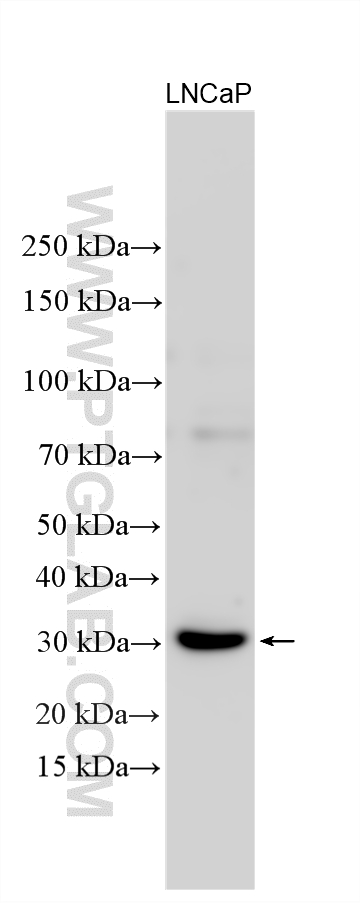
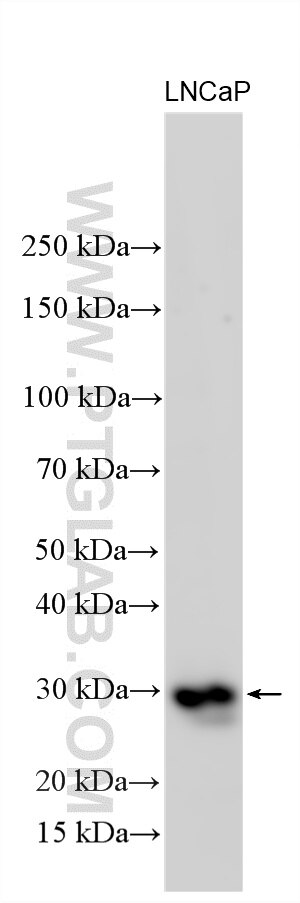
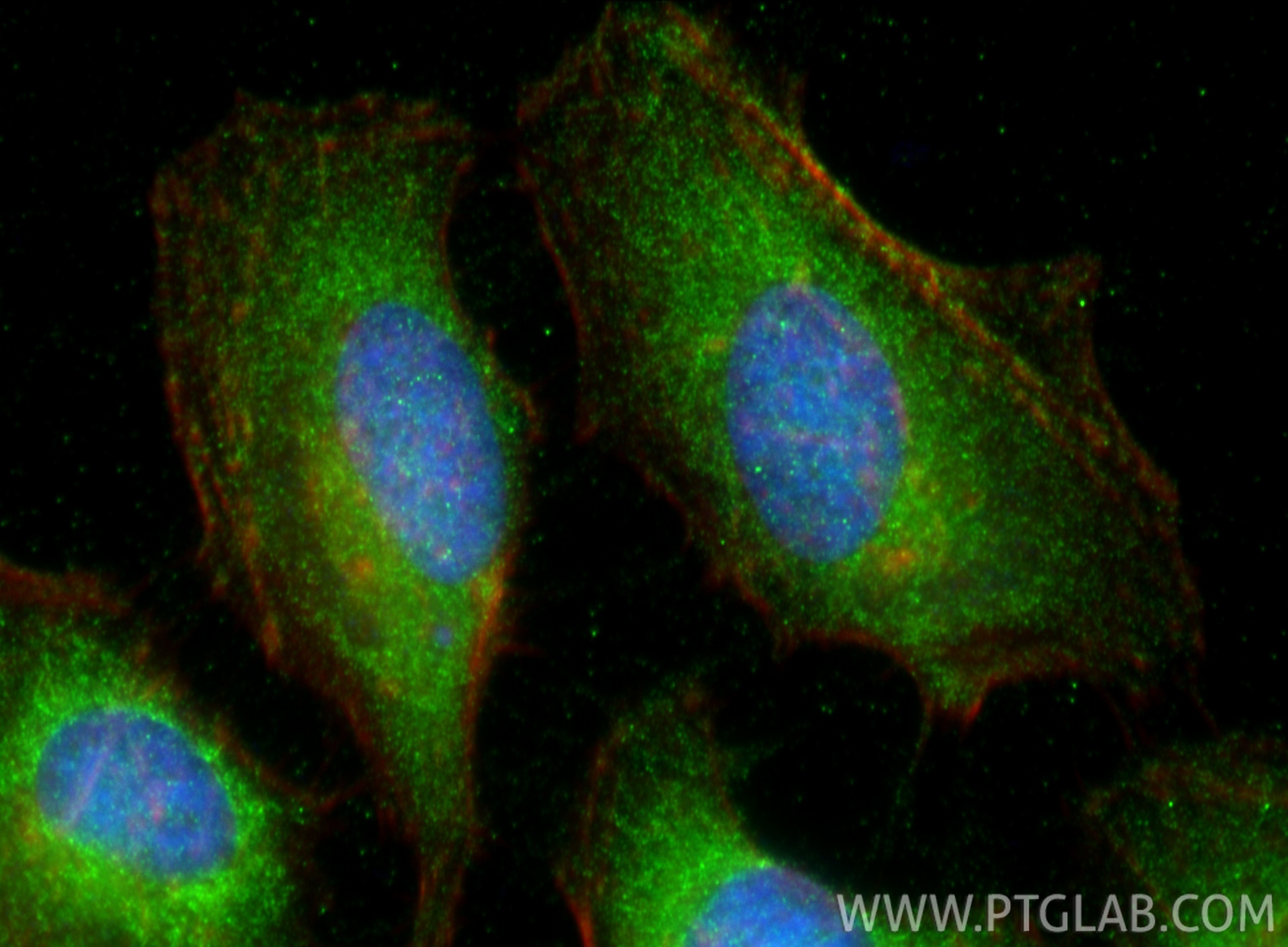
Tested Applications
Recommended dilution
| Application | Dilution |
|---|---|
| It is recommended that this reagent should be titrated in each testing system to obtain optimal results. | |
Product Information
26428-1-PBS targets RASSF3 in WB, IF/ICC, ELISA applications and shows reactivity with human samples.
| Tested Reactivity | human |
| Host / Isotype | Rabbit / IgG |
| Class | Polyclonal |
| Type | Antibody |
| Immunogen |
CatNo: Ag15801 Product name: Recombinant human RASSF3 protein Source: e coli.-derived, PGEX-4T Tag: GST Domain: 14-127 aa of BC100952 Sequence: KVQMELCKPPQTSPNSGKLSPSSNGCMNTLHISSTNTVGEVIEALLKKFLVTESPAKFALYKRCHREDQVYACKLSDREHPLYLRLVAGPRTDTLSFVLREHEIGEWEAFSLPE 相同性解析による交差性が予測される生物種 |
| Full Name | Ras association (RalGDS/AF-6) domain family member 3 |
| Calculated molecular weight | 238 aa, 28 kDa |
| Observed molecular weight | 28-30 kDa |
| GenBank accession number | BC100952 |
| Gene Symbol | RASSF3 |
| Gene ID (NCBI) | 283349 |
| RRID | AB_3742188 |
| Conjugate | Unconjugated |
| Form | |
| Form | Liquid |
| Purification Method | Antigen affinity purification |
| UNIPROT ID | Q86WH2 |
| Storage Buffer | PBS only{{ptg:BufferTemp}}7.3 |
| Storage Conditions | Store at -80°C. |
Background Information
RASSF3 (Ras Association Domain Family Member 3) is an emerging tumor suppressor protein and a key member of the RASSF family, characterized by a conserved Ras Association (RA) domain. RASSF3 acts as a critical node in multiple tumor-suppressive pathways. It directly stabilizes and activates the p53 protein, thereby inducing cell cycle arrest and apoptosis. RASSF3 also contributes to the maintenance of genomic integrity by participating in the DNA damage response. Furthermore, it modulates major signaling cascades such as the Hippo and NF-κB pathways, influencing cell proliferation, survival, and inflammation.