
Validation Data Gallery
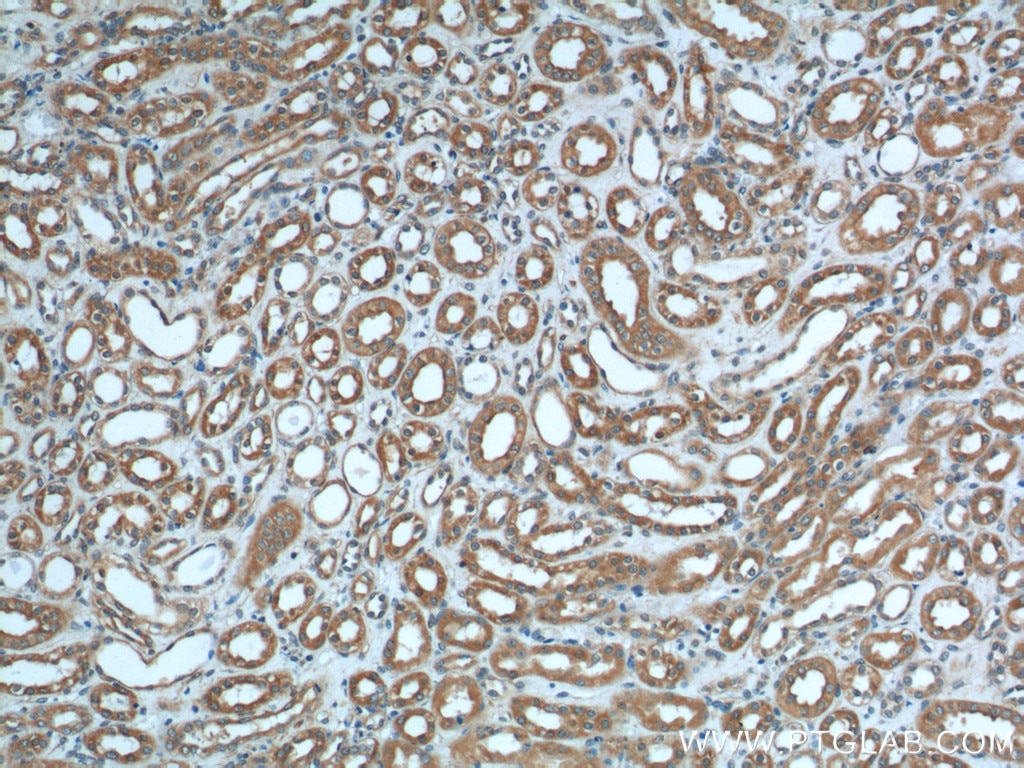
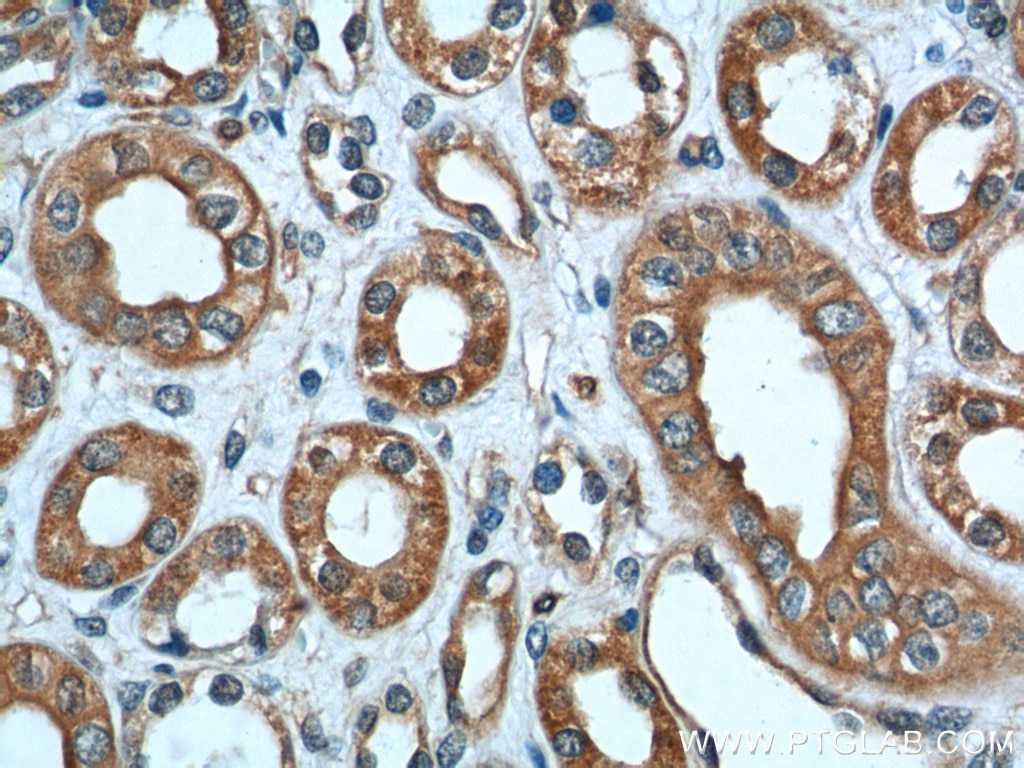
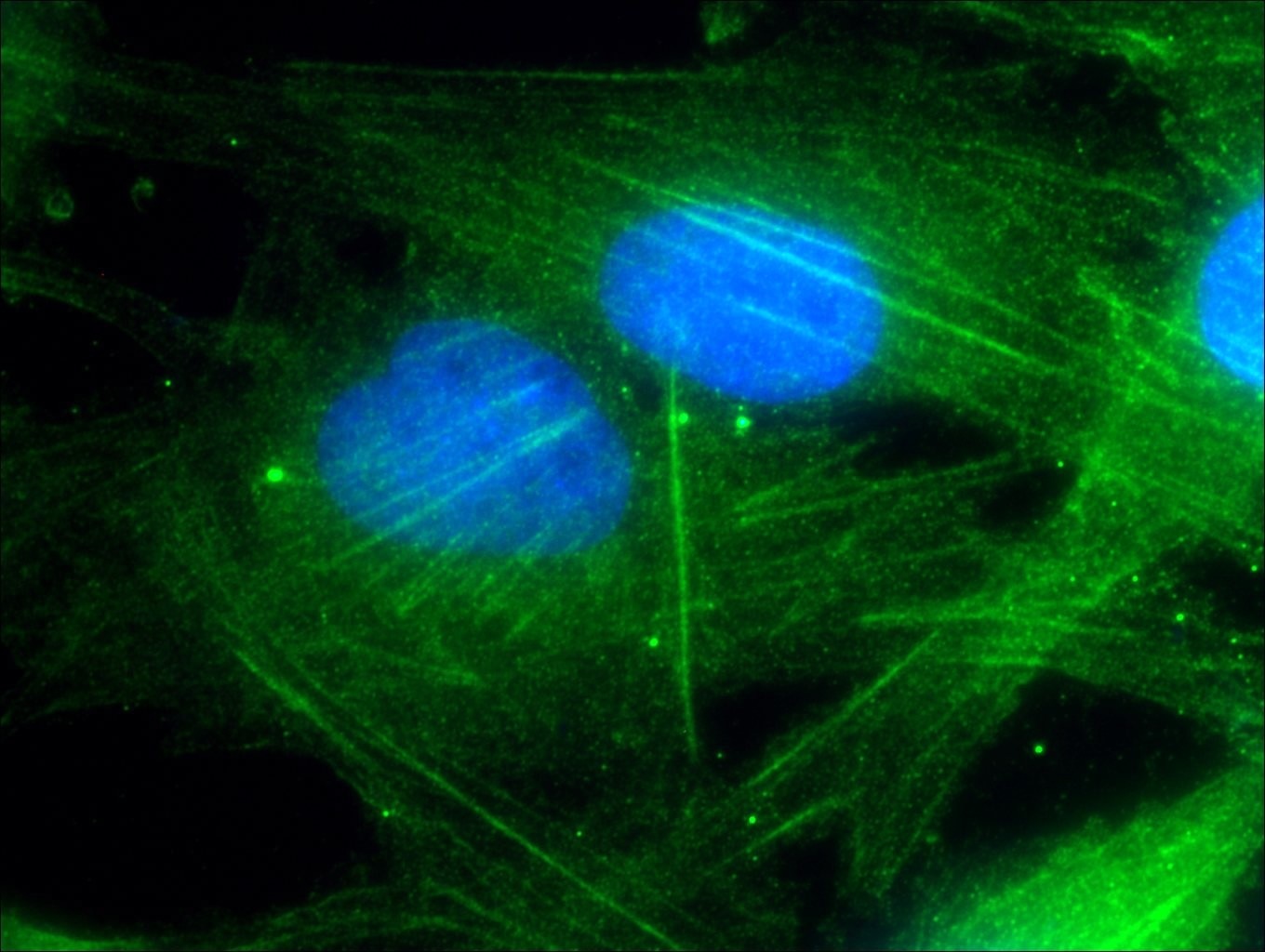
Tested Applications
Recommended dilution
| Application | Dilution |
|---|---|
| It is recommended that this reagent should be titrated in each testing system to obtain optimal results. | |
Product Information
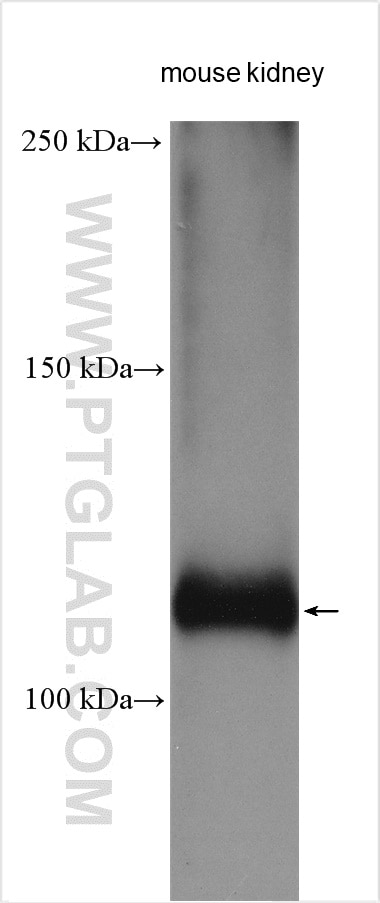
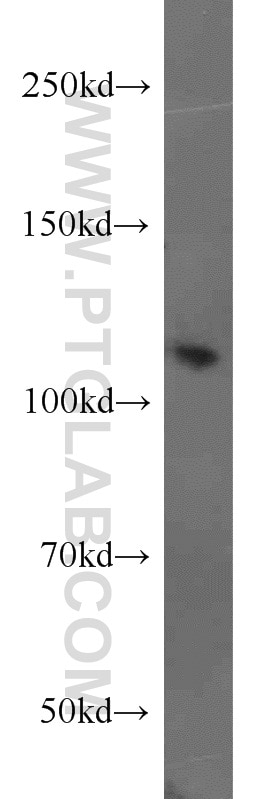
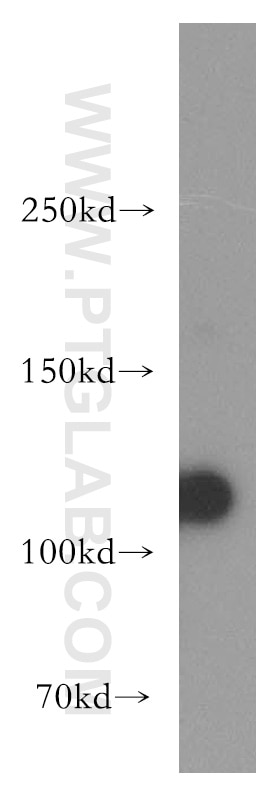
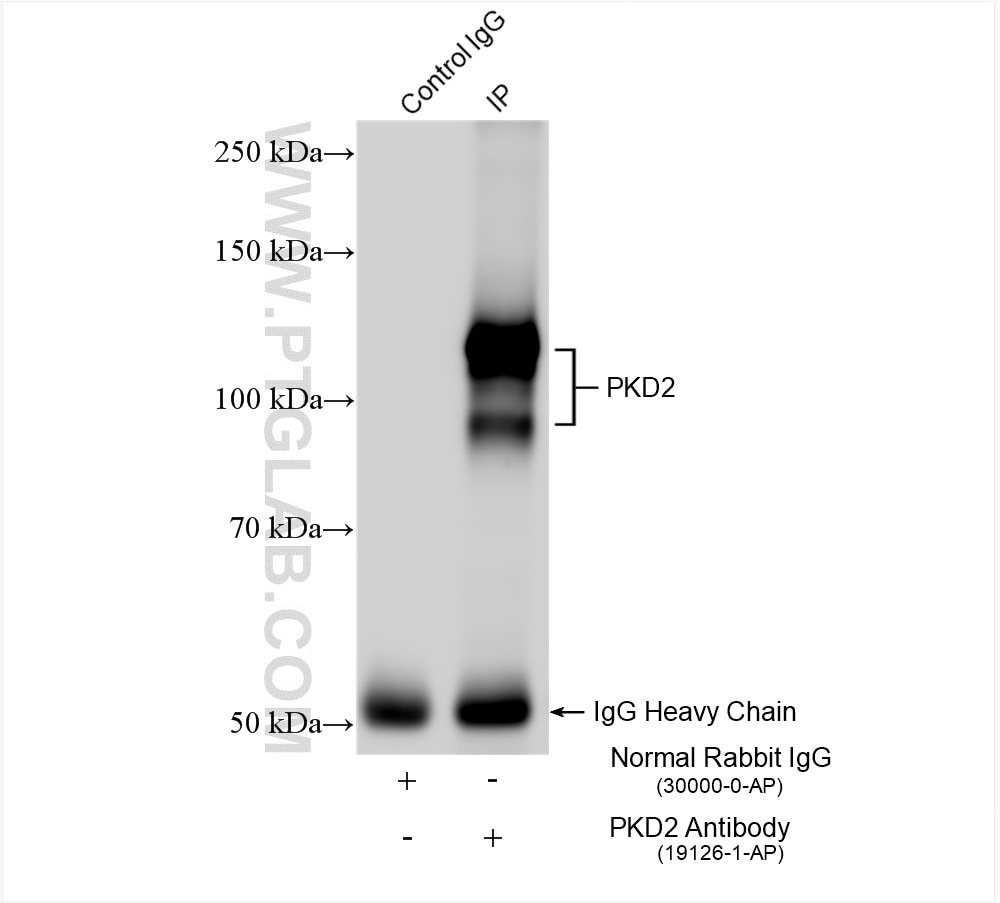
19126-1-PBS targets Polycystin 2 in WB, IHC, IP, Indirect ELISA applications and shows reactivity with human, mouse, rat, canine samples.
| Tested Reactivity | human, mouse, rat, canine |
| Host / Isotype | Rabbit / IgG |
| Class | Polyclonal |
| Type | Antibody |
| Immunogen |
Peptide 相同性解析による交差性が予測される生物種 |
| Full Name | polycystic kidney disease 2 (autosomal dominant) |
| Calculated molecular weight | 110 kDa |
| Observed molecular weight | 109 kDa |
| GenBank accession number | NM_000297 |
| Gene Symbol | PKD2 |
| Gene ID (NCBI) | 5311 |
| RRID | AB_10641050 |
| Conjugate | Unconjugated |
| Form | |
| Form | Liquid |
| Purification Method | Antigen affinity purification |
| UNIPROT ID | Q13563 |
| Storage Buffer | PBS only{{ptg:BufferTemp}}7.3 |
| Storage Conditions | Store at -80°C. |
Background Information
Polycystin 2 (PKD2), the product of the gene mutated in type 2 autosomal dominant polycystic kidney disease, belongs to the polycystin family. PKD2 is a ~110-kDa six-transmembrane channel protein with cytoplasmic N- and C-termini. This protein functions as a Ca2+-activated intracellular Ca2+ release channel in the endoplasmic reticulum. It is also present in the plasma membrane, where it functions as a nonselective cation channel. In addition, PKD2 expression has been documented in the primary cilium of kidney epithelial cells, where it is believed to have an essential role in mediating Ca2+ entry in response to flow rate changes, suggesting that it may be part of a mechanosensing machinery residing in the primary cilium. (PMID: 16135816; 10497221)