
Validation Data Gallery
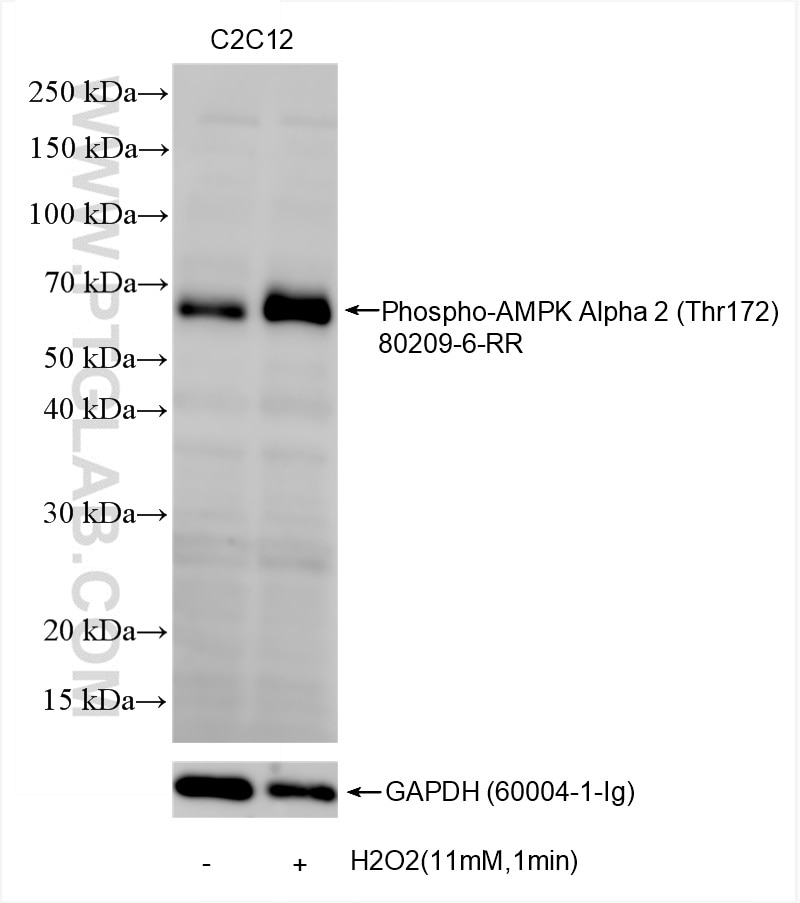
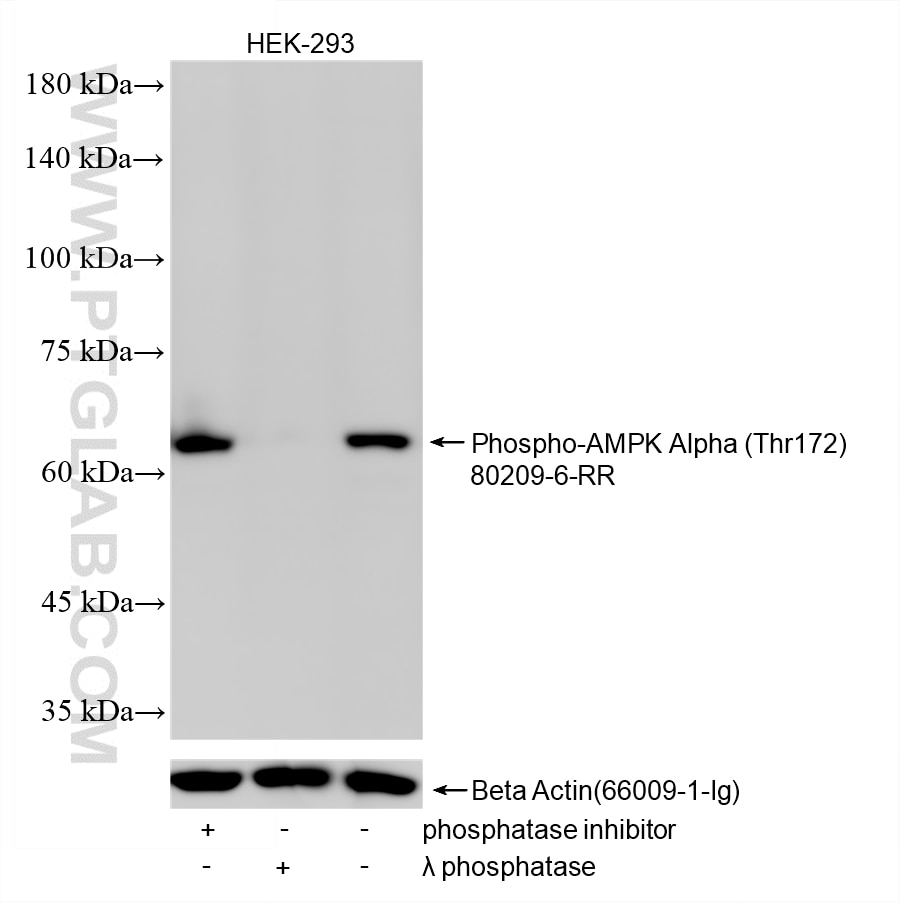
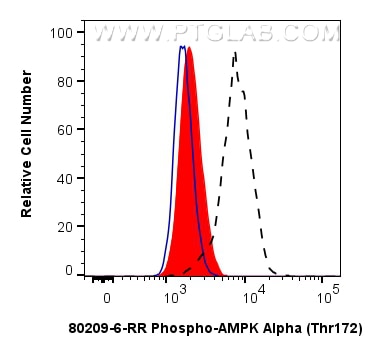
Tested Applications
Recommended dilution
| Application | Dilution |
|---|---|
| It is recommended that this reagent should be titrated in each testing system to obtain optimal results. | |
Product Information
80209-6-PBS targets Phospho-AMPK Alpha (Thr172) in WB, FC (Intra), Indirect ELISA applications and shows reactivity with human, mouse samples.
| Tested Reactivity | human, mouse |
| Host / Isotype | Rabbit / IgG |
| Class | Recombinant |
| Type | Antibody |
| Immunogen |
Peptide 相同性解析による交差性が予測される生物種 |
| Full Name | protein kinase, AMP-activated, alpha 1 catalytic subunit |
| Observed molecular weight | 64 kDa |
| GenBank accession number | BC048980 |
| Gene Symbol | AMPK Alpha 1 |
| Gene ID (NCBI) | 5562 |
| RRID | AB_3743334 |
| Conjugate | Unconjugated |
| Form | |
| Form | Liquid |
| Purification Method | Protein A purification |
| UNIPROT ID | Q13131 |
| Storage Buffer | PBS only{{ptg:BufferTemp}}7.3 |
| Storage Conditions | Store at -80°C. |
Background Information
AMPK is a serine/threonine protein kinase complex consisting of a catalytic α-subunit (α1 and α2), a scaffolding β-subunit (β1 and β2), and a regulatory γ-subunit (γ1, γ2, and γ3). Ubiquitous expression of AMPKα1-, β1-, and γ1-subunits in many tissues makes the α1β1γ1 complex a reference for AMPK assays to identify AMPK activators. AMPK is generally quiescent under normal conditions but is activated in response to signals and stresses that increase the AMP/ATP ratio, such as hypoglycemia, strenuous exercise, anoxia, and ischemia. An increase in the ratio of AMP/ATP activates AMPK by several mechanisms, including direct allosteric activation and covalent modification in which an AMP-dependent AMPK kinase (AMPKK) phosphorylates the α subunit on Thr172. Once activated, AMPK switches on catabolic pathways that generate ATP, while switching off ATP-consuming processes (e.g., biosynthesis, cell growth, and proliferation), and in doing so acts as an "energy gauge". (PMID: 27034026, PMID: 21980456, PMID: 27600021)
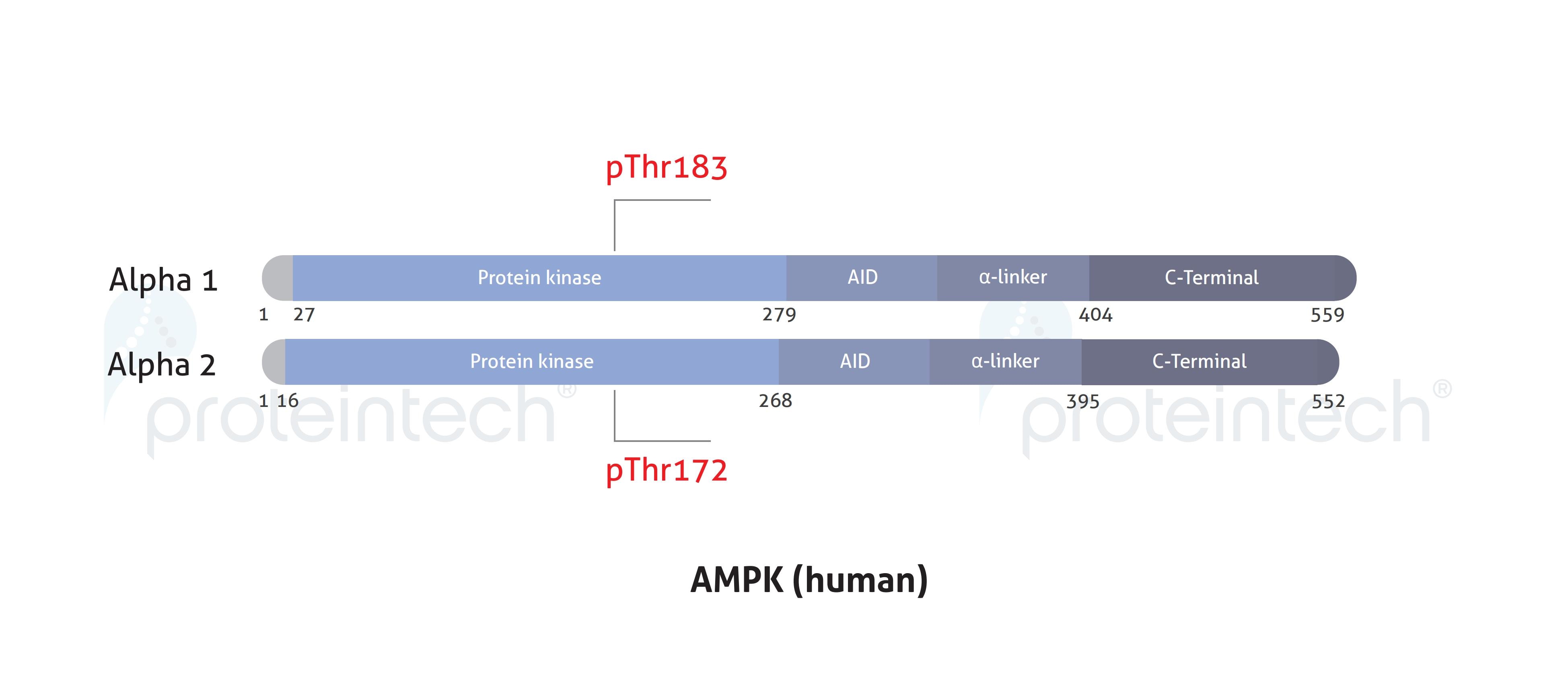
This antibody can recognize the phosphorylation sites of Thr183 in AMPK Alpha 1 and Thr172 in AMPK Alpha 2.