
Validation Data Gallery
Tested Applications
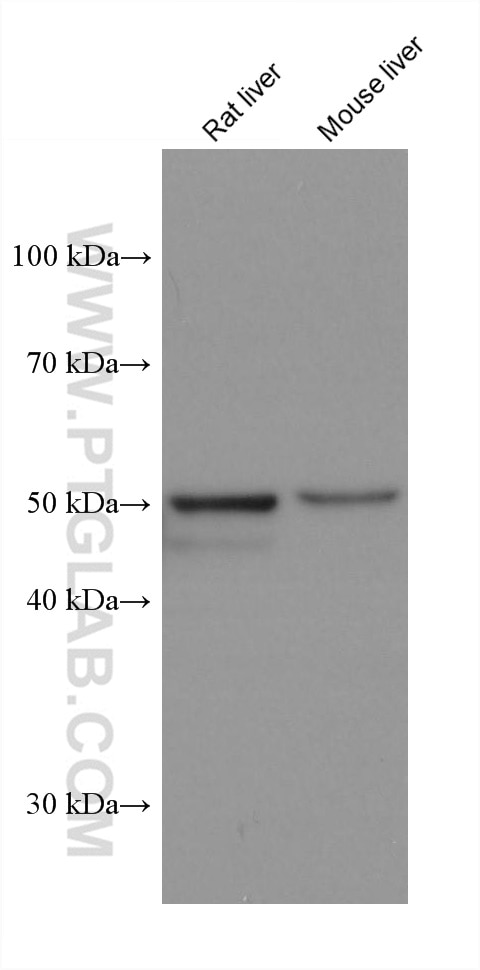
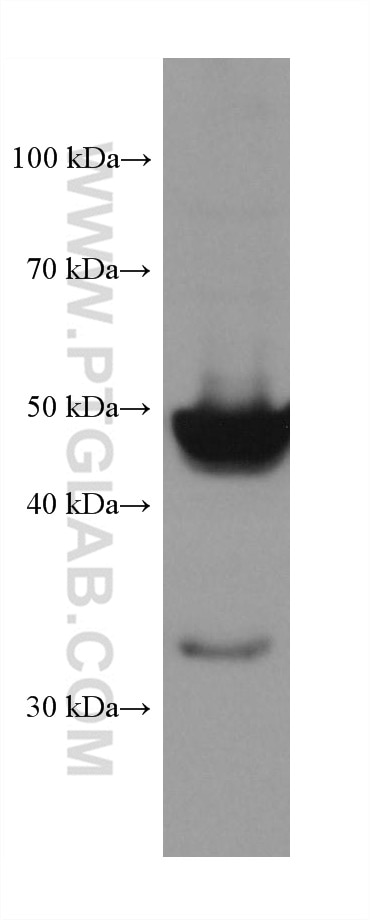
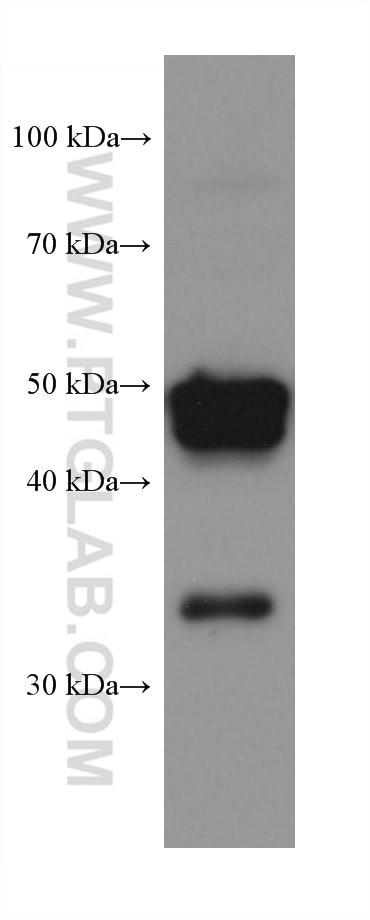
| Positive WB detected in | rat liver tissue, COLO 320 cells, MCF-7 cells, mouse liver tissue |
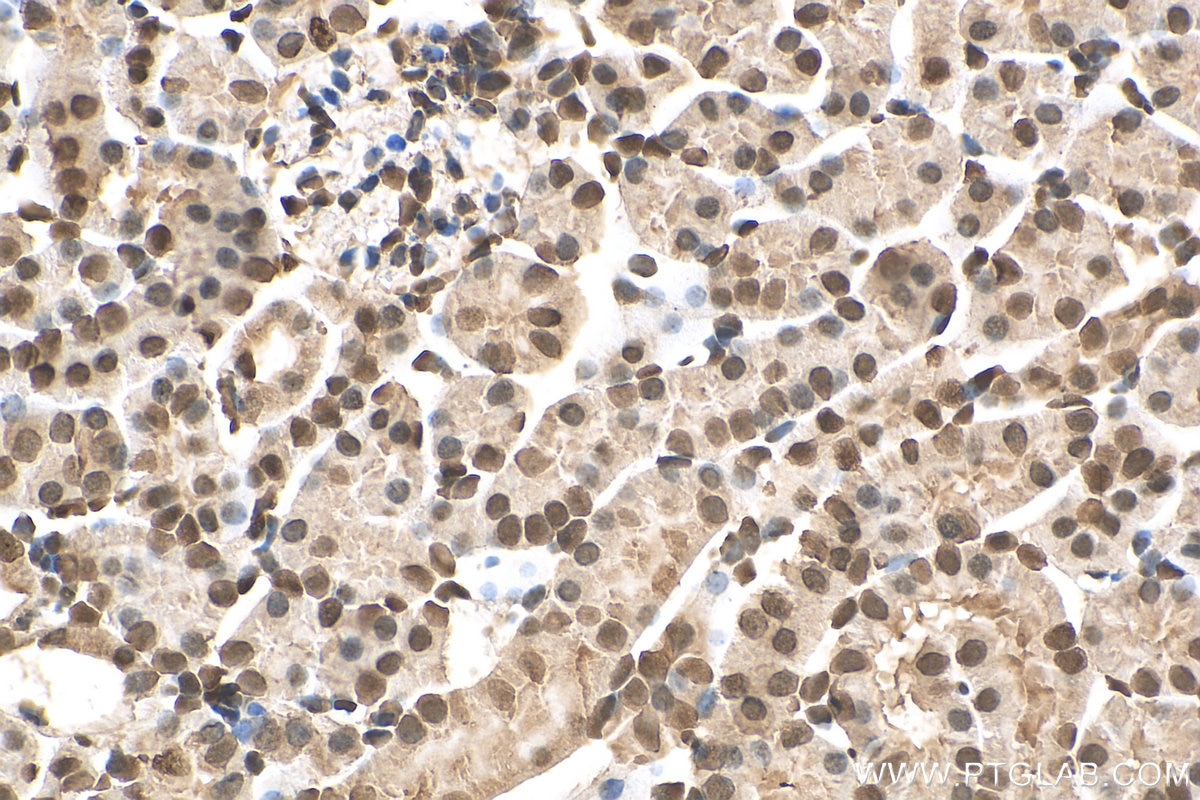
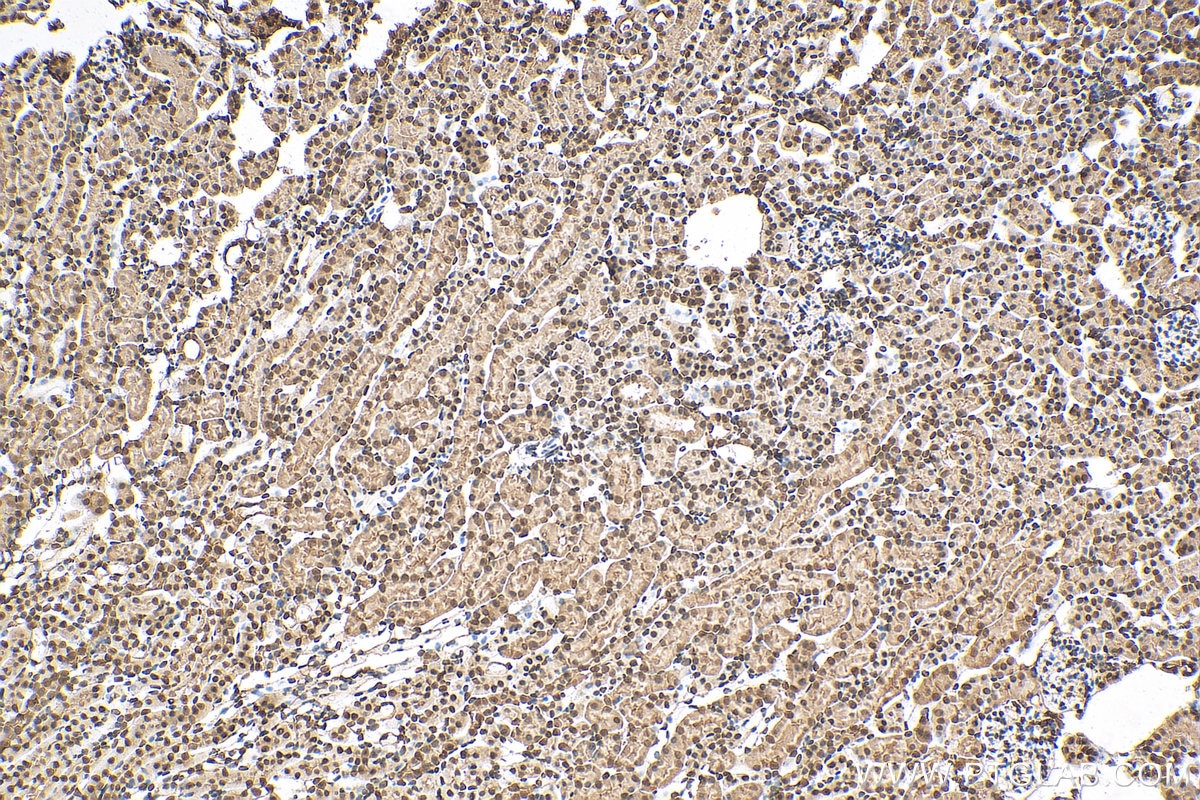
| Positive IHC detected in | mouse kidney tissue Note: suggested antigen retrieval with TE buffer pH 9.0; (*) Alternatively, antigen retrieval may be performed with citrate buffer pH 6.0 |
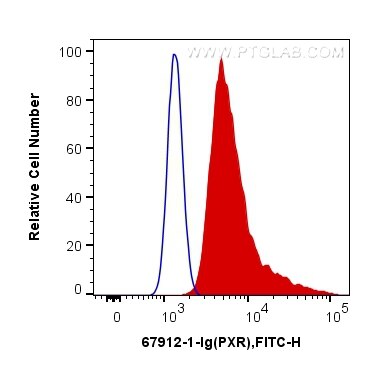
| Positive FC (Intra) detected in | MCF-7 cells |
Recommended dilution
| Application | Dilution |
|---|---|
| Western Blot (WB) | WB : 1:5000-1:50000 |
| Immunohistochemistry (IHC) | IHC : 1:50-1:500 |
| Flow Cytometry (FC) (INTRA) | FC (INTRA) : 0.20 ug per 10^6 cells in a 100 ul suspension |
| It is recommended that this reagent should be titrated in each testing system to obtain optimal results. | |
| Sample-dependent, Check data in validation data gallery. | |
Published Applications
| KD/KO | See 3 publications below |
| WB | See 26 publications below |
| IHC | See 4 publications below |
| IF | See 11 publications below |
| IP | See 1 publications below |
| CoIP | See 1 publications below |
| ChIP | See 1 publications below |
Product Information
67912-1-Ig targets PXR in WB, IHC, IF, FC (Intra), IP, CoIP, ChIP, ELISA applications and shows reactivity with human, mouse, rat samples.
| Tested Reactivity | human, mouse, rat |
| Cited Reactivity | human, mouse, rat, pig |
| Host / Isotype | Mouse / IgG1 |
| Class | Monoclonal |
| Type | Antibody |
| Immunogen |
CatNo: Ag7991 Product name: Recombinant human PXR protein Source: e coli.-derived, PET28a Tag: 6*His Domain: 56-433 aa of BC017304 Sequence: MTCEGCKGFFRRAMKRNARLRCPFRKGACEITRKTRRQCQACRLRKCLESGMKKEMIMSDEAVEERRALIKRKKSERTGTQPLGVQGLTEEQRMMIRELMDAQMKTFDTTFSHFKNFRPGVLSSGCELPESLQAPSREEAAKWSQVRKDLCSLKVSLQLRGEDGSVWNYKPPADSGGKEIFSLLPHMADMSTYMFKGIISFAKVISYFRDLPIEDQISLLKGAAFELCQLRFNTVFNAETGTWECGRLSYCLEDTAGGFQQLLLEPMLKFHYMLKKLQLHEEEYVLMQAISLFSPDRPGVLQHRVVDQLQEQFAITLKSYIECNRPQPAHRFLFLKIMAMLTELRSINAQHTQRLLRIQDIHPFATPLMQELFGITGS 相同性解析による交差性が予測される生物種 |
| Full Name | nuclear receptor subfamily 1, group I, member 2 |
| Calculated molecular weight | 50 kDa |
| Observed molecular weight | 50 kDa |
| GenBank accession number | BC017304 |
| Gene Symbol | PXR |
| Gene ID (NCBI) | 8856 |
| RRID | AB_2918667 |
| Conjugate | Unconjugated |
| Form | |
| Form | Liquid |
| Purification Method | Protein A purification |
| UNIPROT ID | O75469 |
| Storage Buffer | PBS with 0.02% sodium azide and 50% glycerol{{ptg:BufferTemp}}7.3 |
| Storage Conditions | Store at -20°C. Stable for one year after shipment. Aliquoting is unnecessary for -20oC storage. |
Background Information
Pregnane X receptor (PXR; NR1I2), a member of the nuclear receptor superfamily, plays a key role in the induction of genes involved in drug transport and metabolism. It modulates drug transport and metabolism through the regulation of target genes responsible for the transport and conversion of chemicals into metabolites that are more easily eliminated from the body [PMID: 22609277]. It is also emerging as an endobiotic receptor that regulates the inflammatory response. In addition, PXR acts as a transcription factor that activates the transcription of multiple genes involved in the metabolism and secretion of potentially harmful xenobiotics, drugs and endogenous compounds [PMID: 19297428].
Protocols
| Product Specific Protocols | |
|---|---|
| FC protocol for PXR antibody 67912-1-Ig | Download protocol |
| IHC protocol for PXR antibody 67912-1-Ig | Download protocol |
| WB protocol for PXR antibody 67912-1-Ig | Download protocol |
| Standard Protocols | |
|---|---|
| Click here to view our Standard Protocols |
Publications
| Species | Application | Title |
|---|---|---|
Redox Biol Activation of nuclear receptor pregnane-X-receptor protects against abdominal aortic aneurysm by inhibiting oxidative stress | ||
Adv Sci (Weinh) Pregnane X Receptor Activation in Liver Macrophages Protects against Endotoxin-Induced Liver Injury | ||
Adv Sci (Weinh) PXR Activation Relieves Deoxynivalenol-Induced Liver Oxidative Stress Via Malat1 LncRNA m6A Demethylation | ||
Int J Biol Sci Schisandrin B Targets PXR to Enhance Bile Acid Metabolism and Alleviate ANIT-Induced Cholestatic Liver Injury via Dual Pathways. | ||
Int J Biol Sci Integrated single-cell transcriptomics and proteomics elucidate the molecular mechanisms and detoxification strategy of rifampicin-induced hepatotoxicity. | ||
Phytomedicine Panaxytriol upregulates CYP3A4 expression based on the interaction of PXR, CAR, HSP90α, and RXRα. |