
Validation Data Gallery
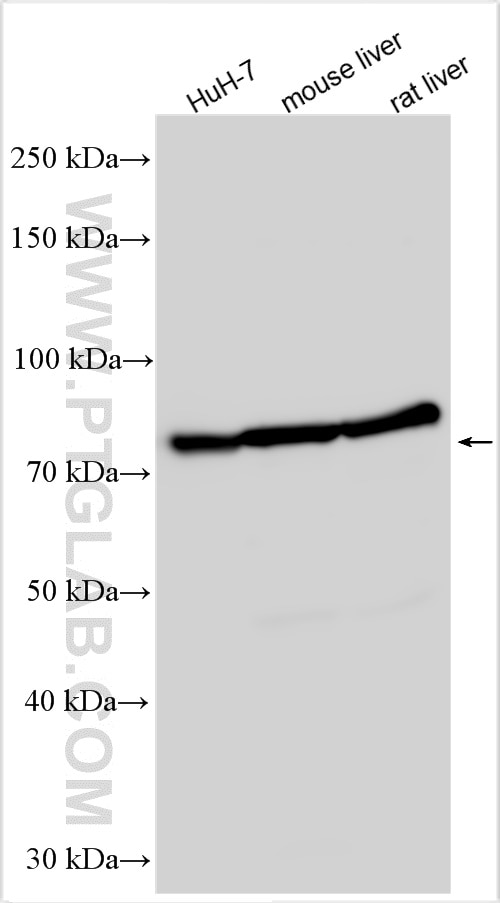
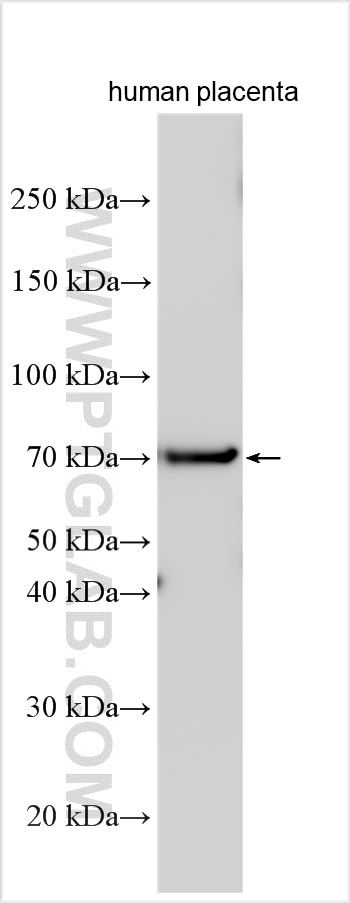
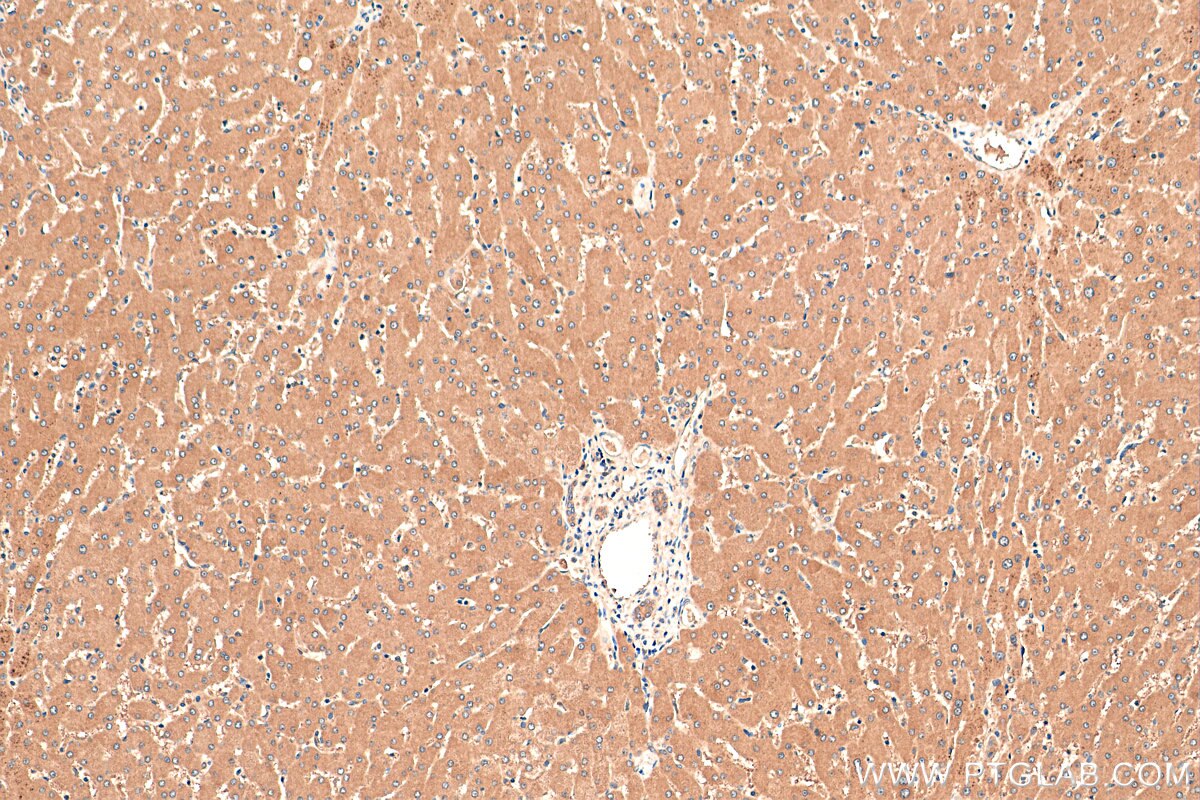
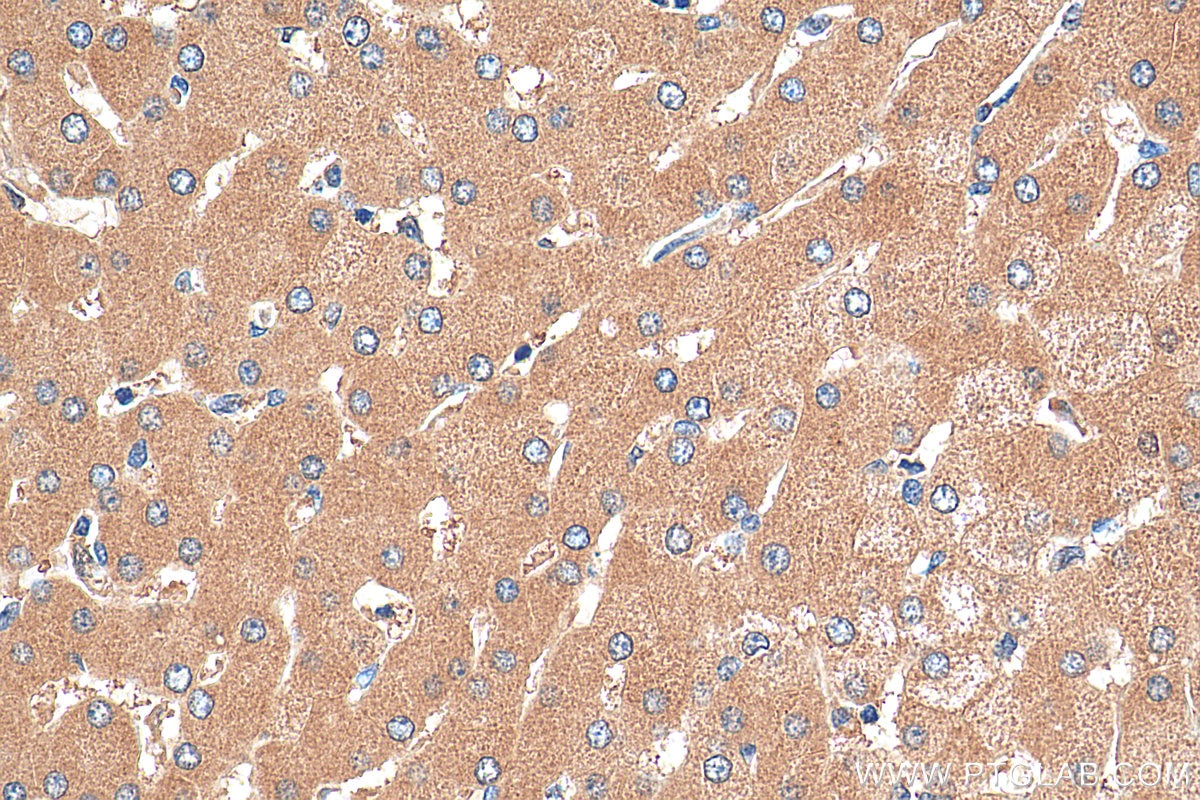
Tested Applications
Recommended dilution
| Application | Dilution |
|---|---|
| It is recommended that this reagent should be titrated in each testing system to obtain optimal results. | |
Product Information
27941-1-PBS targets PTPRD in WB, IHC, Indirect ELISA applications and shows reactivity with human, mouse, rat samples.
| Tested Reactivity | human, mouse, rat |
| Host / Isotype | Rabbit / IgG |
| Class | Polyclonal |
| Type | Antibody |
| Immunogen |
CatNo: Ag27689 Product name: Recombinant human PTPRD protein Source: e coli.-derived, PGEX-4T Tag: GST Domain: 1089-1225 aa of BC106714 Sequence: GNSAGGLQHRVTAKTAPDVLRTKPAFIGKTNLDGMITVQLPEVPANENIKGYYIIIVPLKKSRGKFIKPWESPDEMELDELLKEISRKRRSIRYGREVELKPYIAAHFDVLPTEFTLGDDKHYGGFTNKQLQSGQEY 相同性解析による交差性が予測される生物種 |
| Full Name | protein tyrosine phosphatase, receptor type, D |
| Calculated molecular weight | 1912 aa, 215 kDa |
| Observed molecular weight | 75 kDa, 175 kDa |
| GenBank accession number | BC106714 |
| Gene Symbol | PTPRD |
| Gene ID (NCBI) | 5789 |
| RRID | AB_3086013 |
| Conjugate | Unconjugated |
| Form | |
| Form | Liquid |
| Purification Method | Antigen affinity purification |
| UNIPROT ID | P23468 |
| Storage Buffer | PBS only{{ptg:BufferTemp}}7.3 |
| Storage Conditions | Store at -80°C. |
Background Information
PTPRD is a receptor-type protein tyrosine phosphatase that plays significant roles in various biological processes, including cell adhesion, synaptic function, and signal transduction. PTPRD is highly expressed in the brain, followed by the kidney, ovary, placenta, and intestine. Within the brain, it is found in specific regions, suggesting a role in neurological functions. PTPRD has emerged as a potential therapeutic target for various brain phenotypes and disorders. Its genetic variations have been associated with nervous system phenotypes, and the discovery of the first small molecule inhibitor of PTPRD phosphatase has opened new avenues for therapeutic intervention in addiction and possibly other PTPRD-associated disorders. Additionally, PTPRD is considered a tumor-suppressor gene that is down-regulated in hepatocellular carcinoma, suggesting its role in cancer progression and potential as a therapeutic target. The protein can recognize 175 kDa full length and 75 kDa mature cleavage product (PMID: 19074898, PMID: 25113440).