
Validation Data Gallery
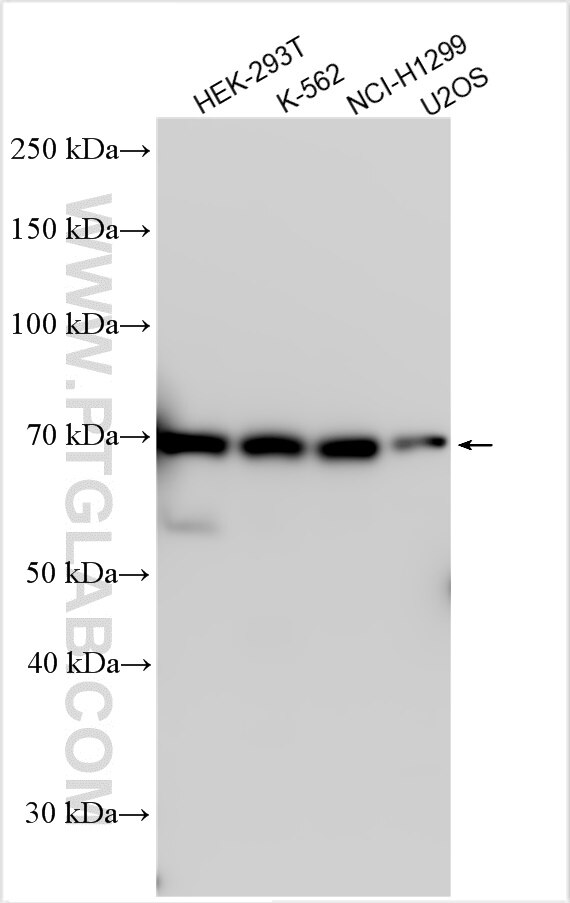
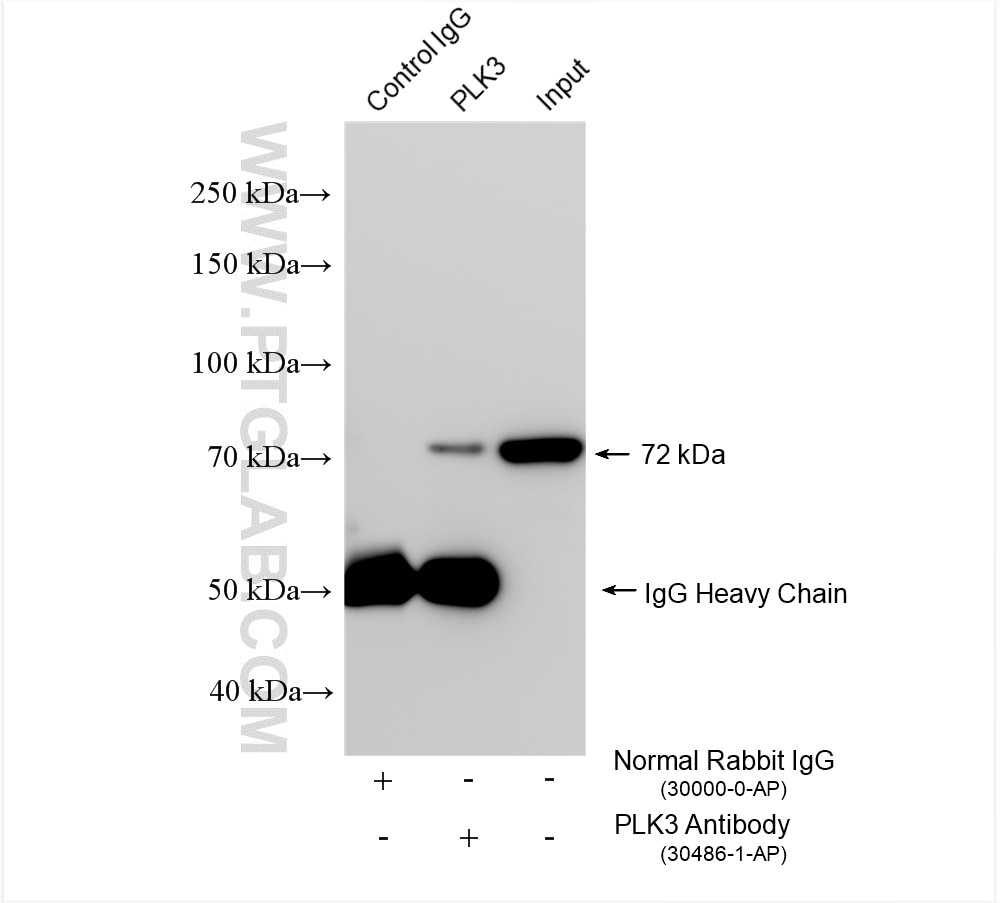
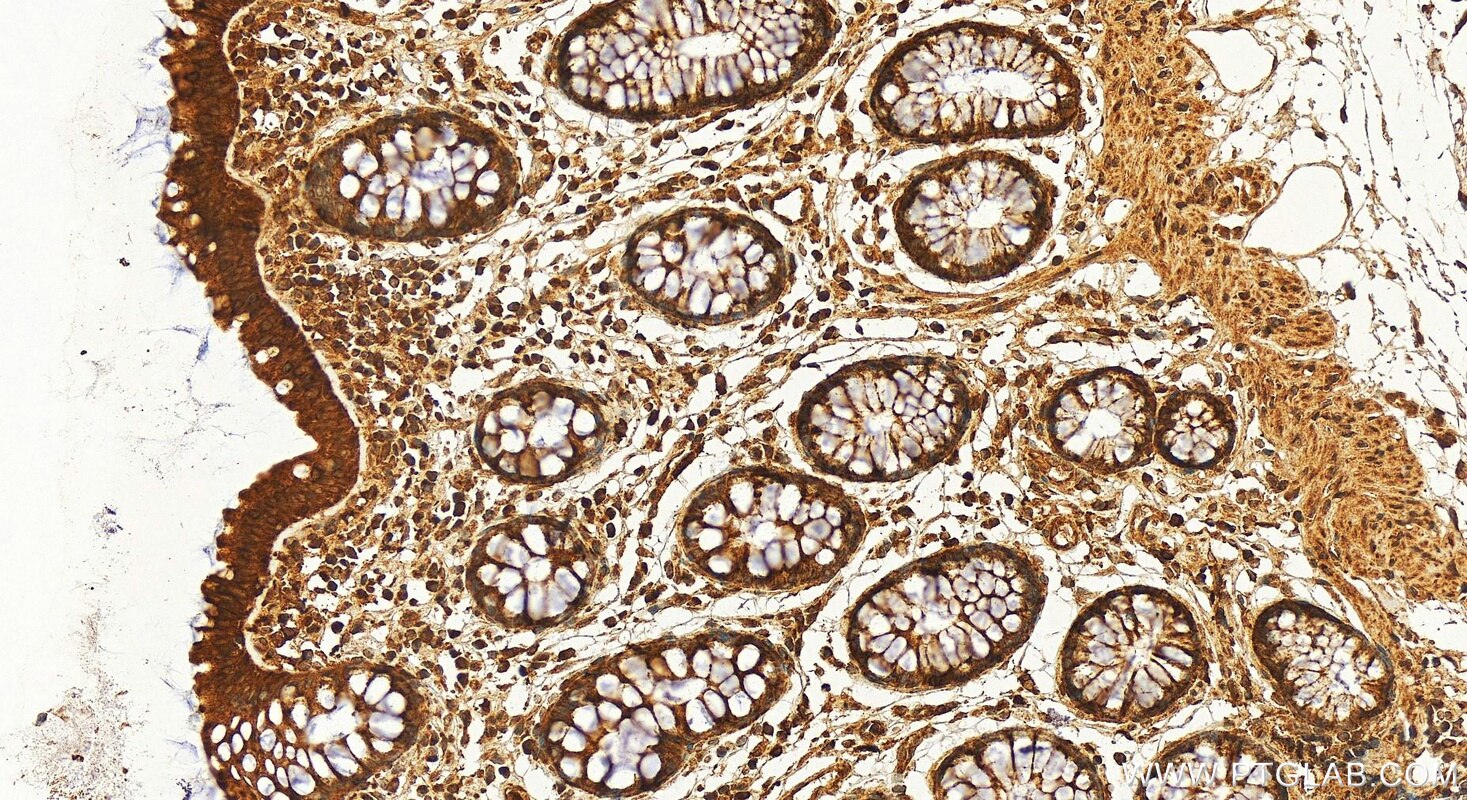
Tested Applications
Recommended dilution
| Application | Dilution |
|---|---|
| It is recommended that this reagent should be titrated in each testing system to obtain optimal results. | |
Product Information
30486-1-PBS targets PLK3 in WB, IHC, IP, Indirect ELISA applications and shows reactivity with human samples.
| Tested Reactivity | human |
| Host / Isotype | Rabbit / IgG |
| Class | Polyclonal |
| Type | Antibody |
| Immunogen |
CatNo: Ag33186 Product name: Recombinant human PLK3 protein Source: e coli.-derived, PGEX-4T Tag: GST Domain: 550-646 aa of BC013899 Sequence: PSVEEVEVPAPPLLLQWVKTDQALLMLFSDGTVQVNFYGDHTKLILSGWEPLLVTFVARNRSACTYLASHLRQLGCSPDLRQRLRYALRLLRDRSPA 相同性解析による交差性が予測される生物種 |
| Full Name | polo-like kinase 3 (Drosophila) |
| Calculated molecular weight | 72 kDa |
| Observed molecular weight | 72 kDa |
| GenBank accession number | BC013899 |
| Gene Symbol | PLK3 |
| Gene ID (NCBI) | 1263 |
| RRID | AB_3669726 |
| Conjugate | Unconjugated |
| Form | |
| Form | Liquid |
| Purification Method | Antigen affinity purification |
| UNIPROT ID | Q9H4B4 |
| Storage Buffer | PBS only{{ptg:BufferTemp}}7.3 |
| Storage Conditions | Store at -80°C. |
Background Information
PLK3(Polo-like kinase 3) is also named as CNK, FNK, PRK and belongs to the protein kinase superfamily. It is involved in the regulation of DNA damage checkpoint as well as in M-phase function. Plk3 physically interacts with p53 and phosphorylates this tumor suppressor protein on serine-20, suggesting that the role of Plk3 in cell cycle progression is mediated, at least in part, through direct regulation of p53(PMID:12548019).