
Validation Data Gallery
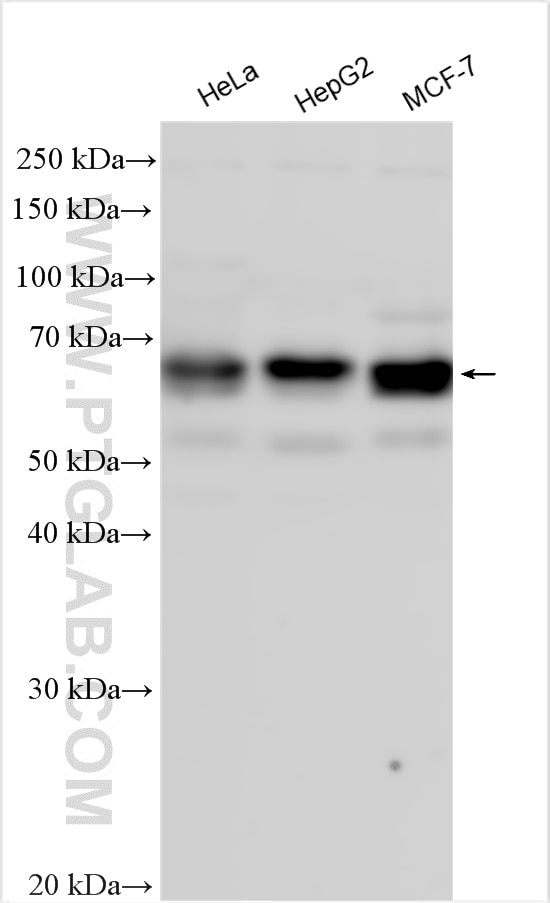
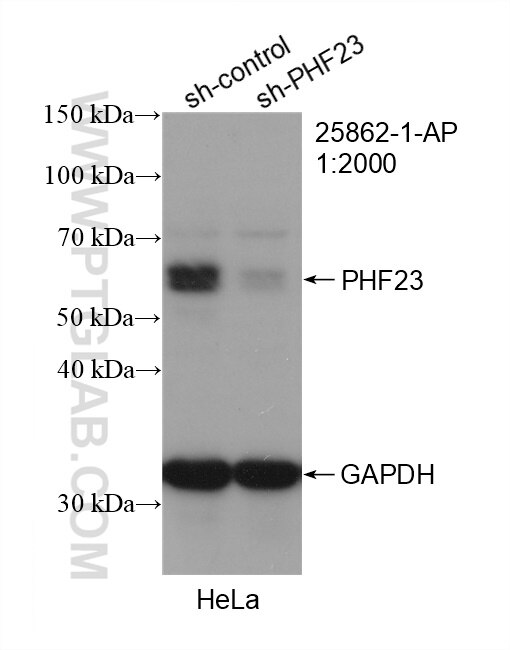
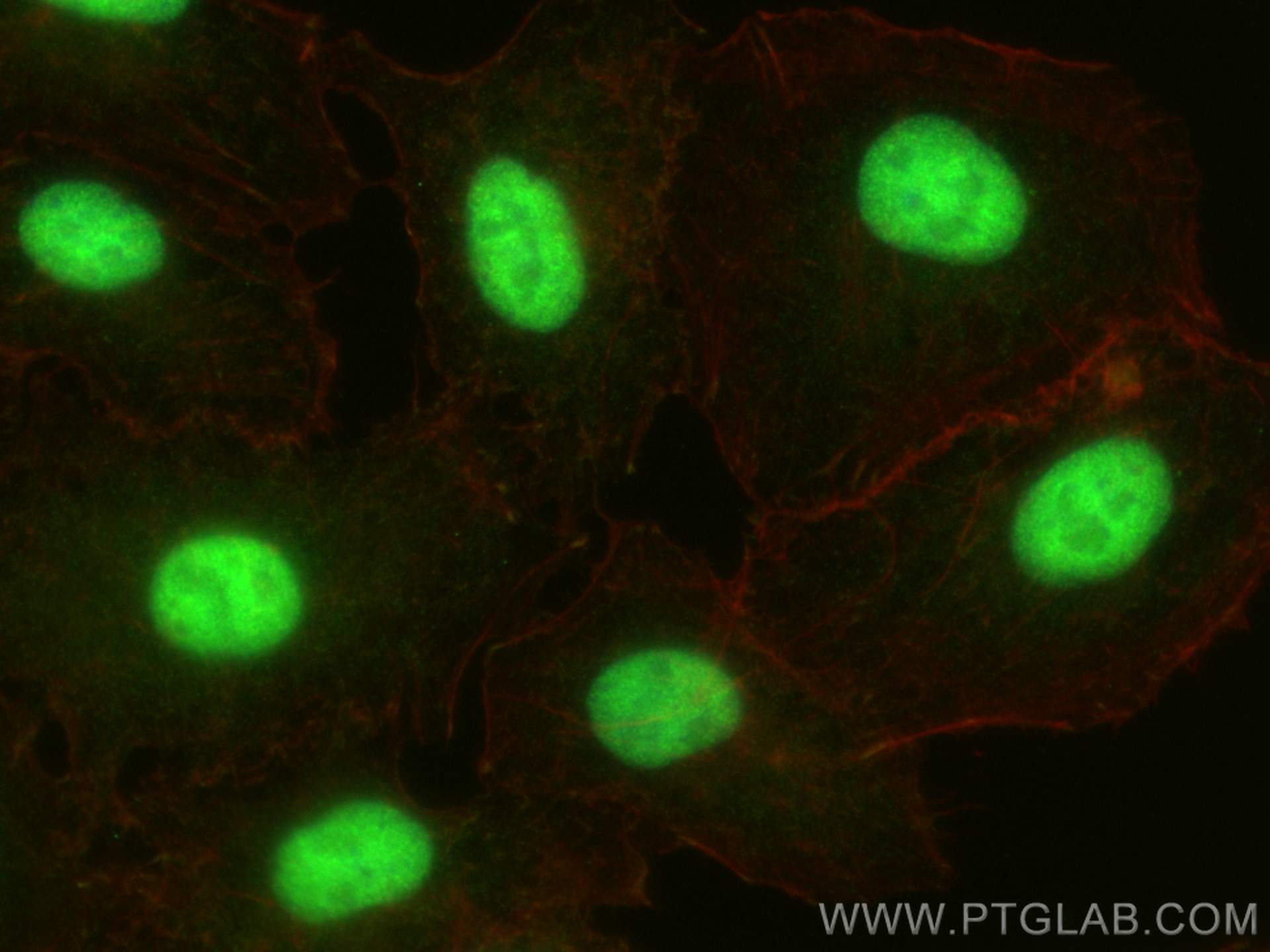
Tested Applications
Recommended dilution
| Application | Dilution |
|---|---|
| It is recommended that this reagent should be titrated in each testing system to obtain optimal results. | |
Product Information
25862-1-PBS targets PHF23 in WB, IF/ICC, Indirect ELISA applications and shows reactivity with human samples.
| Tested Reactivity | human |
| Host / Isotype | Rabbit / IgG |
| Class | Polyclonal |
| Type | Antibody |
| Immunogen |
CatNo: Ag23044 Product name: Recombinant human PHF23 protein Source: e coli.-derived, PGEX-4T Tag: GST Domain: 1-403 aa of BC002509 Sequence: MLEAMAEPSPEDPPPTLKPETQPPEKRRRTIEDFNKFCSFVLAYAGYIPPSKEESDWPASGSSSPLRGESAADSDGWDSAPSDLRTIQTFVKKAKSSKRRAAQAGPTQPGPPRSTFSRLQAPDSATLLEKMKLKDSLFDLDGPKVASPLSPTSLTHTSRPPAALTPVPLSQGDLSHPPRKKDRKNRKLGPGAGAGFGVLRRPRPTPGDGEKRSRIKKSKKRKLKKAERGDRLPPPGPPQAPPSDTDSEEEEEEEEEEEEEEMATVVGGEAPVPVLPTPPEAPRPPATVHPEGVPPADSESKEVGSTETSQDGDASSSEGEMRVMDEDIMVESGDDSWDLITCYCRKPFAGRPMIECSLCGTWIHLSCAKIKKTNVPDFFYCQKCKELRPEARRLGGPPKSGEP 相同性解析による交差性が予測される生物種 |
| Full Name | PHD finger protein 23 |
| Calculated molecular weight | 403 aa, 44 kDa |
| Observed molecular weight | ~65 kDa |
| GenBank accession number | BC002509 |
| Gene Symbol | PHF23 |
| Gene ID (NCBI) | 79142 |
| RRID | AB_3085824 |
| Conjugate | Unconjugated |
| Form | |
| Form | Liquid |
| Purification Method | Antigen affinity purification |
| UNIPROT ID | Q9BUL5 |
| Storage Buffer | PBS only{{ptg:BufferTemp}}7.3 |
| Storage Conditions | Store at -80°C. |
Background Information
PHD finger protein 23 (PHF23), also known as hJUNE-1b, belongs to the PHF23 family. As a putative epigenetic reader, the PHD domain of PHF23 specifically binds to tri-methylated lysine 4 of histone H3 (H3K4me3). PHF23 is widely expressed in human tissues and various cell lines and exerts a negative effect on autophagy by promoting the degradation of E3 ligase LRSAM1 (leucine-rich repeat and sterile alpha motif containing 1) (PMID: 32978226, 32380078). The observed molecular weight of PHF23 is ~65 kDa, which may be caused by post-translational modification. The specificity of this antibody was demonstrated by siRNA-mediated knockdown of target protein.