
Validation Data Gallery



Tested Applications
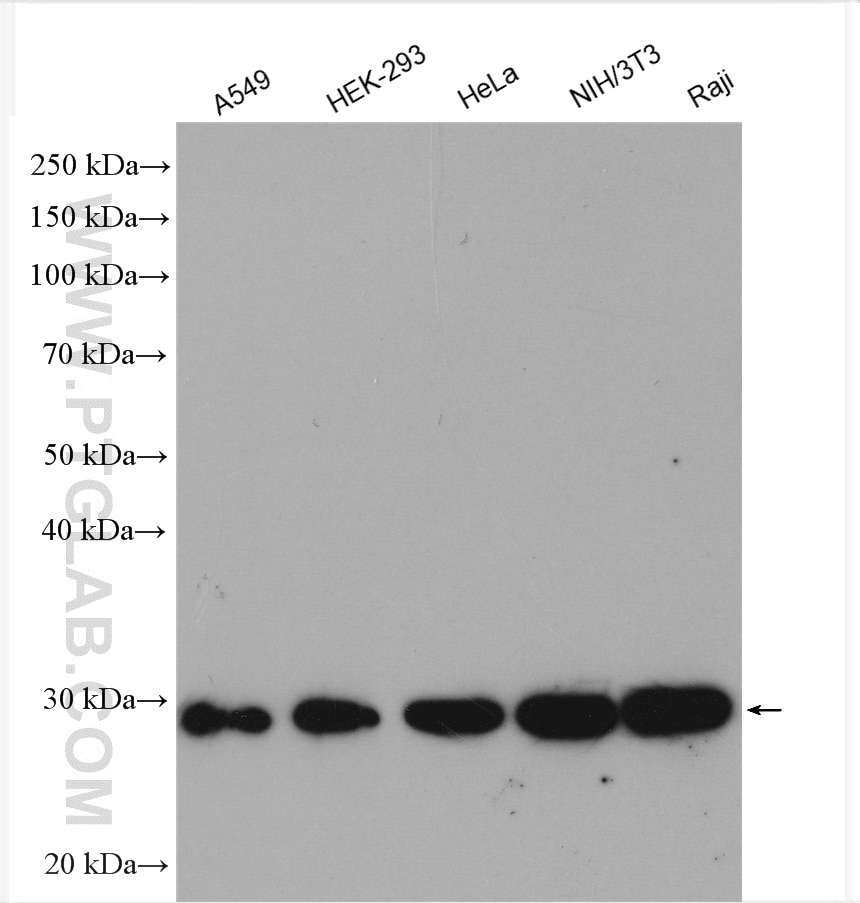
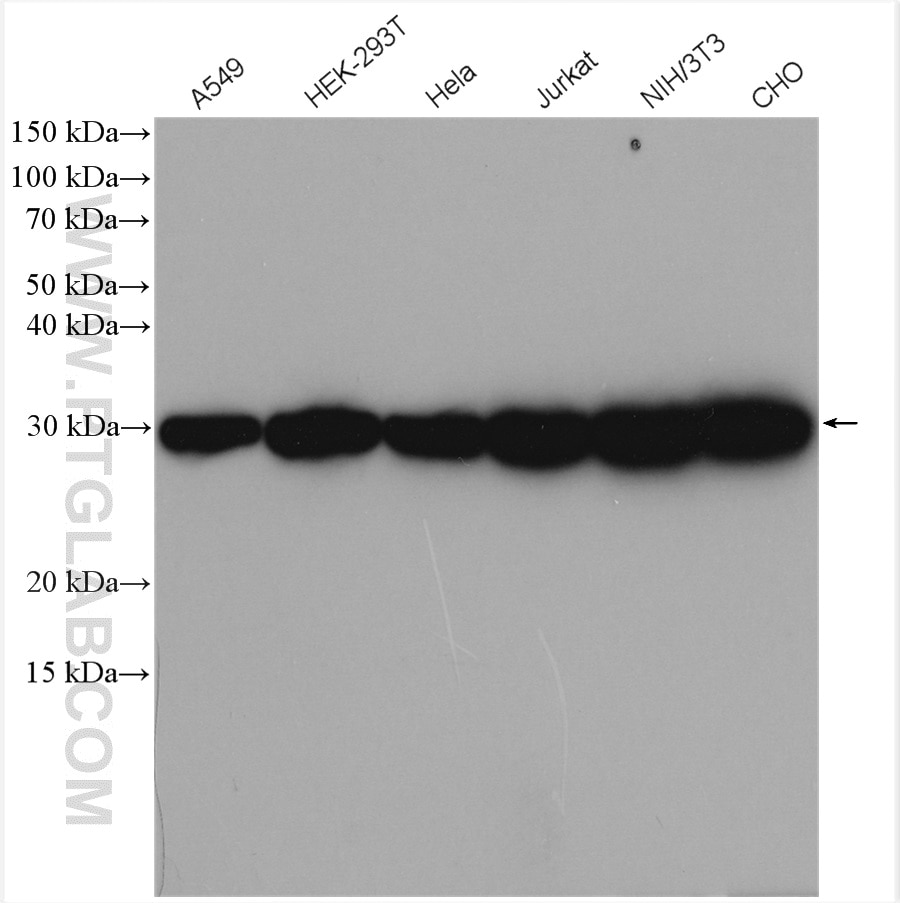
| Positive WB detected in | A549 cells, HEK-293 cells, NIH/3T3 cells, Raji cells, HeLa cells, HEK-293T cells, Jurkat cells, CHO cells |
| Positive IP detected in | HeLa cells |
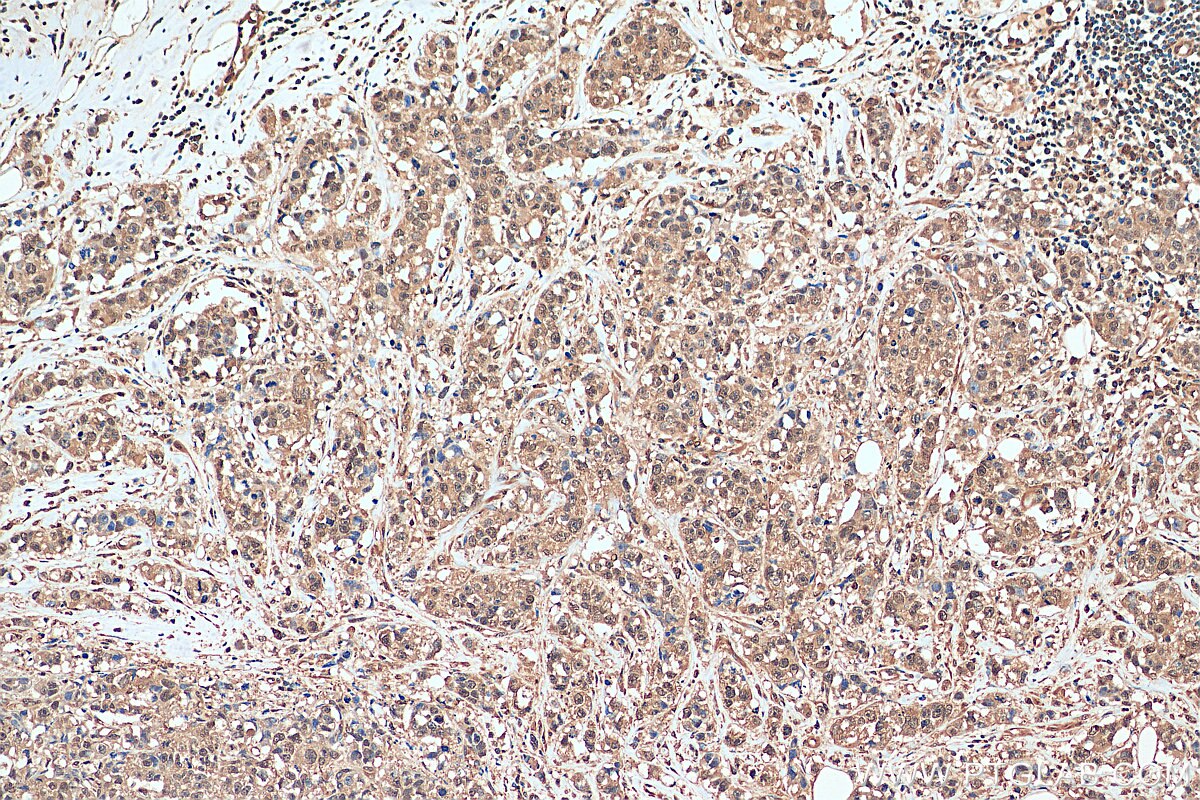
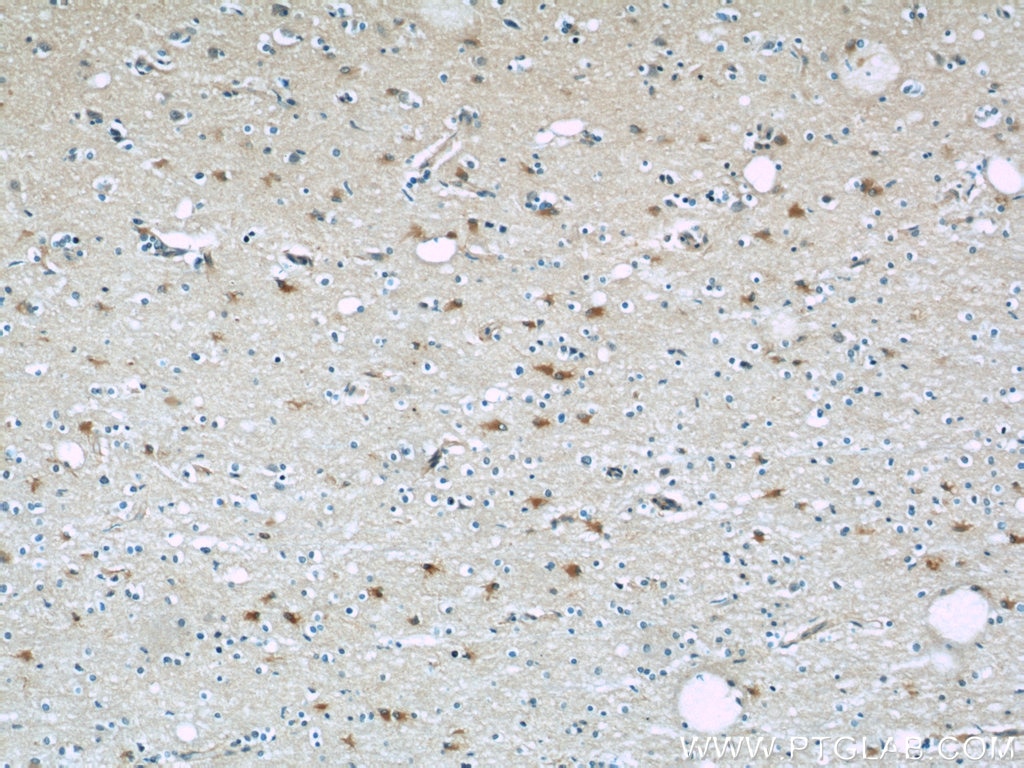
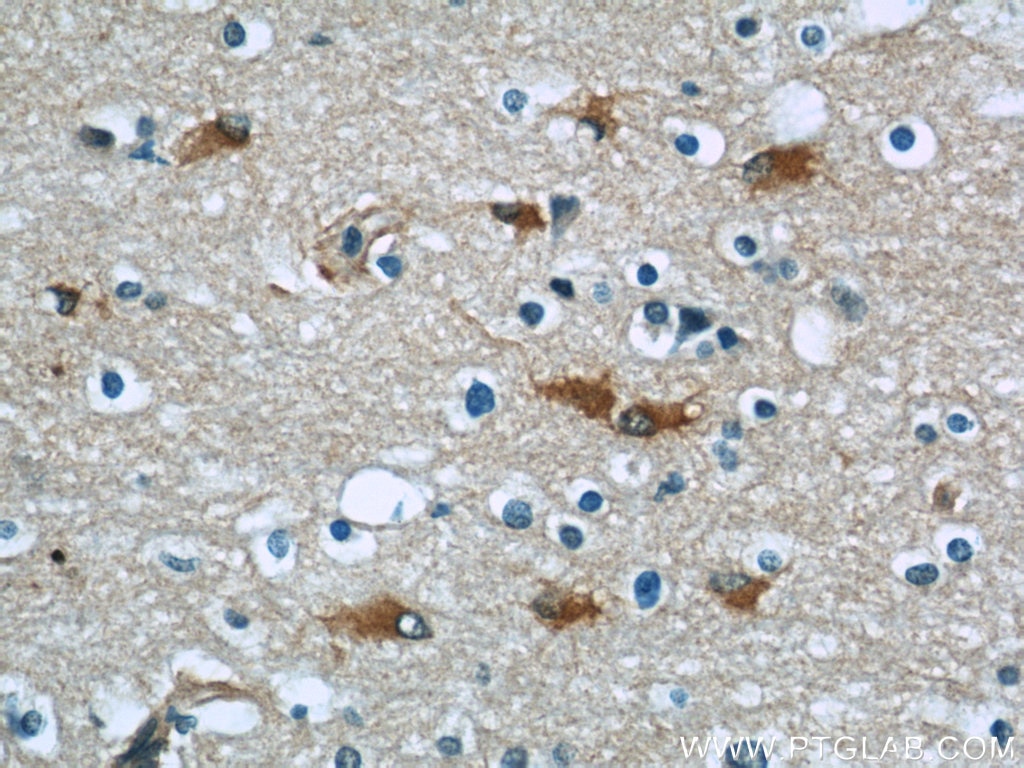
| Positive IHC detected in | human normal colon, human brain tissue, human breast cancer tissue Note: suggested antigen retrieval with TE buffer pH 9.0; (*) Alternatively, antigen retrieval may be performed with citrate buffer pH 6.0 |
| Positive IF/ICC detected in | A549 cells |
Recommended dilution
| Application | Dilution |
|---|---|
| Western Blot (WB) | WB : 1:2000-1:12000 |
| Immunoprecipitation (IP) | IP : 0.5-4.0 ug for 1.0-3.0 mg of total protein lysate |
| Immunohistochemistry (IHC) | IHC : 1:600-1:2400 |
| Immunofluorescence (IF)/ICC | IF/ICC : 1:200-1:800 |
| It is recommended that this reagent should be titrated in each testing system to obtain optimal results. | |
| Sample-dependent, Check data in validation data gallery. | |
Published Applications
| KD/KO | See 6 publications below |
| WB | See 44 publications below |
| IHC | See 4 publications below |
| IF | See 5 publications below |
| IP | See 1 publications below |
| CoIP | See 1 publications below |
Product Information
16126-1-AP targets PGAM1 in WB, IHC, IF/ICC, IP, CoIP, ELISA applications and shows reactivity with human, mouse, rat samples.
| Tested Reactivity | human, mouse, rat |
| Cited Reactivity | human, mouse, rat |
| Host / Isotype | Rabbit / IgG |
| Class | Polyclonal |
| Type | Antibody |
| Immunogen |
CatNo: Ag9110 Product name: Recombinant human PGAM1 protein Source: e coli.-derived, PGEX-4T Tag: GST Domain: 1-254 aa of BC011678 Sequence: MAAYKLVLIRHGESAWNLENRFSGWYDADLSPAGHEEAKRGGQALRDAGYEFDICFTSVQKRAIRTLWTVLDAIDQMWLPVVRTWRLNERHYGGLTGLNKAETAAKHGEAQVKIWRRSYDVPPPPMEPDHPFYSNISKDRRYADLTEDQLPSCESLKDTIARALPFWNEEIVPQIKEGKRVLIAAHGNSLRGIVKHLEGLSEEAIMELNLPTGIPIVYELDKNLKPIKPMQFLGDEETVRKAMEAVAAQGKAKK 相同性解析による交差性が予測される生物種 |
| Full Name | phosphoglycerate mutase 1 (brain) |
| Calculated molecular weight | 254 aa, 29 kDa |
| Observed molecular weight | 29 kDa |
| GenBank accession number | BC011678 |
| Gene Symbol | PGAM1 |
| Gene ID (NCBI) | 5223 |
| RRID | AB_2160786 |
| Conjugate | Unconjugated |
| Form | |
| Form | Liquid |
| Purification Method | Antigen affinity purification |
| UNIPROT ID | P18669 |
| Storage Buffer | PBS with 0.02% sodium azide and 50% glycerol{{ptg:BufferTemp}}7.3 |
| Storage Conditions | Store at -20°C. Stable for one year after shipment. Aliquoting is unnecessary for -20oC storage. |
Background Information
PGAM1(phosphoglycerate mutase 1) is also named as PGAMA,PGAM-B and belongs to the phosphoglycerate mutase family. Phosphoglycerate mutase is widely distributed in mammalian tissues where it catalyzes the reversible reaction of 3-phosphoglycerate (3-PGA) to 2-phosphoglycerate (2-PGA) in the glycolytic pathway. The homodimer PGAM1 is expressed mainly in liver, kidney, brain and overexpressed in a variety of human cancers, including breast carcinoma, colorectal cancer, lung cancer, prostate cancer, oral squamous cell carcinoma, esophageal squamous cell carcinomas and also associated with certain virus infection. PGAM1 could be developed as a useful diagnostic biomarker, as well as a potential therapeutic target for hepatocellular carcinoma (PMID:20403181). This antibody may also recognize PGAM2 and PGAM4 due to the high homology.
Protocols
| Product Specific Protocols | |
|---|---|
| IF protocol for PGAM1 antibody 16126-1-AP | Download protocol |
| IHC protocol for PGAM1 antibody 16126-1-AP | Download protocol |
| IP protocol for PGAM1 antibody 16126-1-AP | Download protocol |
| WB protocol for PGAM1 antibody 16126-1-AP | Download protocol |
| Standard Protocols | |
|---|---|
| Click here to view our Standard Protocols |
Publications
| Species | Application | Title |
|---|---|---|
Cell Metab The diapause-like colorectal cancer cells induced by SMC4 attenuation are characterized by low proliferation and chemotherapy insensitivity
| ||
Cell Res cMyc-mediated activation of serine biosynthesis pathway is critical for cancer progression under nutrient deprivation conditions. | ||
Cell Res Low glucose metabolite 3-phosphoglycerate switches PHGDH from serine synthesis to p53 activation to control cell fate
| ||
Nat Cell Biol The glycolytic enzyme PGAM1 functions as a metabolic-autophagy checkpoint to coordinate growth and stress tolerance | ||
Cancer Res Exon Skipping of Ste20-Like Kinase Enhances Glycolysis and Tumor Progression by Activating Enolase 1-Mediated Phosphoenolpyruvate Production |