
Validation Data Gallery
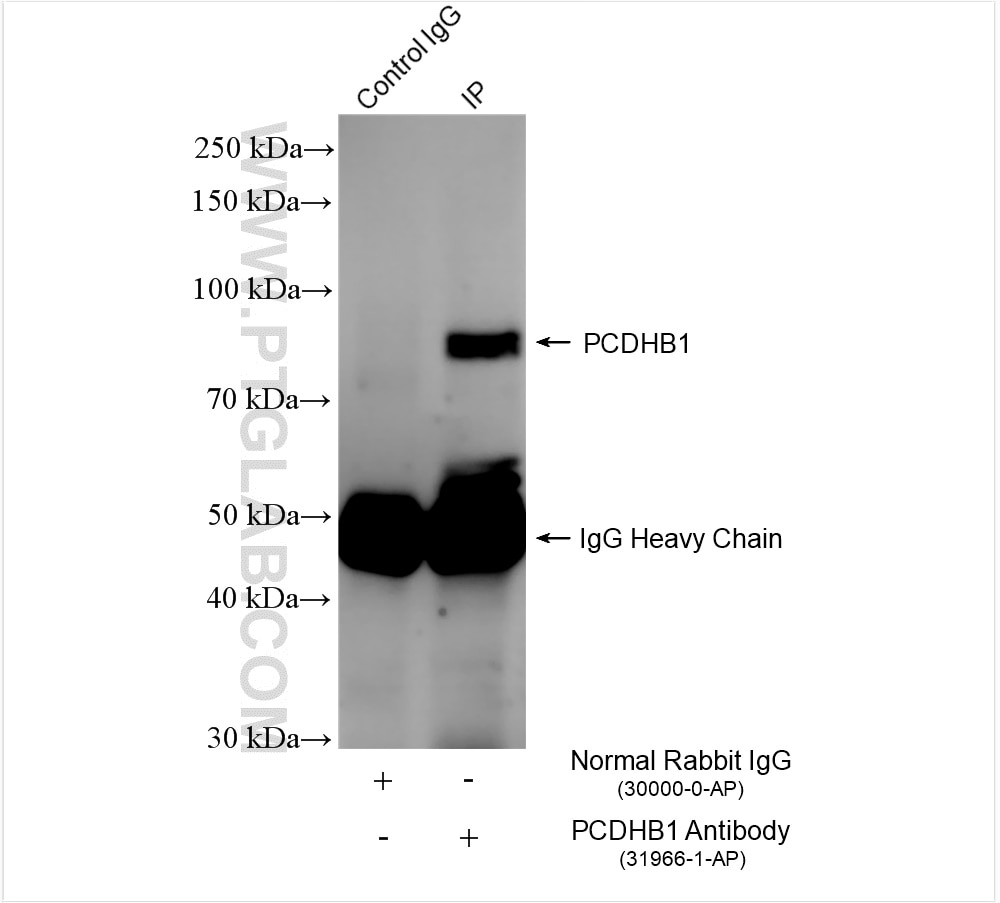
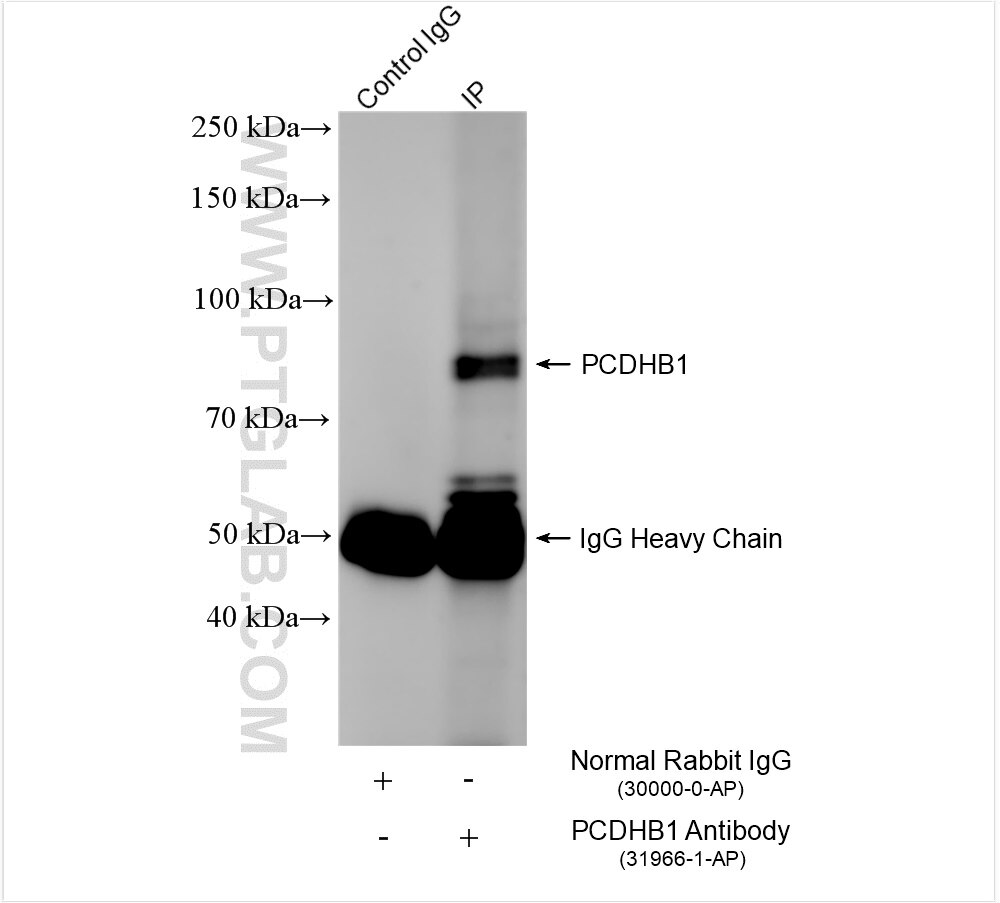
Tested Applications
Recommended dilution
| Application | Dilution |
|---|---|
| It is recommended that this reagent should be titrated in each testing system to obtain optimal results. | |
Product Information
31966-1-PBS targets PCDHB1 in IP, Indirect ELISA applications and shows reactivity with human, mouse, rat samples.
| Tested Reactivity | human, mouse, rat |
| Host / Isotype | Rabbit / IgG |
| Class | Polyclonal |
| Type | Antibody |
| Immunogen |
CatNo: Ag35435 Product name: Recombinant human PCDHB1 protein Source: e coli.-derived, PGEX-4T Tag: GST Domain: 29-320 aa of BC112096 Sequence: TTIRYSVAEEMESGSFVANVAKDLGLEVGKLAARGARLVSEGNKMHFRLHRKTGDLFVKEKLDRESLCGKADPCVLHFEVVLVEPLQSFRAEVRVFDINDNAPVFLNKEPLLKIPESTPLGSRFPLQSAQDLDVGLNGLQNYTLSANGYFHLHTRFCSHGPKYAELVLNKPLDREEQPEVNLTITAVDGGSPPKSGTAHIHVVVLDVNDHVPQFSRLVYRAQVSENSPNGSLVATVTAVDLDEGTNKAITYSLAQNPEAILKTFQIDPQNGEVRLRGPLDFEAIETYDIDIQ 相同性解析による交差性が予測される生物種 |
| Full Name | protocadherin beta 1 |
| Observed molecular weight | 80 kDa |
| GenBank accession number | BC112096 |
| Gene Symbol | PCDHB1 |
| Gene ID (NCBI) | 29930 |
| RRID | AB_3742500 |
| Conjugate | Unconjugated |
| Form | |
| Form | Liquid |
| Purification Method | Antigen affinity Purification |
| UNIPROT ID | Q9Y5F3 |
| Storage Buffer | PBS only{{ptg:BufferTemp}}7.3 |
| Storage Conditions | Store at -80°C. |
Background Information
PCDHB1 (Protocadherin Beta 1) is a member of the protocadherin beta gene cluster, which belongs to the Cadherin superfamily and is expressed primarily in the nervous system. It encodes a cell adhesion protein containing six extracellular adhesion protein structural domains and a distinct cytoplasmic tail involved in the establishment and function of intercellular junctions. PCDHB1 plays an important role in neurodevelopment, and its aberrant expression has been associated with a variety of neurodevelopmental disorders, for example, PCDHB1 expression is upregulated in the brains of patients with Rett syndrome, which may be related to the neuropathological features of the disease. In addition, members of the PCDHB1 gene cluster are involved in neuronal self-recognition, avoidance, and connection establishment with other neurons.