
Validation Data Gallery
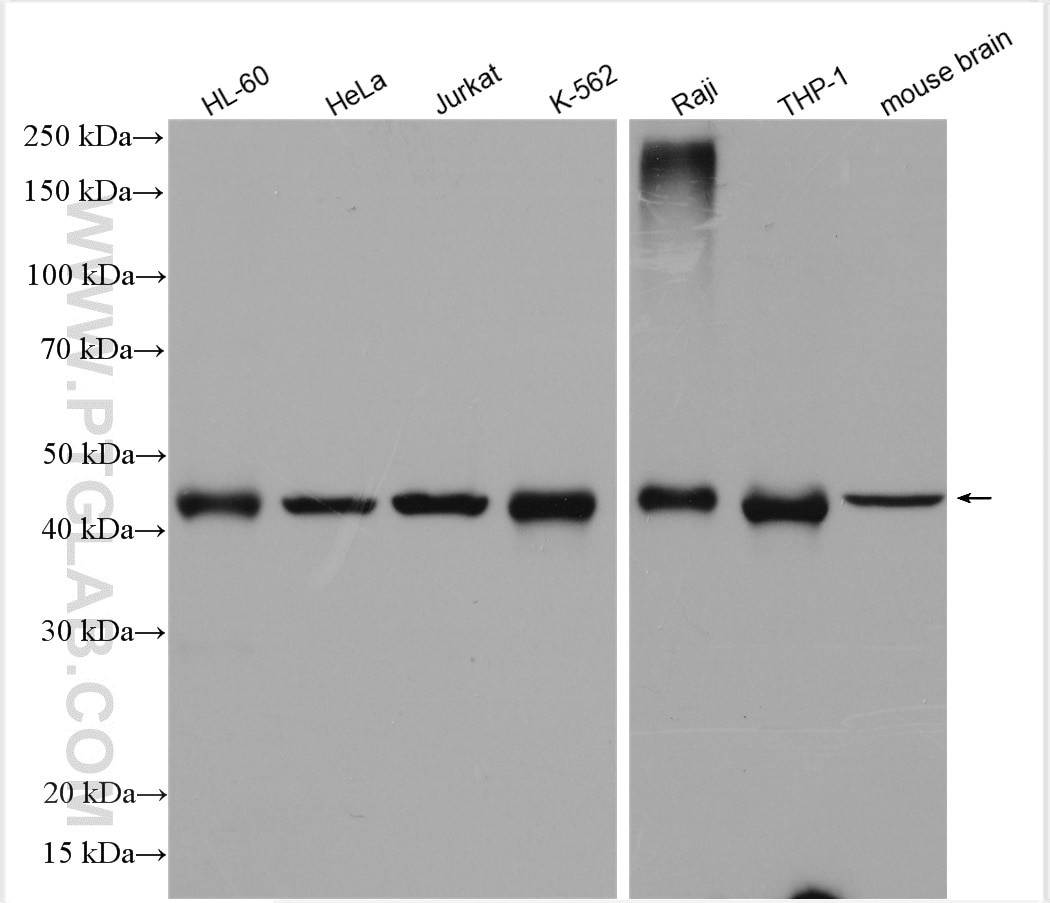
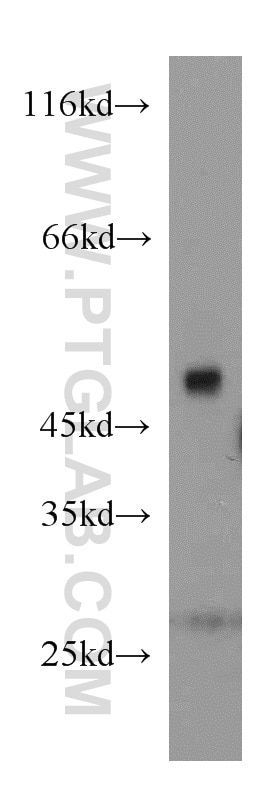
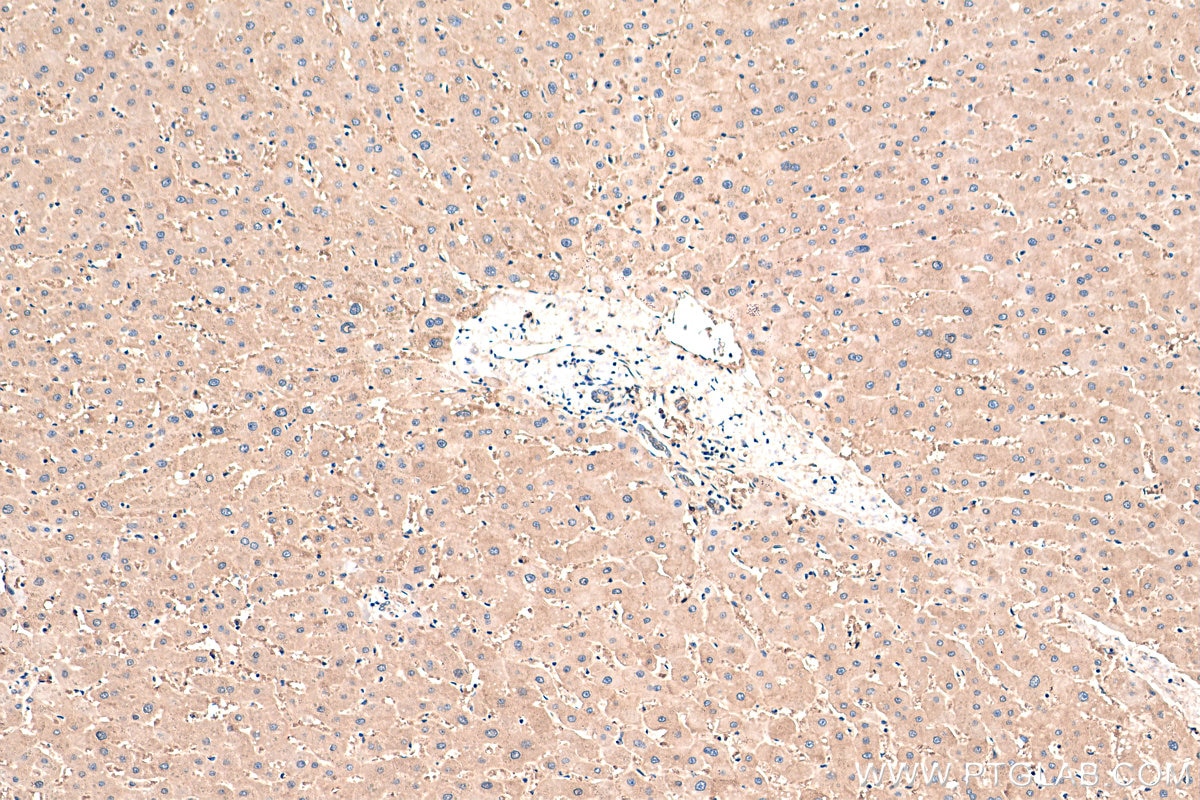
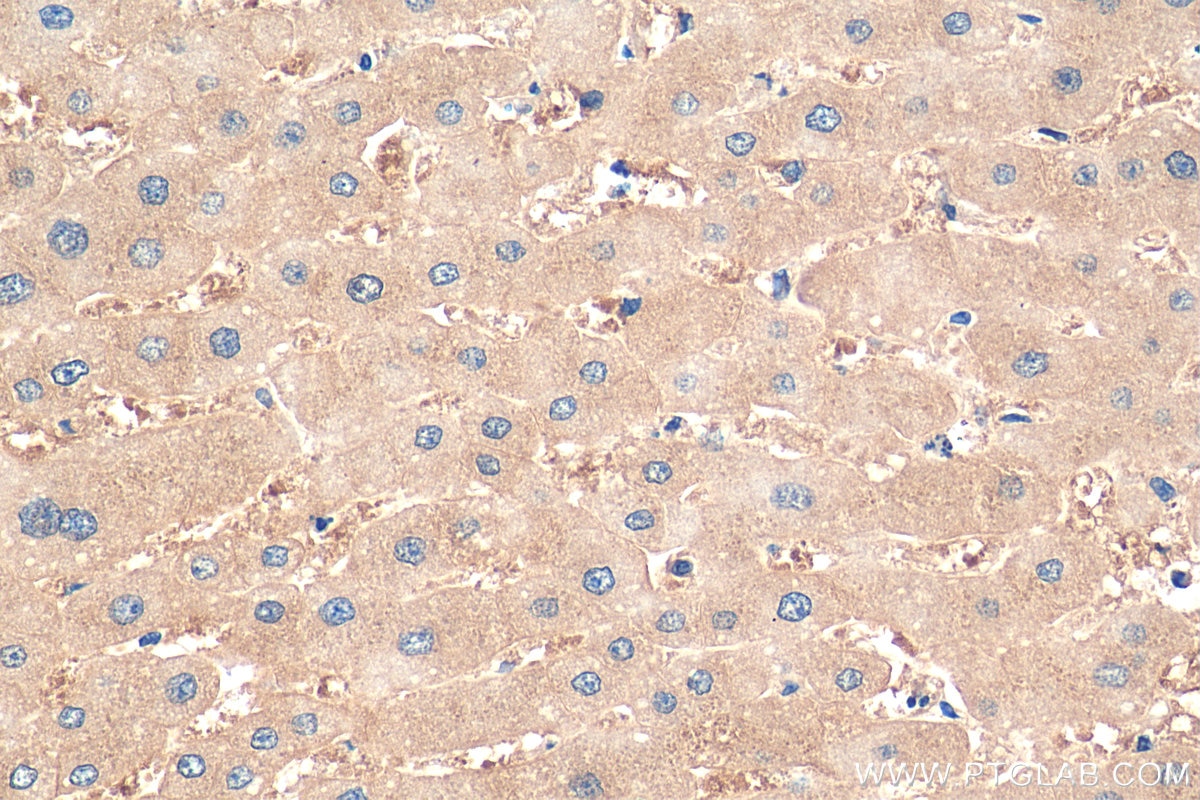
Tested Applications
| Positive WB detected in | HL-60 cells, mouse heart tissue, HeLa cells, Jurkat cells, K-562 cells, Raji cells, THP-1 cells, mouse brain tissue |
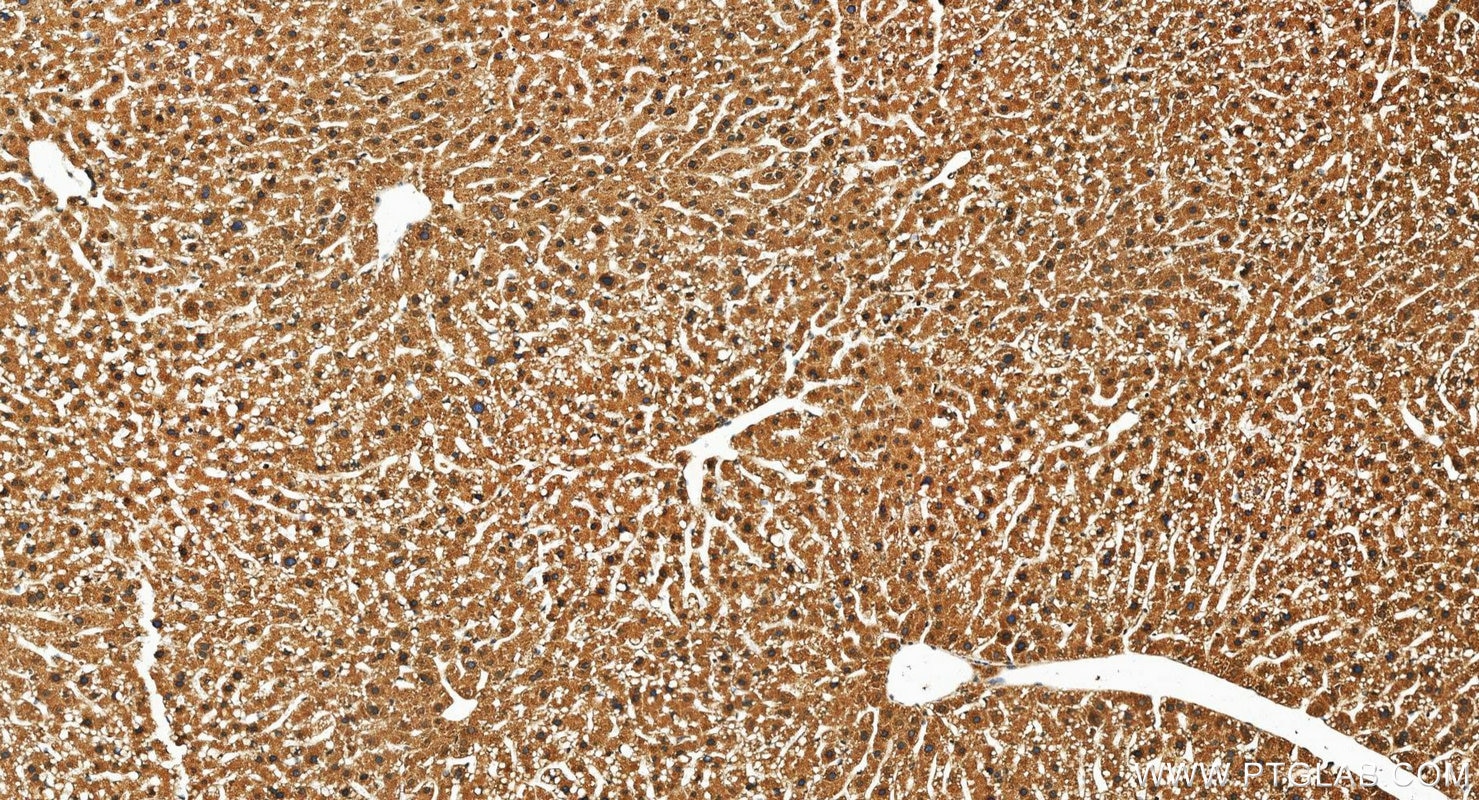
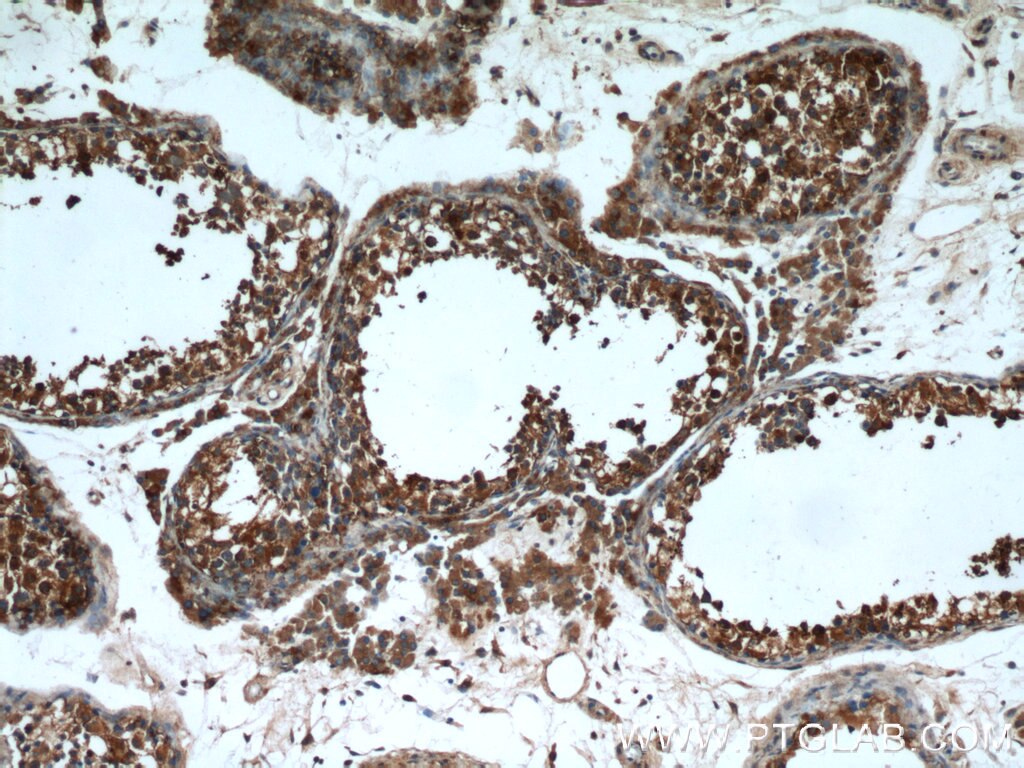
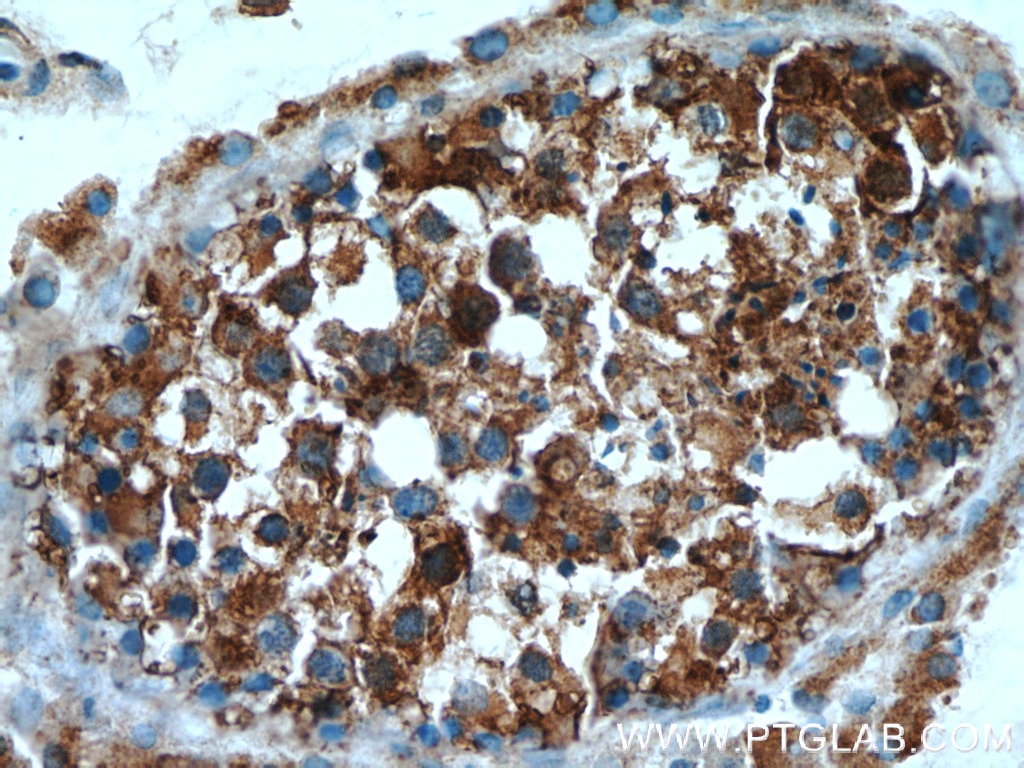
| Positive IHC detected in | human liver tissue, human testis tissue Note: suggested antigen retrieval with TE buffer pH 9.0; (*) Alternatively, antigen retrieval may be performed with citrate buffer pH 6.0 |
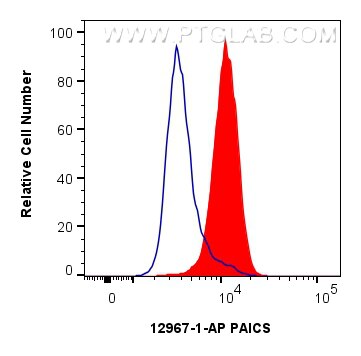
| Positive FC (Intra) detected in | HeLa cells |
Recommended dilution
| Application | Dilution |
|---|---|
| Western Blot (WB) | WB : 1:1000-1:8000 |
| Immunohistochemistry (IHC) | IHC : 1:50-1:500 |
| Flow Cytometry (FC) (INTRA) | FC (INTRA) : 0.25 ug per 10^6 cells in a 100 µl suspension |
| It is recommended that this reagent should be titrated in each testing system to obtain optimal results. | |
| Sample-dependent, Check data in validation data gallery. | |
Published Applications
| KD/KO | See 4 publications below |
| WB | See 12 publications below |
| IHC | See 5 publications below |
| IF | See 4 publications below |
| IP | See 1 publications below |
| CoIP | See 1 publications below |
Product Information
12967-1-AP targets PAICS in WB, IHC, IF/ICC, IP, CoIP, ELISA applications and shows reactivity with human, mouse samples.
| Tested Reactivity | human, mouse |
| Cited Reactivity | human, mouse |
| Host / Isotype | Rabbit / IgG |
| Class | Polyclonal |
| Type | Antibody |
| Immunogen |
CatNo: Ag3621 Product name: Recombinant human PAICS protein Source: e coli.-derived, PGEX-4T Tag: GST Domain: 75-425 aa of BC010273 Sequence: AFTRKCGETAFIAPQCEMIPIEWVCRRIATGSFLKRNPGVKEGYKFYPPKVELFFKDDANNDPQWSEEQLIAAKFCFAGLLIGQTEVDIMSHATQAIFEILEKSWLPQNCTLVDMKIEFGVDVTTKEIVLADVIDNDSWRLWPSGDRSQQKDKQSYRDLKEVTPEGLQMVKKNFEWVAERVELLLKSESQCRVVVLMGSTSDLGHCEKIKKACGNFGIPCELRVTSAHKGPDETLRIKAEYEGDGIPTVFVAVAGRSNGLGPVMSGNTAYPVISCPPLTPDWGVQDVWSSLRLPSGLGCSTVLSPEGSAQFAAQIFGLSNHLVWSKLRASILNTWISLKQADKKIRECNL 相同性解析による交差性が予測される生物種 |
| Full Name | phosphoribosylaminoimidazole carboxylase, phosphoribosylaminoimidazole succinocarboxamide synthetase |
| Calculated molecular weight | 425 aa, 47 kDa |
| Observed molecular weight | 47 kDa |
| GenBank accession number | BC010273 |
| Gene Symbol | PAICS |
| Gene ID (NCBI) | 10606 |
| RRID | AB_10638449 |
| Conjugate | Unconjugated |
| Form | |
| Form | Liquid |
| Purification Method | Antigen affinity purification |
| UNIPROT ID | P22234 |
| Storage Buffer | PBS with 0.02% sodium azide and 50% glycerol{{ptg:BufferTemp}}7.3 |
| Storage Conditions | Store at -20°C. Stable for one year after shipment. Aliquoting is unnecessary for -20oC storage. |
Background Information
PAICS is also named as ADE2(Multifunctional protein), AIRC, PAIS. It is an important bifunctional enzyme in de novo purine biosynthesis in vertebrate with both 5-aminoimidazole ribonucleotide carboxylase (AIRc) and 4-(N-succinylcarboxamide)-5-aminoimidazole ribonucleotide synthetase (SAICARs) activities. It becomes an attractive target for rational anticancer drug design, since rapidly dividing cancer cells rely heavily on the purine de novo pathway for synthesis of adenine and guanine, whereas normal cells favor the salvage pathway(PMID:17224163).
Protocols
| Product Specific Protocols | |
|---|---|
| FC protocol for PAICS antibody 12967-1-AP | Download protocol |
| IF protocol for PAICS antibody 12967-1-AP | Download protocol |
| IHC protocol for PAICS antibody 12967-1-AP | Download protocol |
| WB protocol for PAICS antibody 12967-1-AP | Download protocol |
| Standard Protocols | |
|---|---|
| Click here to view our Standard Protocols |
Publications
| Species | Application | Title |
|---|---|---|
Nat Commun ACSS2 drives senescence-associated secretory phenotype by limiting purine biosynthesis through PAICS acetylation | ||
Mol Cell ERK2 Phosphorylates PFAS to Mediate Posttranslational Control of De Novo Purine Synthesis. | ||
Mol Cell Accumulation of succinate suppresses de novo purine synthesis through succinylation-mediated control of the mitochondrial folate cycle. | ||
J Clin Invest Therapeutic targeting of metabolic vulnerabilities in cancers with MLL3/4-COMPASS epigenetic regulator mutations |