
Validation Data Gallery
Tested Applications
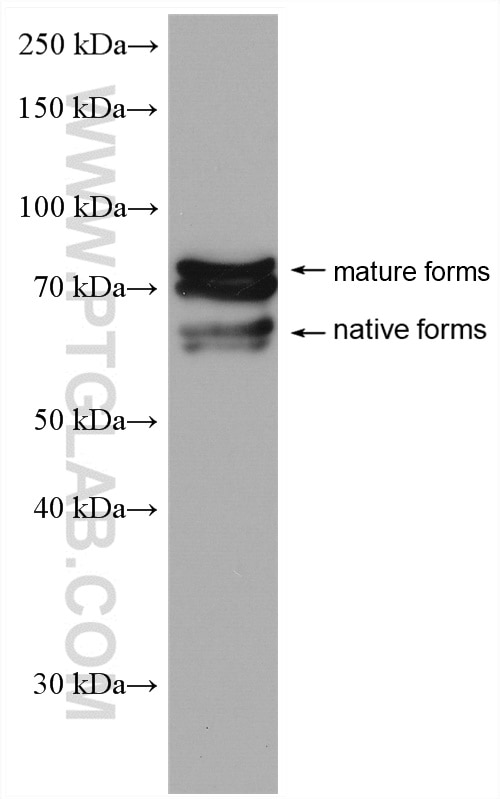
| Positive WB detected in | mouse brain tissue |
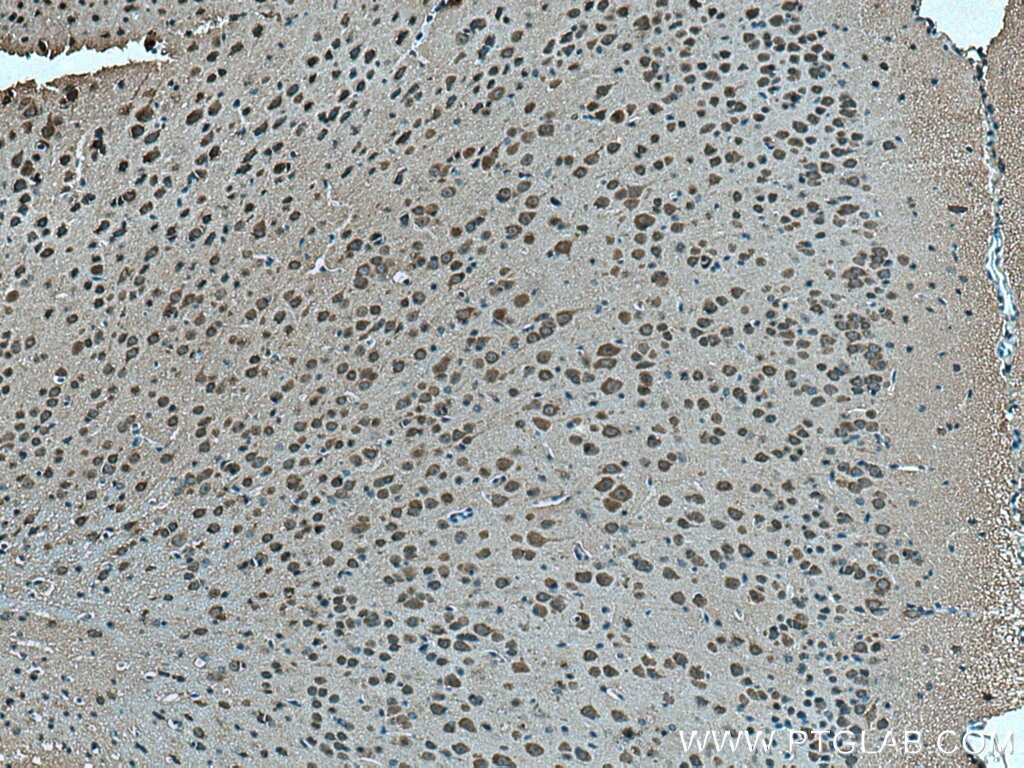
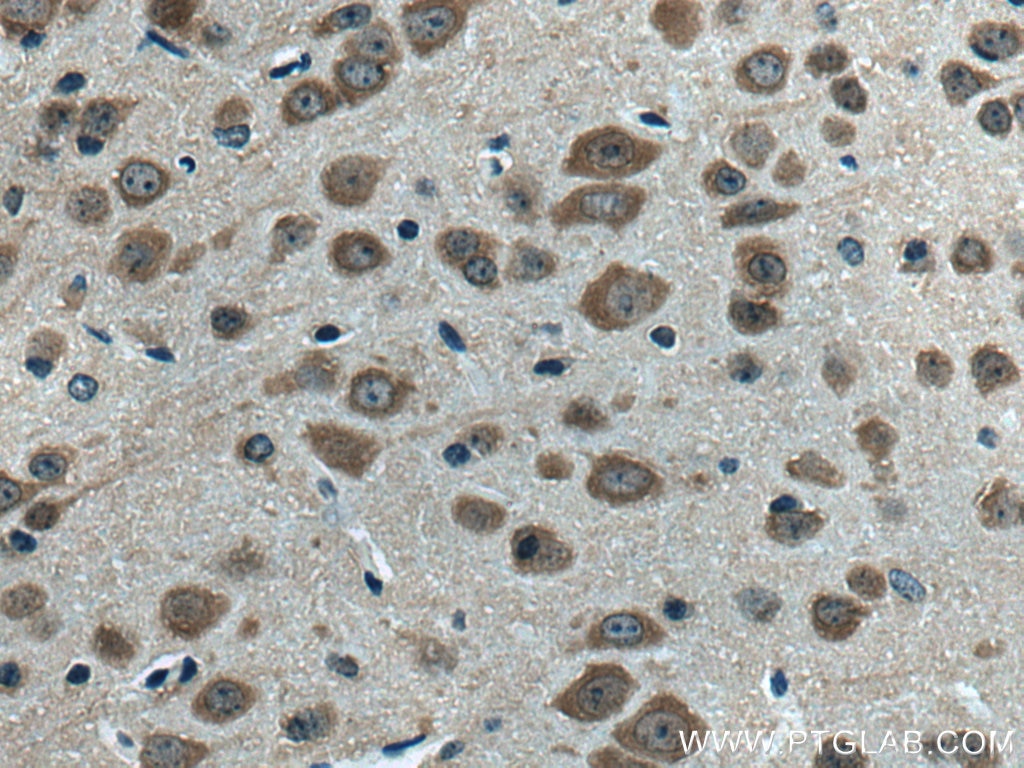
| Positive IHC detected in | mouse brain tissue Note: suggested antigen retrieval with TE buffer pH 9.0; (*) Alternatively, antigen retrieval may be performed with citrate buffer pH 6.0 |
Recommended dilution
| Application | Dilution |
|---|---|
| Western Blot (WB) | WB : 1:500-1:2000 |
| Immunohistochemistry (IHC) | IHC : 1:50-1:500 |
| It is recommended that this reagent should be titrated in each testing system to obtain optimal results. | |
| Sample-dependent, Check data in validation data gallery. | |
Published Applications
| WB | See 33 publications below |
| IHC | See 2 publications below |
| IF | See 3 publications below |
Product Information
26574-1-AP targets OAT1 in WB, IHC, IF, ELISA applications and shows reactivity with human, mouse samples.
| Tested Reactivity | human, mouse |
| Cited Reactivity | human, mouse, rat |
| Host / Isotype | Rabbit / IgG |
| Class | Polyclonal |
| Type | Antibody |
| Immunogen |
CatNo: Ag24234 Product name: Recombinant human SLC22A6 protein Source: e coli.-derived, PGEX-4T Tag: GST Domain: 476-550 aa of BC033682 Sequence: SMTAELYPSMPLFIYGAVPVAASAVTVLLPETLGQPLPDTVQDLESRKGKQTRQQQEHQKYMVPLQASAQEKNGL 相同性解析による交差性が予測される生物種 |
| Full Name | solute carrier family 22 (organic anion transporter), member 6 |
| Calculated molecular weight | 62 kDa |
| Observed molecular weight | 60-65 and 70-80 kDa |
| GenBank accession number | BC033682 |
| Gene Symbol | OAT1 |
| Gene ID (NCBI) | 9356 |
| RRID | AB_2880557 |
| Conjugate | Unconjugated |
| Form | |
| Form | Liquid |
| Purification Method | Antigen affinity purification |
| UNIPROT ID | Q4U2R8 |
| Storage Buffer | PBS with 0.02% sodium azide and 50% glycerol{{ptg:BufferTemp}}7.3 |
| Storage Conditions | Store at -20°C. Stable for one year after shipment. Aliquoting is unnecessary for -20oC storage. |
Background Information
OAT1, also named as SLC22A6, has two GXXXG motifs in its transmembrane which is associated with protein processing and oligomerization of other proteins. OAT1 is involved in the renal elimination of endogenous and exogenous organic anions. It has been reported that OAT1 plays a key role in clearing endogenous metabolites, toxins and drugs from blood. OAT1 has some isoforms and the calculated MW ranges from 55 kDa to 62 kDa. 26574-1-AP antibody detects the 60-65 kDa (native forms) and 70-80 kDa (mature forms) protein in SDS-PAGE. (PMID: 21340049, 23389457, 23196129)
Protocols
| Product Specific Protocols | |
|---|---|
| IHC protocol for OAT1 antibody 26574-1-AP | Download protocol |
| WB protocol for OAT1 antibody 26574-1-AP | Download protocol |
| Standard Protocols | |
|---|---|
| Click here to view our Standard Protocols |
Publications
| Species | Application | Title |
|---|---|---|
Cell Metab Adipocyte-derived glutathione promotes obesity-related breast cancer by regulating the SCARB2-ARF1-mTORC1 complex | ||
Cell Rep Med The SGLT2 inhibitor dapagliflozin ameliorates renal fibrosis in hyperuricemic nephropathy | ||
Sci Adv Brain-derived extracellular vesicles circUsp32 polarized macrophages causing acute kidney injury after traumatic brain injury. | ||
Phytomedicine Data mining-guided alleviation of hyperuricemia by Paeonia veitchii Lynch through inhibition of xanthine oxidase and regulation of renal urate transporters | ||
Phytomedicine Paeonia × suffruticosa Andrews leaf extract and its main component apigenin 7-O-glucoside ameliorate hyperuricemia by inhibiting xanthine oxidase activity and regulating renal urate transporters |