
Validation Data Gallery
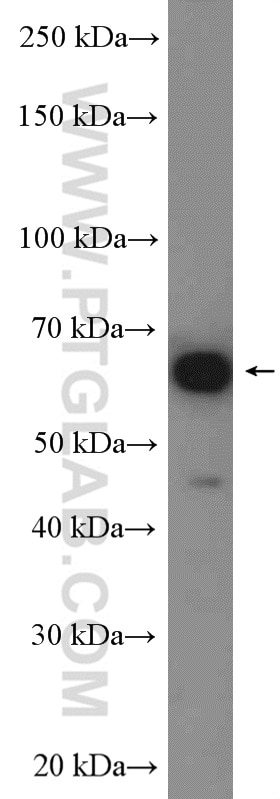
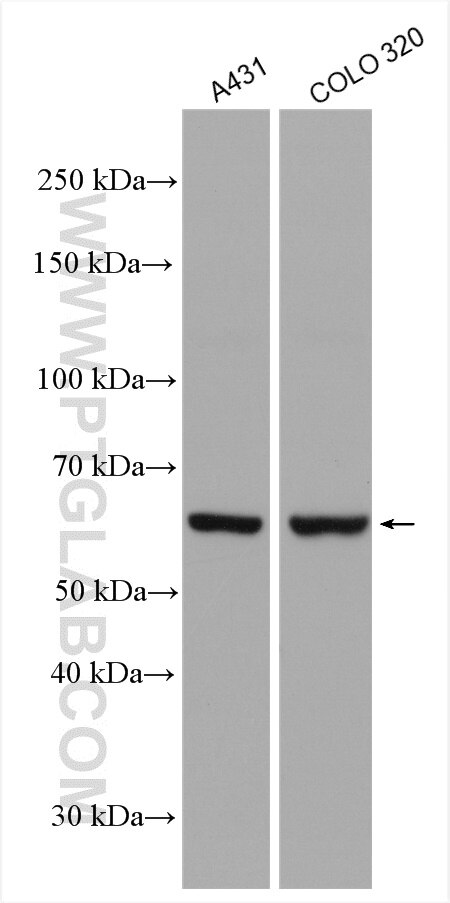
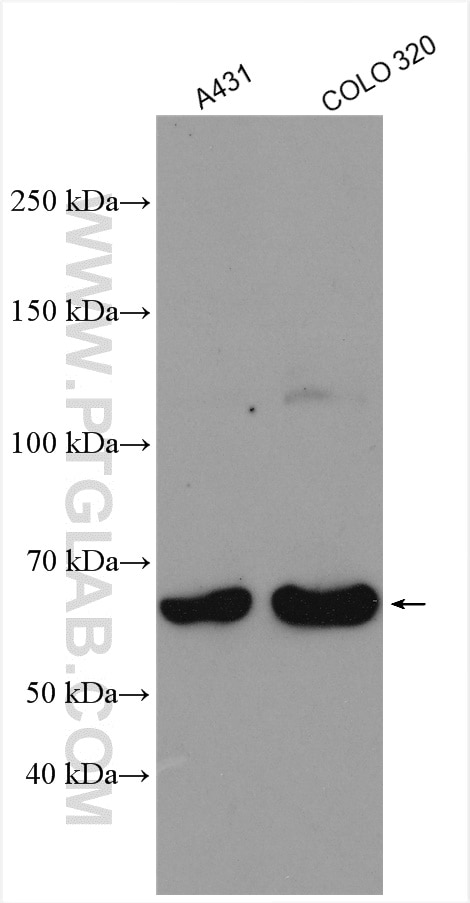
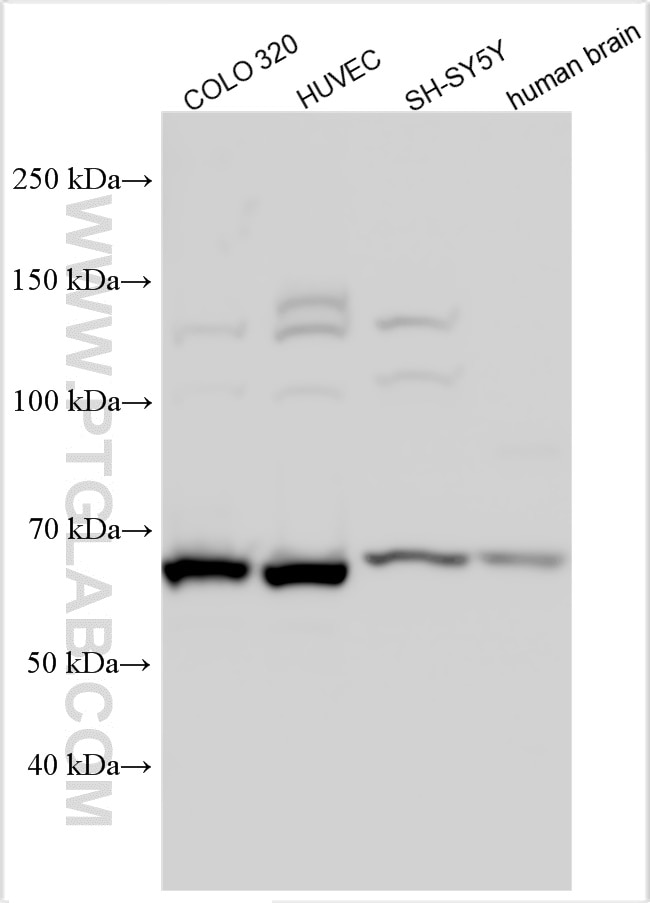
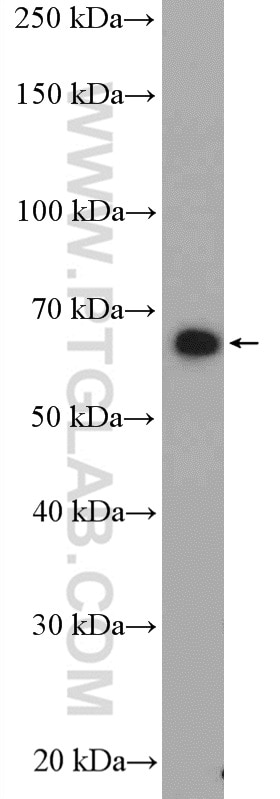
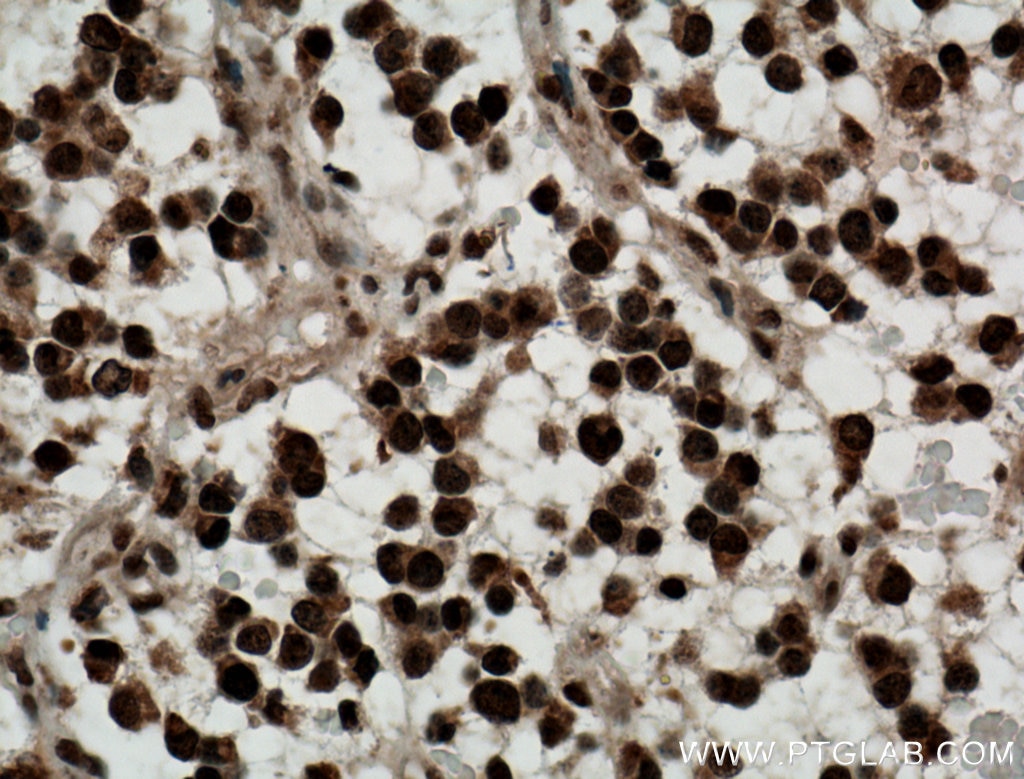
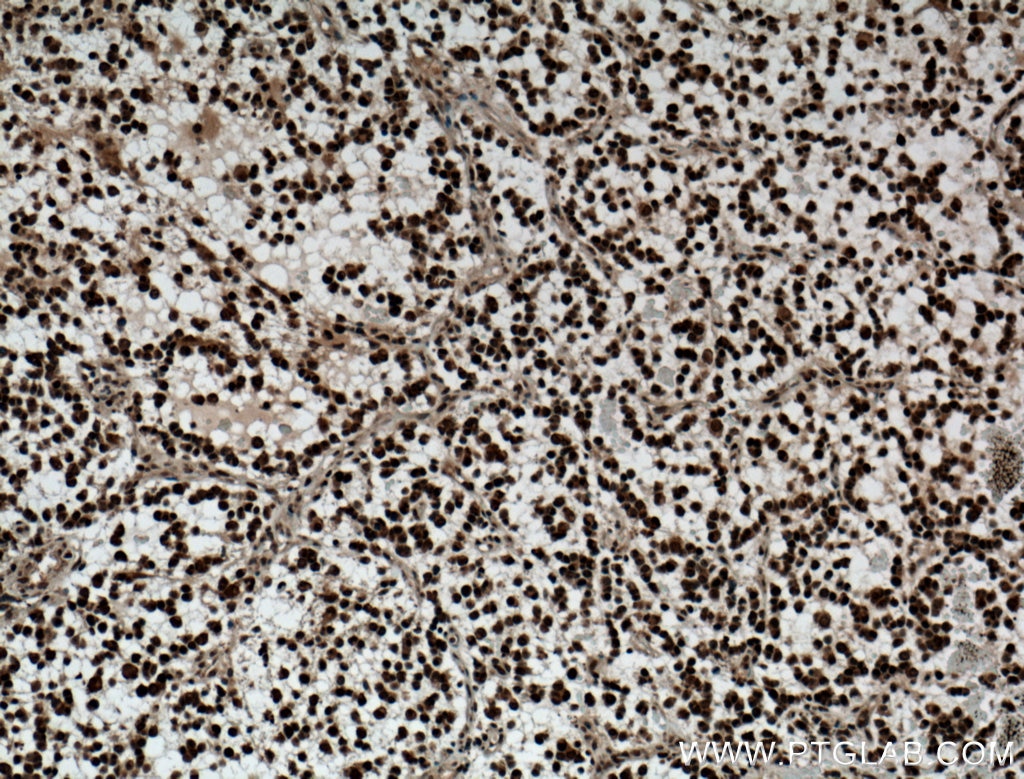
Tested Applications
| Positive WB detected in | COLO 320 cells, fetal human brain tissue, SH-SY5Y cells, A431 cells, HUVEC cells |
| Positive IHC detected in | human gliomas tissue Note: suggested antigen retrieval with TE buffer pH 9.0; (*) Alternatively, antigen retrieval may be performed with citrate buffer pH 6.0 |
Recommended dilution
| Application | Dilution |
|---|---|
| Western Blot (WB) | WB : 1:1000-1:4000 |
| Immunohistochemistry (IHC) | IHC : 1:50-1:500 |
| It is recommended that this reagent should be titrated in each testing system to obtain optimal results. | |
| Sample-dependent, Check data in validation data gallery. | |
Published Applications
| WB | See 22 publications below |
| IHC | See 4 publications below |
| IF | See 15 publications below |
| ChIP | See 1 publications below |
Product Information
10975-2-AP targets Nurr1/NR4A2 in WB, IHC, IF, ChIP, ELISA applications and shows reactivity with human samples.
| Tested Reactivity | human |
| Cited Reactivity | human, mouse, rat, monkey |
| Host / Isotype | Rabbit / IgG |
| Class | Polyclonal |
| Type | Antibody |
| Immunogen |
CatNo: Ag1418 Product name: Recombinant human NR4A2 protein Source: e coli.-derived, PGEX-4T Tag: GST Domain: 250-598 aa of BC009288 Sequence: SPPSRGSPSNEGLCAVCGDNAACQHYGVRTCEGCKGFFKRTVQKNAKYVCLANKNCPVDKRRRNRCQYCRFQKCLAVGMVKEVVRTDSLKGRRGRLPSKPKSPQEPSPPSPPVSLISALVRAHVDSNPAMTSLDYSRFQANPDYQMSGDDTQHIQQFYDLLTGSMEIIRGWAEKIPGFADLPKADQDLLFESAFLELFVLRLAYRSNPVEGKLIFCNGVVLHRLQCVRGFGEWIDSIVEFSSNLQNMNIDISAFSCIAALAMVTERHGLKEPKRVEELQNKIVNCLKDHVTFNNGGLNRPNYLSKLLGKLPELRTLCTQGLQRIFYLKLEDLVPPPAIIDKLFLDTLPF 相同性解析による交差性が予測される生物種 |
| Full Name | nuclear receptor subfamily 4, group A, member 2 |
| Calculated molecular weight | 66 kDa |
| Observed molecular weight | 66 kDa |
| GenBank accession number | BC009288 |
| Gene Symbol | Nurr1 |
| Gene ID (NCBI) | 4929 |
| RRID | AB_2153760 |
| Conjugate | Unconjugated |
| Form | |
| Form | Liquid |
| Purification Method | Antigen affinity purification |
| UNIPROT ID | P43354 |
| Storage Buffer | PBS with 0.02% sodium azide and 50% glycerol{{ptg:BufferTemp}}7.3 |
| Storage Conditions | Store at -20°C. Stable for one year after shipment. Aliquoting is unnecessary for -20oC storage. |
Background Information
NR4A2 belongs to the orphan nuclear receptor (NR) family referred to as NR4A family, which have been implicated in cell cycle regulation, apoptosis, inflammation, metabolism and more recently in carcinogenesis [PMID:22583411]. NR4A2 also has a role in the expression of several proteins that are necessary for the synthesis and regulation of DA, such as tyrosine hidroxilase, DA transporter, vesicular monoamine transporter 2, and cRET [PMID:22294735]. Act as a transcriptional regulator, NR4A2 is essential for the differentiation and maintenance of meso-diencephalic dopaminergic (mdDA) neurons during development. It is crucial for expression of a set of genes such as SLC6A3, SLC18A2, TH and DRD2 which are essential for development of mdDA neurons [PMID: 17184956].
Protocols
| Product Specific Protocols | |
|---|---|
| IHC protocol for Nurr1/NR4A2 antibody 10975-2-AP | Download protocol |
| WB protocol for Nurr1/NR4A2 antibody 10975-2-AP | Download protocol |
| Standard Protocols | |
|---|---|
| Click here to view our Standard Protocols |
Publications
| Species | Application | Title |
|---|---|---|
Cancer Discov Targeting Microglial Metabolic Rewiring Synergizes with Immune Checkpoint Blockade Therapy for Glioblastoma | ||
Nat Commun Parkinson's disease-associated PLA2G6 protects IP3R1 protein to control ER-mitochondria tethering and Ca(2+) transfer. | ||
J Nanobiotechnology MiR-1290 in natural killer cell derived extracellular vesicles: a pathogenic mediator of lupus nephritis and therapeutic target for th17 regulation | ||
J Nanobiotechnology Promoting collateral formation in type 2 diabetes mellitus using ultra-small nanodots with autophagy activation and ROS scavenging | ||
Adv Sci (Weinh) A Graphene Composite Film Based Wearable Far-Infrared Therapy Apparatus (GRAFT) for Effective Prevention of Postoperative Peritoneal Adhesion |