
Validation Data Gallery
Tested Applications
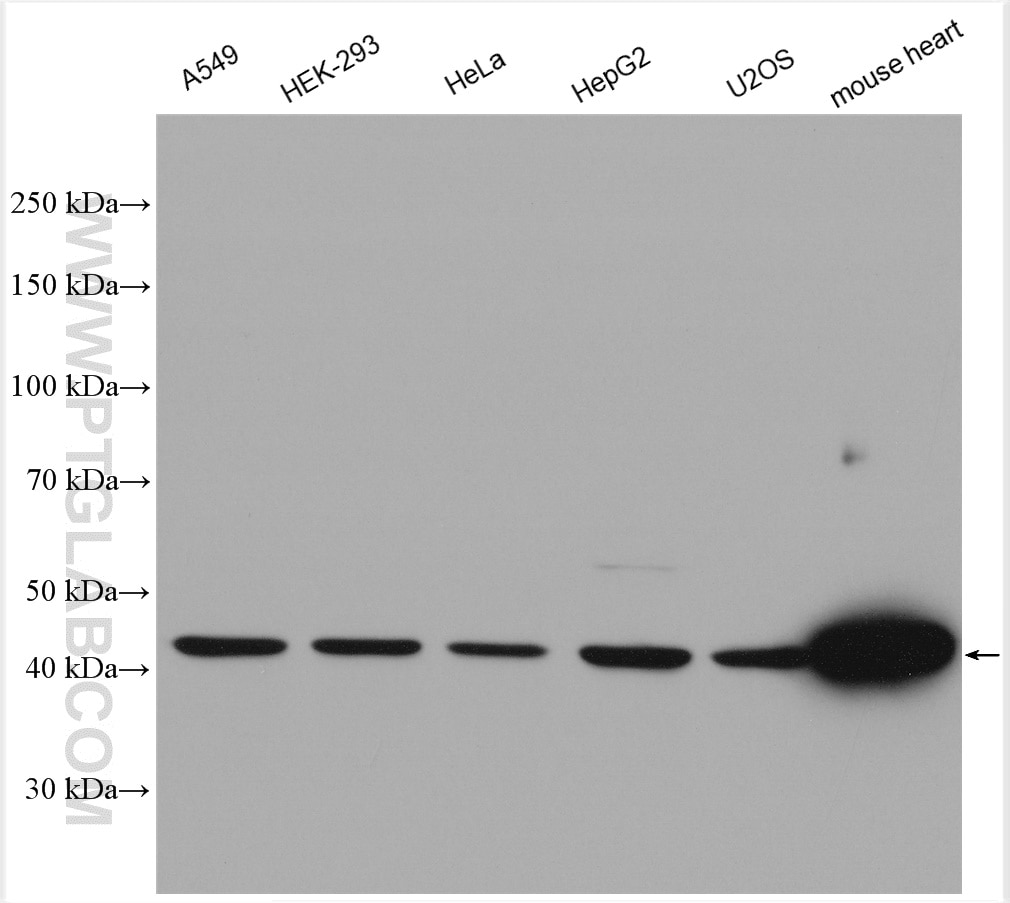
| Positive WB detected in | A549 cells, HEK-293 cells, HeLa cells, HepG2 cells, U2OS cells, mouse heart tissue |
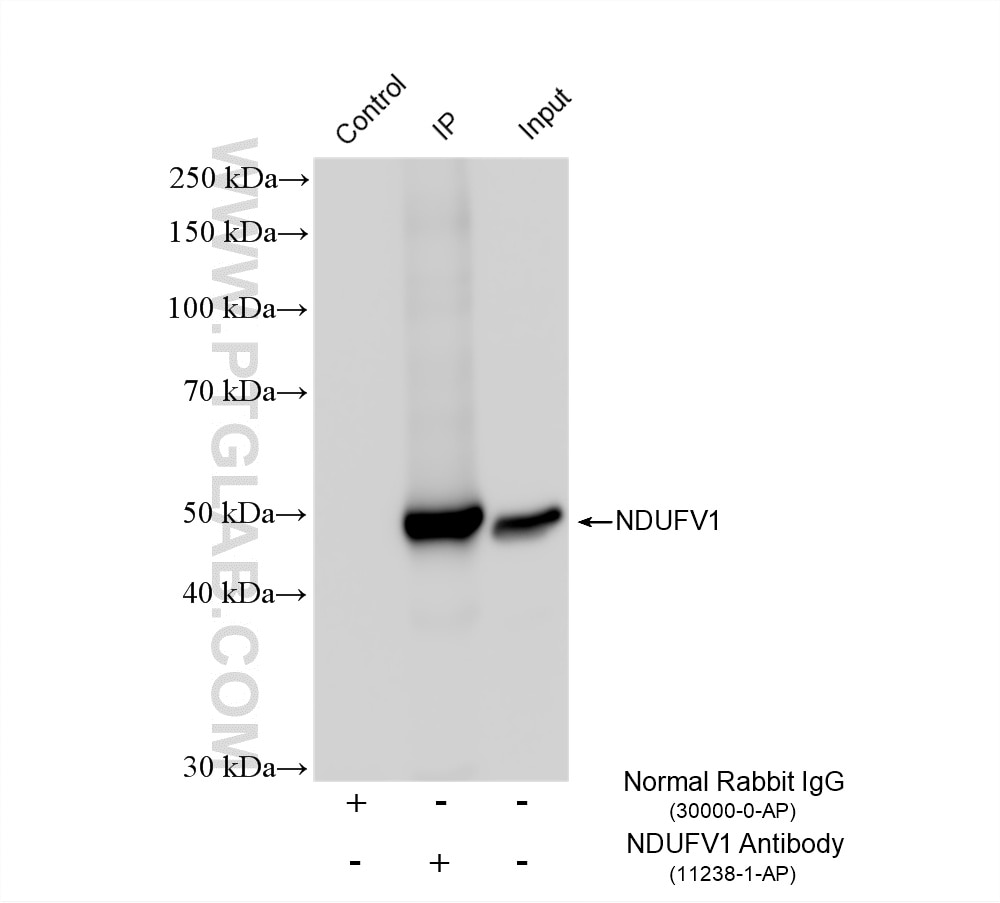
| Positive IP detected in | mouse heart tissue |
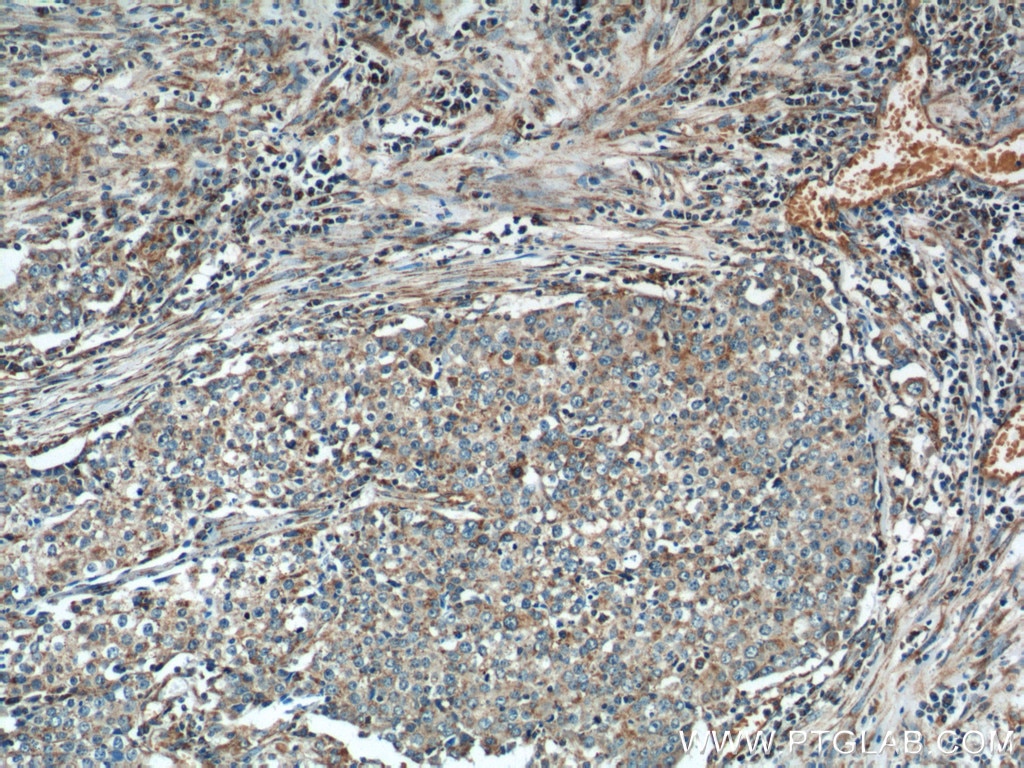
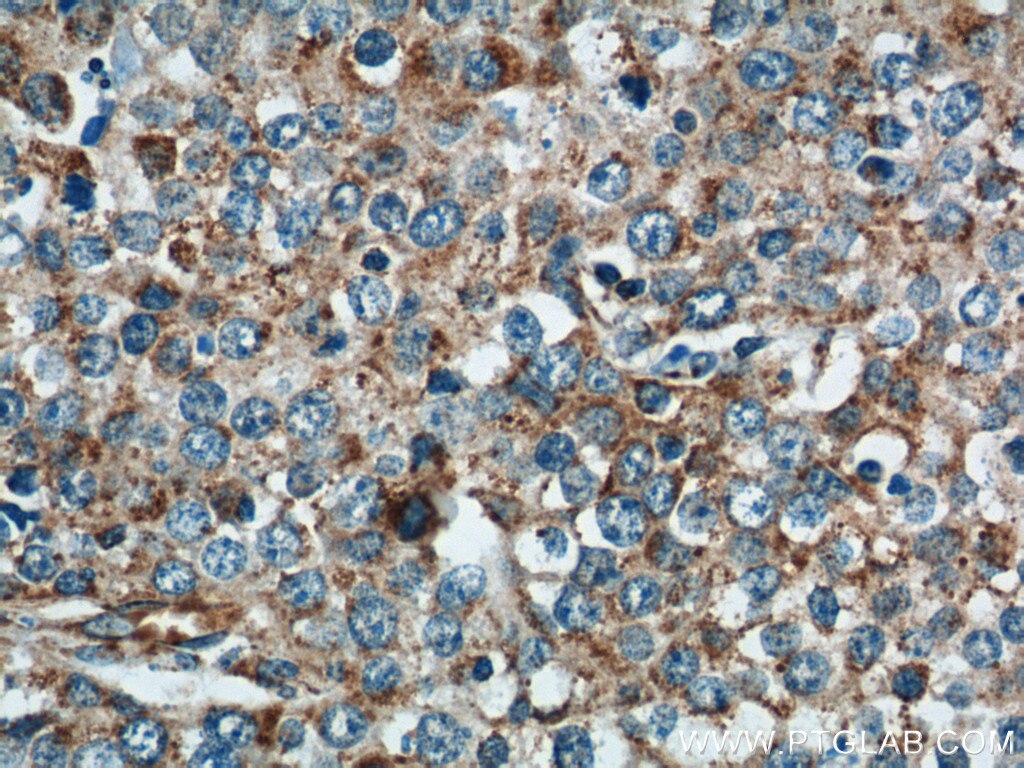
| Positive IHC detected in | human lung cancer tissue Note: suggested antigen retrieval with TE buffer pH 9.0; (*) Alternatively, antigen retrieval may be performed with citrate buffer pH 6.0 |
Recommended dilution
| Application | Dilution |
|---|---|
| Western Blot (WB) | WB : 1:1000-1:8000 |
| Immunoprecipitation (IP) | IP : 0.5-4.0 ug for 1.0-3.0 mg of total protein lysate |
| Immunohistochemistry (IHC) | IHC : 1:50-1:500 |
| It is recommended that this reagent should be titrated in each testing system to obtain optimal results. | |
| Sample-dependent, Check data in validation data gallery. | |
Published Applications
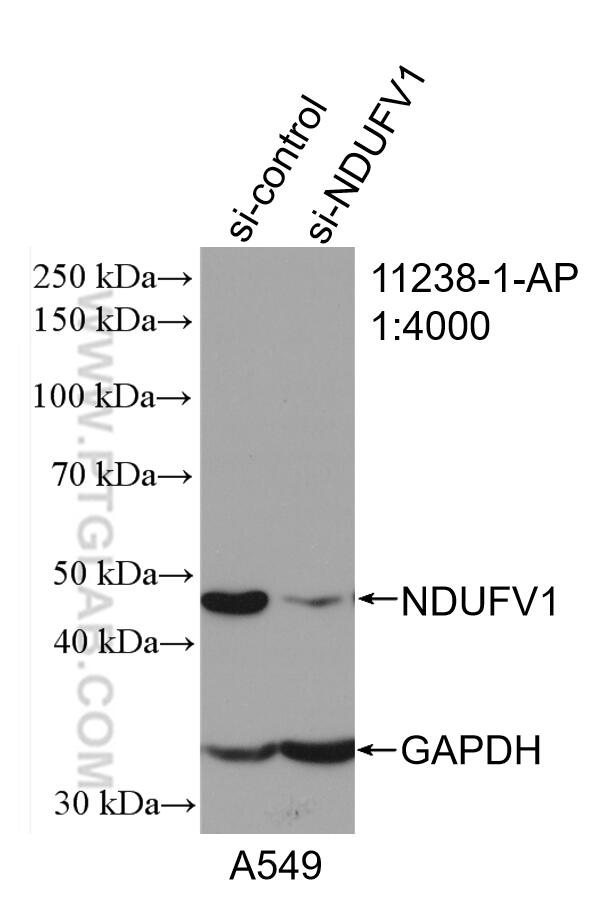
| KD/KO | See 3 publications below |
| WB | See 59 publications below |
| IHC | See 1 publications below |
| IF | See 1 publications below |
| IP | See 1 publications below |
Product Information
11238-1-AP targets NDUFV1 in WB, IHC, IF, IP, ELISA applications and shows reactivity with human, mouse, rat samples.
| Tested Reactivity | human, mouse, rat |
| Cited Reactivity | human, mouse, rat, pig |
| Host / Isotype | Rabbit / IgG |
| Class | Polyclonal |
| Type | Antibody |
| Immunogen |
CatNo: Ag1764 Product name: Recombinant human NDUFV1 protein Source: e coli.-derived, PGEX-4T Tag: GST Domain: 116-447 aa of BC015645 Sequence: NADEGEPGTCKDREILRHDPHKLLEGCLVGGRAMGARAAYIYIRGEFYNEASNLQVAIREAYEAGLIGKNACGSGYDFDVFVVRGAGAYICGEETALIESIEGKQGKPRLKPPFPADVGVFGCPTTVANVETVAVSPTICRRGGTWFAGFGRERNSGTKLFNISGHVNHPCTVEEEMSVPLKELIEKHAGGVTGGWDNLLAVIPGGSSTPLIPKSVCETVLMDFDALVQAQTGLGTAAVIVMDRSTDIVKAIARLIEFYKHESCGQCTPCREGVDWMNKVMARFVRGDARPAEIDSLWEISKQIEGHTICALGDGAAWPVQGLIRHFRPELE 相同性解析による交差性が予測される生物種 |
| Full Name | NADH dehydrogenase (ubiquinone) flavoprotein 1, 51kDa |
| Calculated molecular weight | 51 kDa |
| Observed molecular weight | 45 kDa |
| GenBank accession number | BC015645 |
| Gene Symbol | NDUFV1 |
| Gene ID (NCBI) | 4723 |
| RRID | AB_2149040 |
| Conjugate | Unconjugated |
| Form | |
| Form | Liquid |
| Purification Method | Antigen affinity purification |
| UNIPROT ID | P49821 |
| Storage Buffer | PBS with 0.02% sodium azide and 50% glycerol{{ptg:BufferTemp}}7.3 |
| Storage Conditions | Store at -20°C. Stable for one year after shipment. Aliquoting is unnecessary for -20oC storage. |
Background Information
DUFV1(NADH dehydrogenase [ubiquinone] flavoprotein 1, mitochondrial) is also named as UQOR1,Complex I-51kD and belongs to the complex I 51 kDa subunit family. It is the core subunit of the mitochondrial membrane respiratory chain NADH dehydrogenase (Complex I) that is believed to belong to the minimal assembly required for catalysis. It has 2 isoforms produced by alternative splicing. Defects in NDUFV1 are a cause of Leigh syndrome (LS) and mitochondrial complex I deficiency (MT-C1D).
Protocols
| Product Specific Protocols | |
|---|---|
| IHC protocol for NDUFV1 antibody 11238-1-AP | Download protocol |
| IP protocol for NDUFV1 antibody 11238-1-AP | Download protocol |
| WB protocol for NDUFV1 antibody 11238-1-AP | Download protocol |
| Standard Protocols | |
|---|---|
| Click here to view our Standard Protocols |
Publications
| Species | Application | Title |
|---|---|---|
Signal Transduct Target Ther Albumosomes formed by cytoplasmic pre-folding albumin maintain mitochondrial homeostasis and inhibit nonalcoholic fatty liver disease | ||
Signal Transduct Target Ther Intracellular CYTL1, a novel tumor suppressor, stabilizes NDUFV1 to inhibit metabolic reprogramming in breast cancer.
| ||
Nature In vivo imaging of mitochondrial membrane potential in non-small-cell lung cancer. | ||
Nature Accessory subunits are integral for assembly and function of human mitochondrial complex I. | ||
Circulation Nuclear Receptor NR1D1 Regulates Abdominal Aortic Aneurysm Development by Targeting the Mitochondrial Tricarboxylic Acid Cycle Enzyme Aconitase-2 | ||
Cell Metab The lncRNA HOXA11os regulates mitochondrial function in myeloid cells to maintain intestinal homeostasis |