
Recombinant Mouse PR3/PRTN3 protein (rFc Tag)
Species
Mouse
Purity
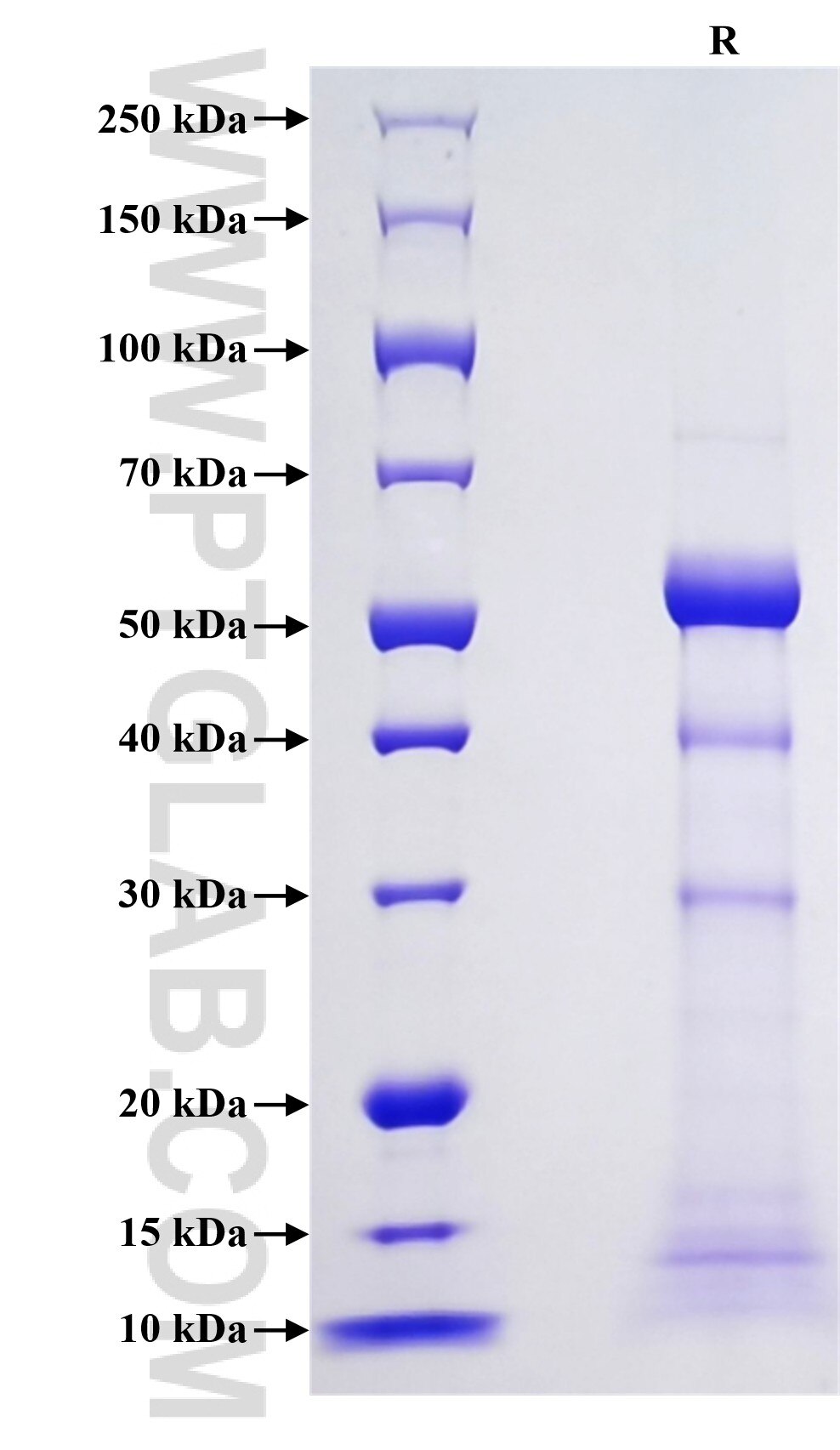
>90 %, SDS-PAGE
Tag
rFc Tag
Activity
not tested
Cat no : Eg2750
Validation Data Gallery
Product Information
| Purity | >90 %, SDS-PAGE |
| Endotoxin | <0.1 EU/μg protein, LAL method |
| Activity |
Not tested |
| Expression | CHO-derived Mouse PR3 protein Ser28-Arg250 (Accession# Q61096) with a rabbit IgG Fc tag at the C-terminus. |
| GeneID | 19152 |
| Accession | Q61096 |
| PredictedSize | 50.2 kDa |
| SDS-PAGE | 50-60 kDa, reducing (R) conditions |
| Formulation | Lyophilized from 0.22 μm filtered solution in PBS, pH 7.4. Normally 5% trehalose and 5% mannitol are added as protectants before lyophilization. |
| Reconstitution | Briefly centrifuge the tube before opening. Reconstitute at 0.1-0.5 mg/mL in sterile water. |
| Storage Conditions |
It is recommended that the protein be aliquoted for optimal storage. Avoid repeated freeze-thaw cycles.
|
| Shipping | The product is shipped at ambient temperature. Upon receipt, store it immediately at the recommended temperature. |
Background
PRTN3 is a serine protease secreted by cells of myeloid lineage and allocated to the cell surface of neutrophils and endothelial cells. PRTN3 is related to inflammatory processes. It triggers inflammatory processes in neutrophils by interacting with ADGRG3 upstream of F2RL1/PAR2 activation. PRTN3 expressed by neutrophils within the TME can be taken up by breast cancer and melanoma cells, which in turn increases the susceptibility to PR1-targeting therapies.
References:
1. Csernok, E et al. Clinical and experimental immunology vol. 95,2 (1994): 244-50.
2. Alatrash, Gheath et al. Journal of immunology (Baltimore, Md. : 1950) vol. 189,11 (2012): 5476-84.
3. Mayet, W J et al. Blood vol. 82,4 (1993): 1221-9.
4. Chu, Tai-Ying et al. Nature communications vol. 13,1 (2022): 6385.
5. Peters, Haley L et al. Cancer immunology research vol. 5,4 (2017): 319-329.