
Recombinant Mouse PTPRD protein (rFc Tag)
Species
Mouse
Purity
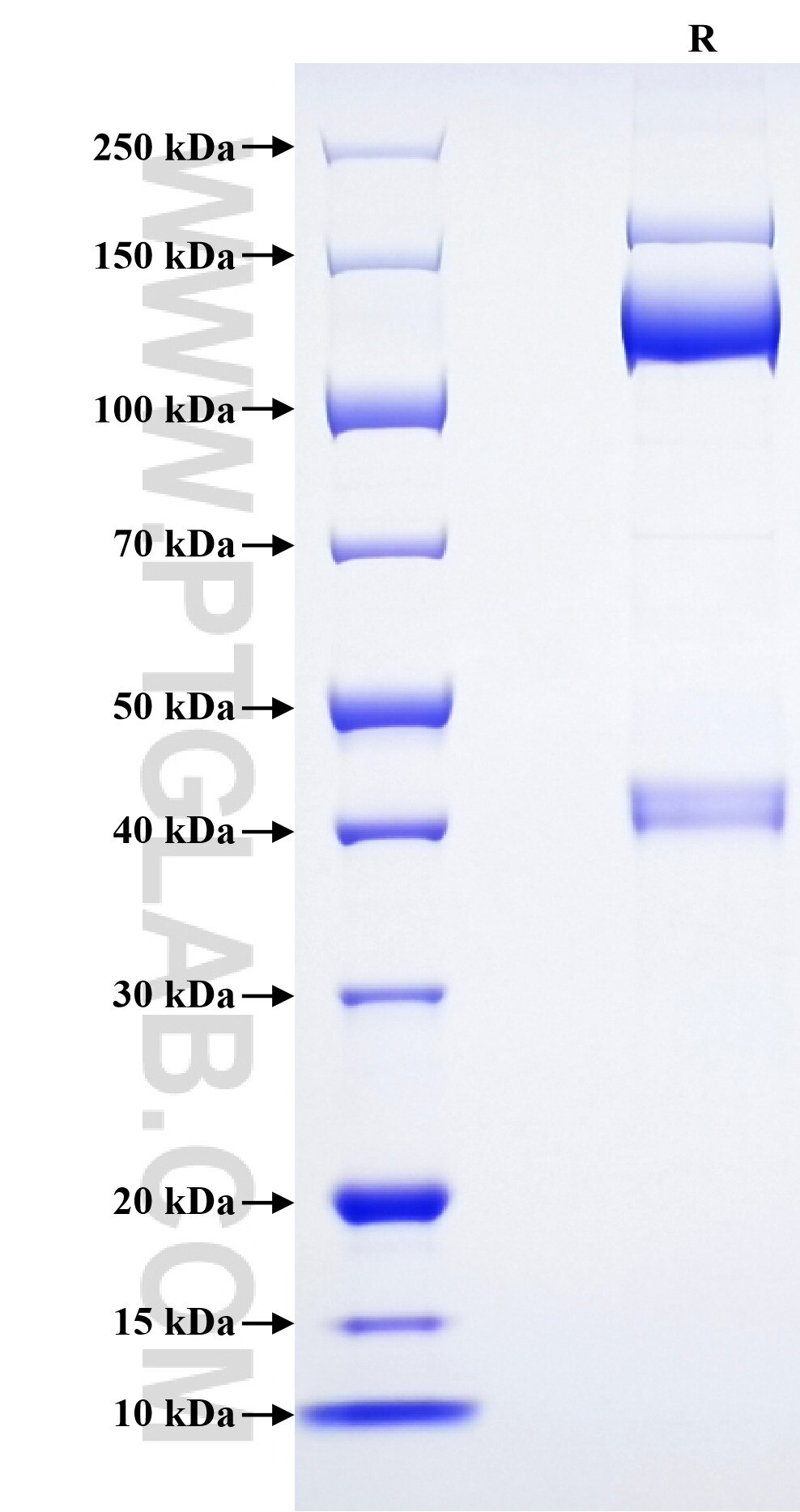
>90 %, SDS-PAGE
Tag
rFc Tag
Activity
not tested
Cat no : Eg6916
Validation Data Gallery
Product Information
| Purity | >90 %, SDS-PAGE |
| Endotoxin | <0.1 EU/μg protein, LAL method |
| Activity |
Not tested |
| Expression | HEK293-derived Mouse PTPRD protein Glu21-Gly1266 (Accession# Q64487-4) with a rabbit IgG Fc tag at the C-terminus. |
| GeneID | 19266 |
| Accession | Q64487-4 |
| PredictedSize | 163.6 kDa |
| SDS-PAGE | 40-43 kDa and 115-145 kDa, reducing (R) conditions |
| Formulation | Lyophilized from 0.22 μm filtered solution in PBS, pH 7.4. Normally 5% trehalose and 5% mannitol are added as protectants before lyophilization. |
| Reconstitution | Briefly centrifuge the tube before opening. Reconstitute at 0.1-0.5 mg/mL in sterile water. |
| Storage Conditions |
It is recommended that the protein be aliquoted for optimal storage. Avoid repeated freeze-thaw cycles.
|
| Shipping | The product is shipped at ambient temperature. Upon receipt, store it immediately at the recommended temperature. |
Background
PTPRD is a receptor-type protein tyrosine phosphatase that plays significant roles in various biological processes, including cell adhesion, synaptic function, and signal transduction. PTPRD is highly expressed in the brain, followed by the kidney, ovary, placenta, and intestine. Within the brain, it is found in specific regions, suggesting a role in neurological functions. PTPRD has emerged as a potential therapeutic target for various brain phenotypes and disorders. Its genetic variations have been associated with nervous system phenotypes, and the discovery of the first small molecule inhibitor of PTPRD phosphatase has opened new avenues for therapeutic intervention in addiction and possibly other PTPRD-associated disorders. Additionally, PTPRD is considered a tumor-suppressor gene that is down-regulated in hepatocellular carcinoma, suggesting its role in cancer progression and potential as a therapeutic target.
References:
1. Solomon DA, Kim JS, Cronin JC, et al.  Cancer Res. 2008;68(24):10300-10306.
2. Walia V, Prickett TD, Kim JS, et al. Hum Mutat. 2014;35(11):1301-1310.