
Recombinant Mouse OLR1/LOX1 protein (rFc Tag) (HPLC verified)
Species
Mouse
Purity
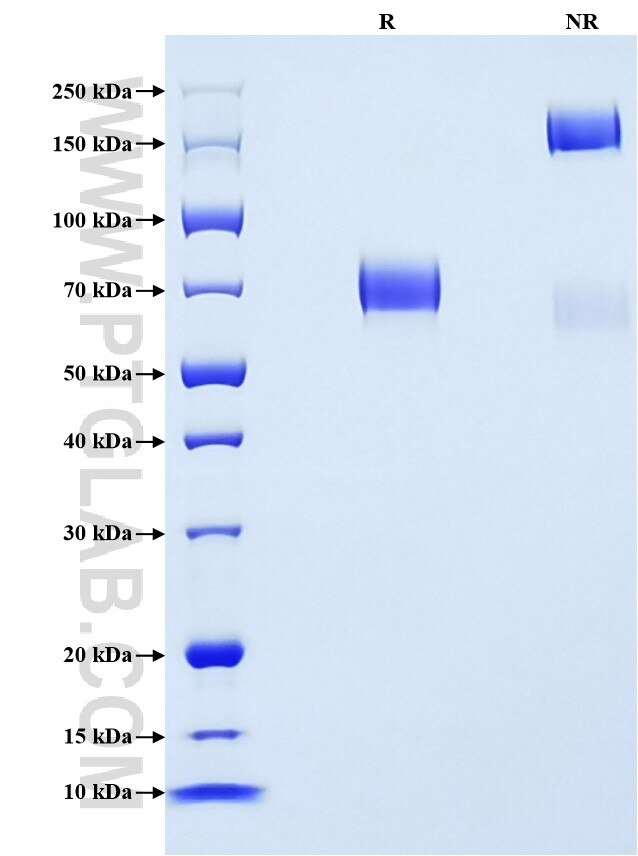
>90 %, SDS-PAGE
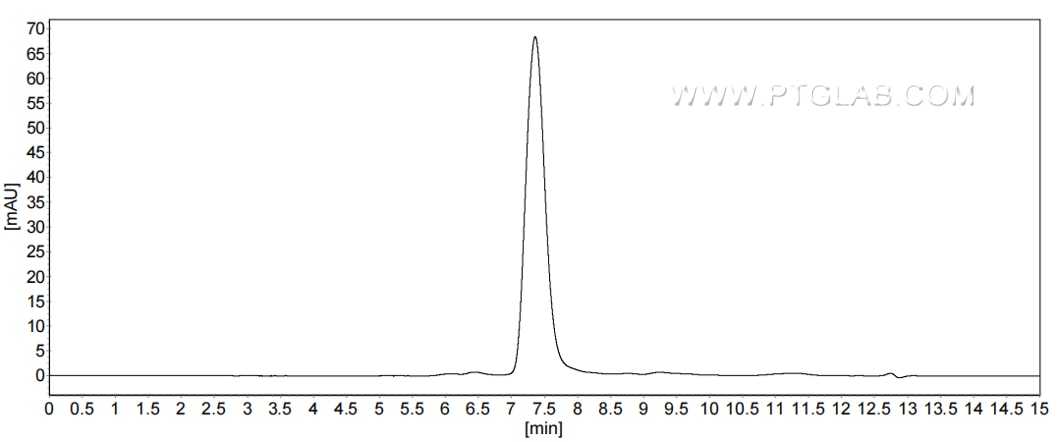
>90 %, SEC-HPLC
Tag
rFc Tag
Activity
not tested
Cat no : Eg2473
Validation Data Gallery
Product Information
| Purity | >90 %, SDS-PAGE >90 %, SEC-HPLC |
| Endotoxin | <0.1 EU/μg protein, LAL method |
| Activity |
Not tested |
| Expression | HEK293-derived Mouse OLR1 protein Arg60-Ile363 (Accession# Q9EQ09) with a rabbit IgG Fc tag at the C-terminus. |
| GeneID | 108078 |
| Accession | Q9EQ09 |
| PredictedSize | 61.0 kDa |
| SDS-PAGE | 65-85 kDa, reducing (R) conditions |
| Formulation | Lyophilized from 0.22 μm filtered solution in PBS, pH 7.4. Normally 5% trehalose and 5% mannitol are added as protectants before lyophilization. |
| Reconstitution | Briefly centrifuge the tube before opening. Reconstitute at 0.1-0.5 mg/mL in sterile water. |
| Storage Conditions |
It is recommended that the protein be aliquoted for optimal storage. Avoid repeated freeze-thaw cycles.
|
| Shipping | The product is shipped at ambient temperature. Upon receipt, store it immediately at the recommended temperature. |
Background
OLR1 (also known as LOX1) is the receptor of oxidized low-density lipoprotein (ox-LDL) and is mainly expressed in endothelial cells, macrophages, smooth muscle cells, platelets, fibroblasts, and neurons. OLR1 is almost undetectable under physiological conditions, but it is upregulated following exposure to several proinflammatory and proatherogenic stimuli and can be detected in animal and human atherosclerotic lesions. OLR1 is the major contributor to ox-LDL uptake, internalization, and degradation in various cells. OLR1 plays a role in metabolism, cardiovascular disease and cancer.
References:
1.Pirillo A. et al. (2013) Mediators Inflamm. 2013:152786.
2.Jin P and Cong S. (2019) Clin Chim Acta. 491:24-29.
3.Zhang P.  et al. (2023) Oncoimmunology. 12(1):2203073.
4.Wu L. et al. (2023) Int J Mol Sci. 24(16):12904.