
Recombinant Mouse NID1 protein (rFc Tag)
Species
Mouse
Purity
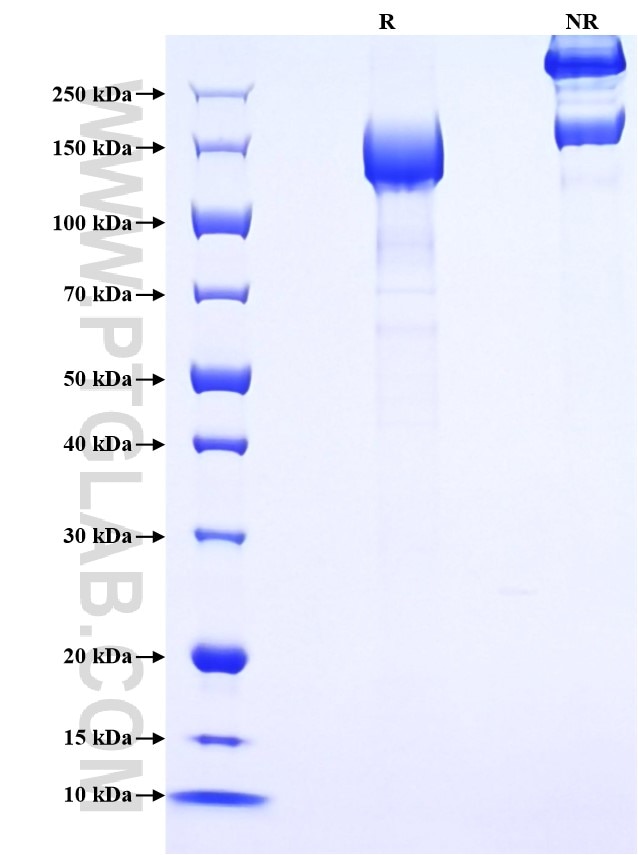
>90 %, SDS-PAGE
Tag
rFc Tag
Activity
not tested
Cat no : Eg3030
Validation Data Gallery
Product Information
| Purity | >90 %, SDS-PAGE |
| Endotoxin | <0.1 EU/μg protein, LAL method |
| Activity |
Not tested |
| Expression | HEK293-derived Mouse NID1 protein Leu29-Lys1245 (Accession# P10493) with a rabbit IgG Fc tag at the C-terminus. |
| GeneID | 18073 |
| Accession | P10493 |
| PredictedSize | 160.7 kDa |
| SDS-PAGE | 125-200 kDa, reducing (R) conditions |
| Formulation | Lyophilized from 0.22 μm filtered solution in PBS, pH 7.4. Normally 5% trehalose and 5% mannitol are added as protectants before lyophilization. |
| Reconstitution | Briefly centrifuge the tube before opening. Reconstitute at 0.1-0.5 mg/mL in sterile water. |
| Storage Conditions |
It is recommended that the protein be aliquoted for optimal storage. Avoid repeated freeze-thaw cycles.
|
| Shipping | The product is shipped at ambient temperature. Upon receipt, store it immediately at the recommended temperature. |
Background
NID1 (Nidogen 1) is an extracellular matrix protein that is an integral part of the extracellular matrix and basement membrane.The primary function of NID1 is to establish a link between laminin, collagen, and proteoglycans and cell-surface receptors to control cell polarization, migration, and invasion. (PMID: 38001576) NID1 regulates tumor-matrix crosstalk during tumor metastasis and has been shown to modulate various tumor progression. Currently NID1 has been shown to promote lung metastasis in HCC, colorectal, laryngeal, breast and melanoma cancers through various molecular mechanisms and has been identified as a candidate diagnostic biomarker for ovarian cancer.
References:
1. Rokavec M, et al. Cancers (Basel). 2023;15(22):5316.
2. Liu W, et al. Biol Direct. 2024;19(1):115.
3. Zhou Y, et al. Oncotarget. 2017;8(20):33110-33121.