
Recombinant Mouse IGFBP4 protein (rFc Tag)
Species
Mouse
Purity
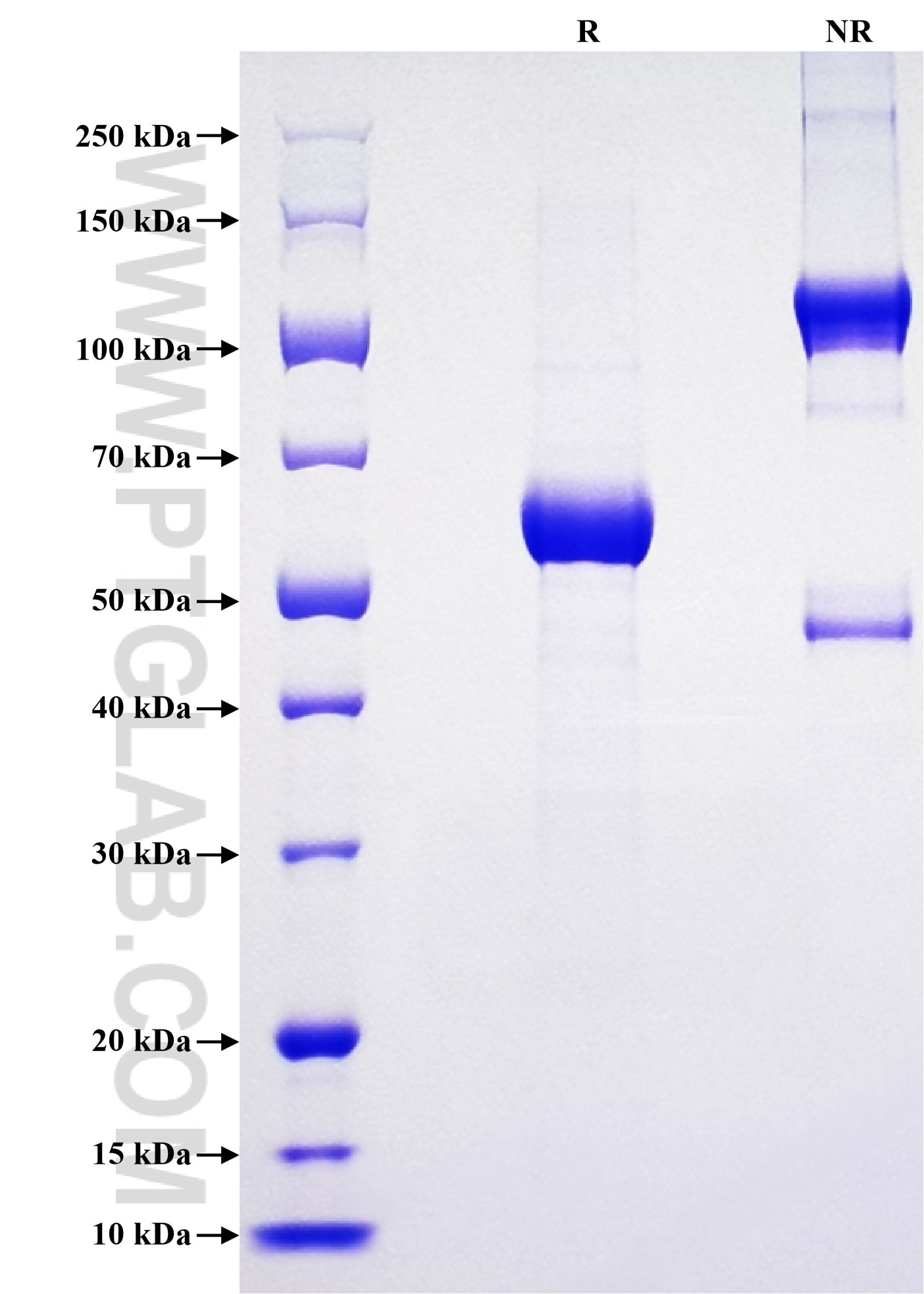
>90 %, SDS-PAGE
Tag
rFc Tag
Activity
not tested
Cat no : Eg10275
Validation Data Gallery
Product Information
| Purity | >90 %, SDS-PAGE |
| Endotoxin | <0.1 EU/μg protein, LAL method |
| Activity |
Not tested |
| Expression | HEK293-derived Mouse IGFBP4 protein Asp22-Glu254 (Accession# P47879) with a rabbit IgG Fc tag at the C-terminus. |
| GeneID | 16010 |
| Accession | P47879 |
| PredictedSize | 51.3 kDa |
| SDS-PAGE | 55-66 kDa, reducing (R) conditions |
| Formulation | Lyophilized from 0.22 μm filtered solution in PBS, pH 7.4. Normally 5% trehalose and 5% mannitol are added as protectants before lyophilization. |
| Reconstitution | Briefly centrifuge the tube before opening. Reconstitute at 0.1-0.5 mg/mL in sterile water. |
| Storage Conditions |
It is recommended that the protein be aliquoted for optimal storage. Avoid repeated freeze-thaw cycles.
|
| Shipping | The product is shipped at ambient temperature. Upon receipt, store it immediately at the recommended temperature. |
Background
IGFBP4 (insulin-like growth factor-binding protein 4) is a secreted glycoprotein that binds IGF-I and IGF-II, modulating their bioavailability and signaling. Structurally, it contains an IGFBP domain and a thyroglobulin type-I domain, and its expression is regulated by promoter methylation via MYBBP1A. IGFBP4 participates in several signaling pathways, including negative regulation of canonical Wnt signaling and positive regulation of IGF receptor signaling, and is involved in MAPK cascade, glucose metabolism, and pancreatic β‑cell proliferation. It is being investigated as a prognostic biomarker in liver, renal, endometrial and gastric cancers, and as a therapeutic target in diabetes and Alzheimer‘s disease
References:
1.Liang, Jieling et al. Renal failure vol. 47,1 (2025): 2440528.
2.Sun, Yujing et al. International journal of oncology vol. 66,1 (2025): 4.
3.Ke, Hongqin et al. Experimental eye research, vol. 270 111107. 4 Jun. 2026,