
Recombinant Mouse IFNA9 protein (rFc Tag) (HPLC verified)
Species
Mouse
Purity
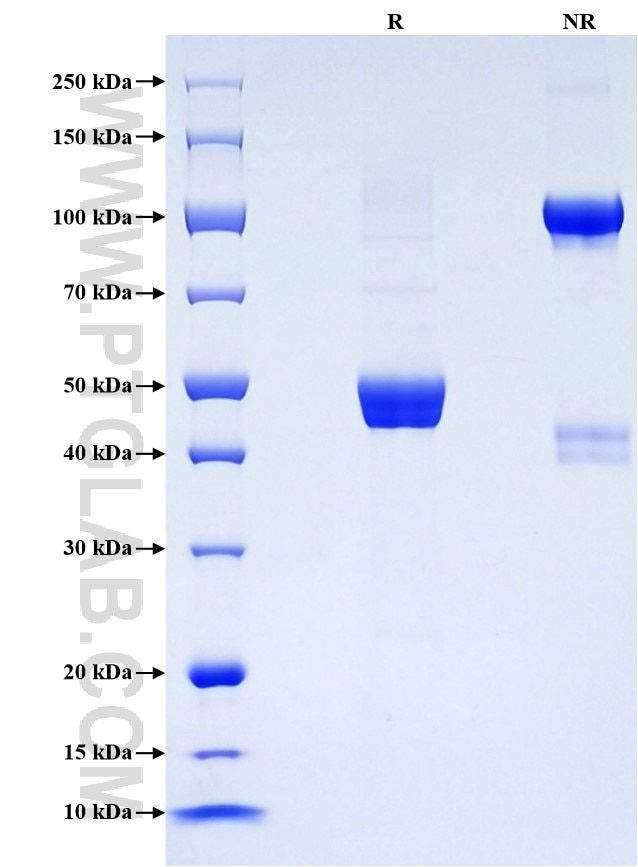
>90 %, SDS-PAGE
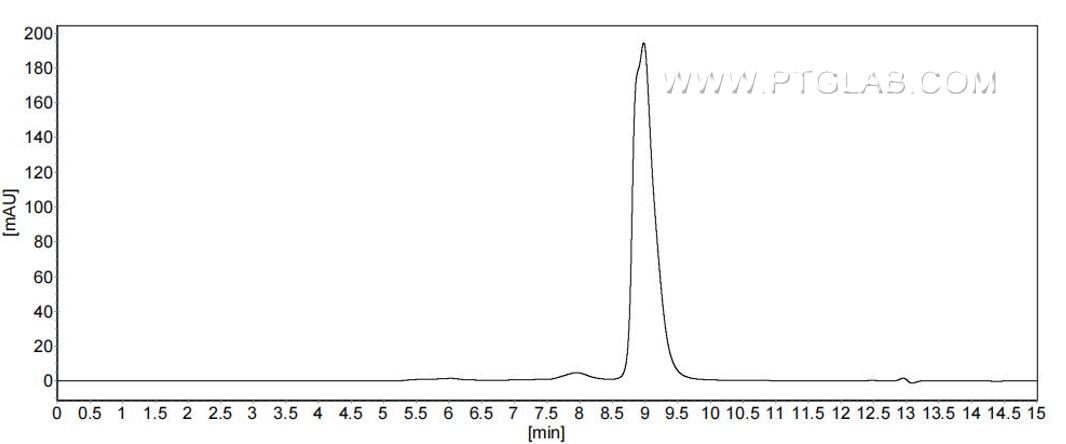
>90 %, SEC-HPLC
Tag
rFc Tag
Activity
not tested
Cat no : Eg3040
Validation Data Gallery
Product Information
| Purity | >90 %, SDS-PAGE >90 %, SEC-HPLC |
| Endotoxin | <0.1 EU/μg protein, LAL method |
| Activity |
Not tested |
| Expression | HEK293-derived Mouse IFNA9 protein Cys24-Glu190 (Accession# P09235) with a rabbit IgG Fc tag at the C-terminus. |
| GeneID | 15972 |
| Accession | P09235 |
| PredictedSize | 45.1 kDa |
| SDS-PAGE | 44-52 kDa, reducing (R) conditions |
| Formulation | Lyophilized from 0.22 μm filtered solution in PBS, pH 7.4. Normally 5% trehalose and 5% mannitol are added as protectants before lyophilization. |
| Reconstitution | Briefly centrifuge the tube before opening. Reconstitute at 0.1-0.5 mg/mL in sterile water. |
| Storage Conditions |
It is recommended that the protein be aliquoted for optimal storage. Avoid repeated freeze-thaw cycles.
|
| Shipping | The product is shipped at ambient temperature. Upon receipt, store it immediately at the recommended temperature. |
Background
Interferons (IFNs) are a family of cytokines with potent antiviral, antiproliferative, and immunomodulatory properties. Ifna9 is a type I interferon that binds to the interferon alpha receptor (IFNAR), which consists of two subunits: IFNAR1 (alpha-subunit) and IFNAR2 (beta-subunit). Ifna9 is expressed in various tissues and is induced in L929 cells 6-9 hours after Poly(I).Poly(C) treatment. Differential expression of the IFN-alpha subtypes is observed in influenza A/NWS/33- and B/Lee/40-infected L929 cells. Ifna9 interacts with several proteins, including Ifnar1, Ifna14, Ifna5, Ifna12, Ifna11, Jak2, Irf7, Irf3, and Egfr. These interactions are crucial for the signaling pathways involved in the immune response and antiviral activities. The human ortholog of Ifna9 is IFNA1.
References:
1. Bartlett EJ, et al. (2004). Immunol Cell Biol. 82(2):119-26.