
Recombinant Mouse IL-5 protein (His Tag)
Species
Mouse
Purity
>95 %, SDS-PAGE
Tag
His Tag
Activity
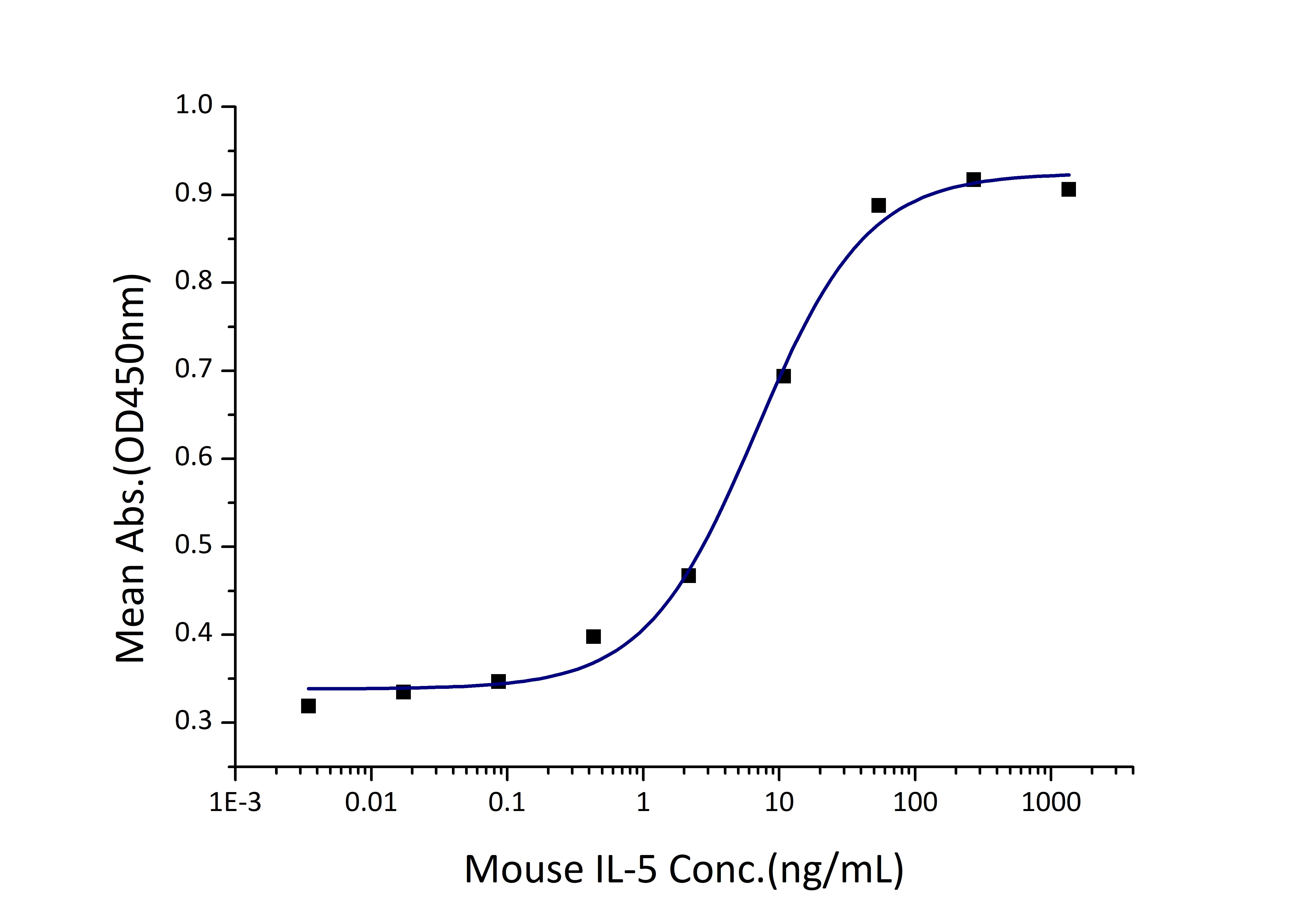
EC50: 3-13 ng/mL
Cat no : Eg0223
Validation Data Gallery
Product Information
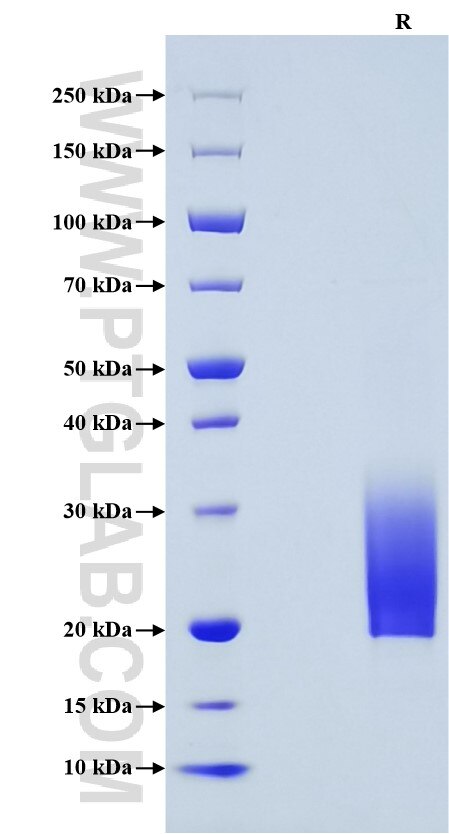
| Purity | >95 %, SDS-PAGE |
| Endotoxin | <0.1 EU/μg protein, LAL method |
| Activity |
1.Measured in a cell proliferation assay using TF-1 human erythroleukemic cells. The ED50 for this effect is typically 3-13 ng/mL. |
| Expression | HEK293-derived Mouse IL-5 protein Met21-Gly133 (Accession# P04401) with His tag at the C-terminus. |
| GeneID | 16191 |
| Accession | P04401 |
| PredictedSize | 13.9 kDa |
| SDS-PAGE | 20-40 kDa, reducing (R) conditions |
| Formulation | Lyophilized from 0.22 μm filtered solution in PBS, pH 7.4. Normally 5% trehalose and 5% mannitol are added as protectants before lyophilization. |
| Reconstitution | Briefly centrifuge the tube before opening. Reconstitute at 0.1-0.5 mg/mL in sterile water. |
| Storage Conditions |
It is recommended that the protein be aliquoted for optimal storage. Avoid repeated freeze-thaw cycles.
|
| Shipping | The product is shipped at ambient temperature. Upon receipt, store it immediately at the recommended temperature. |
Background
Interleukin-5 (IL-5), was originally discovered as a soluble T cell-derived factor, called T cell-replacing factor (TRF), that induced T cell-depleted activated B cells to secrete immunoglobulin. IL-5 is a key hematopoietic cytokine in eosinophil differentiation, maturation, recruitment and activation at sites of allergic inflammation. IL-5 also plays a role in the development, metabolism, and function of basophils. IL-5 exerts its biological activity through the IL-5 receptor (IL-5R), which is composed of at least two chains: an alpha chain that binds IL-5 with low affinity and a beta chain that does not bind IL-5, but together with the IL-5 alpha chain, constitutes the high affinity IL-5 receptor. The beta chain is common to the IL-3, IL-5 and GM-CSF receptors and has been shown to signal through the JAK/Stat pathway. IL-5 has long been associated with the cause of several allergic diseases including allergic rhinitis and asthma, wherein a large increase in the number of circulating, airway tissue, and induced sputum eosinophils have been observed.
References:
1. K Takatsu. et al. (1988). Immunol Rev. 102:107-35.
2. Kiyoshi Takatsu. et al. (2011). Proc Jpn Acad Ser B Phys Biol Sci. 87(8):463-85.
3. Taku Kouro. et al. (2009). Int Immunol. 21(12):1303-9.
4. Corrado Pelaia. et al. (2019). Front Physiol.10:1514.