
Recombinant Mouse HRG protein (rFc Tag)
Species
Mouse
Purity
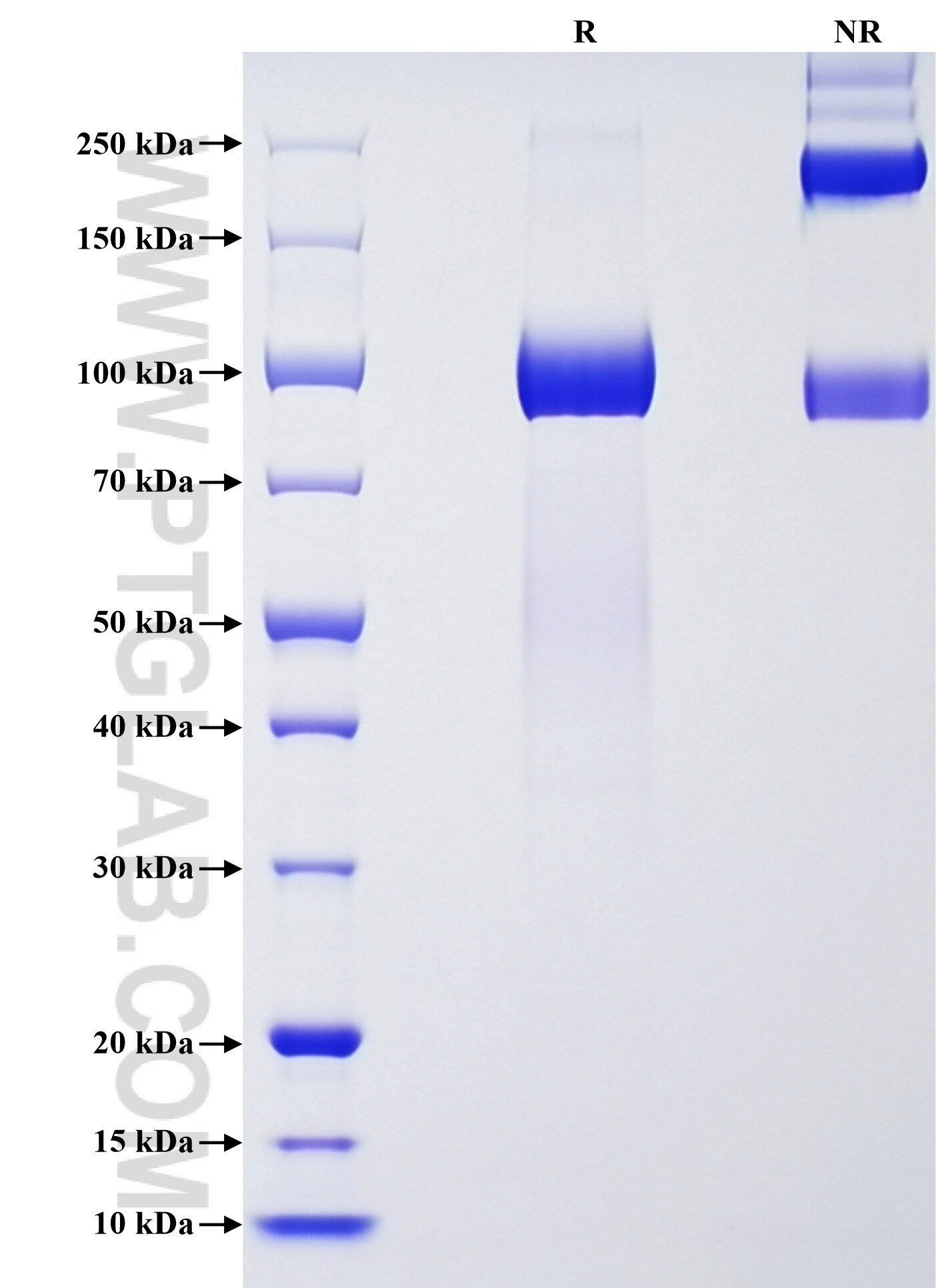
>90 %, SDS-PAGE
Tag
rFc Tag
Activity
not tested
Cat no : Eg9623
Validation Data Gallery
Product Information
| Purity | >90 %, SDS-PAGE |
| Endotoxin | <0.1 EU/μg protein, LAL method |
| Activity |
Not tested |
| Expression | HEK293-derived Mouse HRG protein Leu19-Lys525 (Accession# Q9ESB3) with a rabbit IgG Fc tag at the C-terminus. |
| GeneID | 94175 |
| Accession | Q9ESB3 |
| PredictedSize | 82.8 kDa |
| SDS-PAGE | 90-120 kDa, reducing (R) conditions |
| Formulation | Lyophilized from 0.22 μm filtered solution in PBS, pH 7.4. Normally 5% trehalose and 5% mannitol are added as protectants before lyophilization. |
| Reconstitution | Briefly centrifuge the tube before opening. Reconstitute at 0.1-0.5 mg/mL in sterile water. |
| Storage Conditions |
It is recommended that the protein be aliquoted for optimal storage. Avoid repeated freeze-thaw cycles.
|
| Shipping | The product is shipped at ambient temperature. Upon receipt, store it immediately at the recommended temperature. |
Background
Histidine-Rich Glycoprotein (HRG or HPRG) is a highly abundant and multifunctional single-stranded plasma glycoprotein. Because of its unique molecular structure, it can bind to a variety of ligands (such as metal ions, coagulation factors, immune cell surface receptors, etc.). Genetic mutation of HRG (such as high plasma HRG level or abnormal function) is closely related to familial Thrombophilia. In addition, in patients with septicemia, the plasma HRG level usually drops sharply, which is often used as a biomarker of the severity and prognosis of the disease.
References:
1. Foglia, Beatrice et al. Frontiers in immunology vol. 15 1342404. 26 Feb. 2024.
2. Schmaier, Alvin H. Blood advances vol. 7,18 (2023): 5649-5650.
3. Malik, Rida A et al. Blood advances vol. 7,18 (2023): 5651-5660.
4. Jiang, Wei et al. EMBO molecular medicine vol. 16,9 (2024): 2146-2169.