
Recombinant Mouse FABP1 protein (rFc Tag)
Species
Mouse
Purity
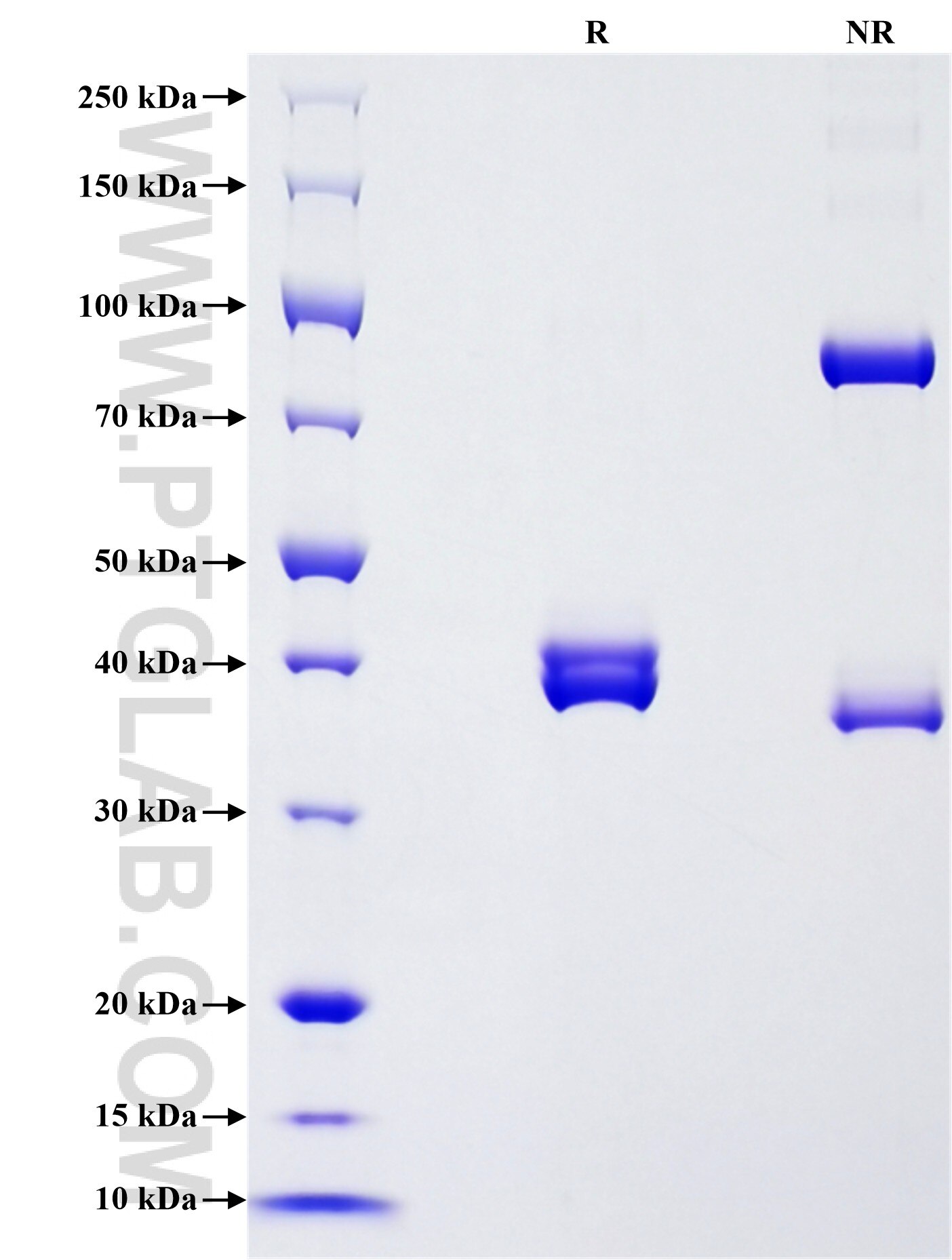
>90 %, SDS-PAGE
Tag
rFc Tag
Activity
not tested
Cat no : Eg7278
Validation Data Gallery
Product Information
| Purity | >90 %, SDS-PAGE |
| Endotoxin | <0.1 EU/μg protein, LAL method |
| Activity |
Not tested |
| Expression | HEK293-derived Mouse FABP1 protein Asn2-Ile127 (Accession# P12710) with a rabbit IgG Fc tag at the C-terminus. |
| GeneID | 14080 |
| Accession | P12710 |
| PredictedSize | 39.7 kDa |
| SDS-PAGE | 38-42 kDa, reducing (R) conditions |
| Formulation | Lyophilized from 0.22 μm filtered solution in PBS, pH 7.4. Normally 5% trehalose and 5% mannitol are added as protectants before lyophilization. |
| Reconstitution | Briefly centrifuge the tube before opening. Reconstitute at 0.1-0.5 mg/mL in sterile water. |
| Storage Conditions |
It is recommended that the protein be aliquoted for optimal storage. Avoid repeated freeze-thaw cycles.
|
| Shipping | The product is shipped at ambient temperature. Upon receipt, store it immediately at the recommended temperature. |
Background
FABP1, liver fatty acid-binding protein, is abundant in cytoplasm that regulates lipid transport and metabolism. It plays a role in lipoprotein-mediated cholesterol uptake in hepatocytes. FABP1 is mainly expressed in hepatocytes, enterocytes and to a lesser degree in renal tubular cells, associated with liver injury. Levels of FABP1 have been found to be elevated in patients with hepatocyte injury secondary to alcohol or drug toxicity.
References:
1.Huang, Huan et al. Biochimica et biophysica acta vol. 1851,7 (2015): 946-55.
2.Pelsers, Maurice M A L et al. Clinica chimica acta; international journal of clinical chemistry vol. 352,1-2 (2005): 15-35.
3.Pelsers, Maurice M A L et al. Clinical biochemistry vol. 36,7 (2003): 529-35.