
Recombinant Mouse Epha6 protein (rFc Tag)(HPLC verified)
Species
Mouse
Purity
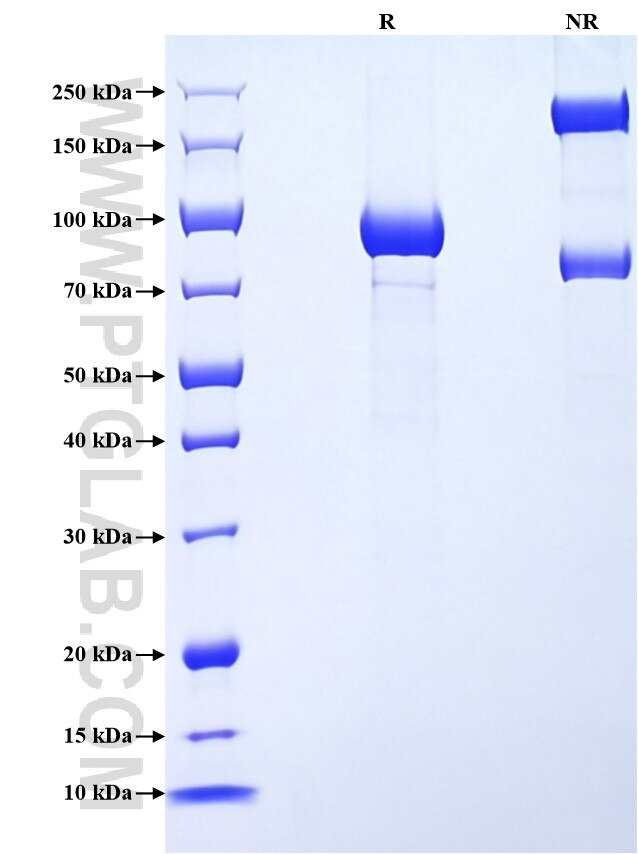
>90 %, SDS-PAGE
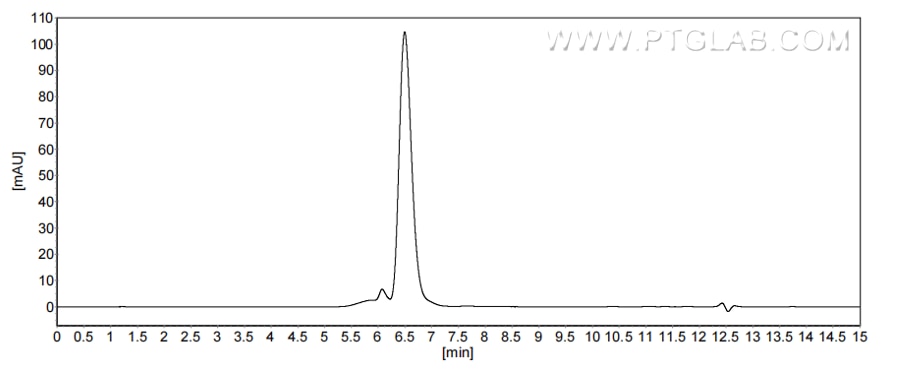
>90%, SEC-HPLC
Tag
rFc Tag
Activity
not tested
Cat no : Eg2857
Validation Data Gallery
Product Information
| Purity | >90 %, SDS-PAGE >90%, SEC-HPLC |
| Endotoxin | <0.1 EU/μg protein, LAL method |
| Activity |
Not tested |
| Expression | HEK293-derived Mouse Epha6 protein Ser28-Gln546 (Accession# Q62413) with a rabbit IgG Fc tag at the C-terminus. |
| GeneID | 13840 |
| Accession | Q62413 |
| PredictedSize | 84.1 kDa |
| SDS-PAGE | 85-110 kDa, reducing (R) conditions |
| Formulation | Lyophilized from 0.22 μm filtered solution in PBS, pH 7.4. Normally 5% trehalose and 5% mannitol are added as protectants before lyophilization. |
| Reconstitution | Briefly centrifuge the tube before opening. Reconstitute at 0.1-0.5 mg/mL in sterile water. |
| Storage Conditions |
It is recommended that the protein be aliquoted for optimal storage. Avoid repeated freeze-thaw cycles.
|
| Shipping | The product is shipped at ambient temperature. Upon receipt, store it immediately at the recommended temperature. |
Background
Epha6 (Eph receptor A6) is a receptor tyrosine kinase that binds to a mixed GPI-anchored heparin-A family ligand residing on neighboring cells, resulting in contact-dependent bidirectional signaling to neighboring cells. Epha6 plays a critical role in brain development and/or behavioral regulation, and the inactivation of its gene leads to impaired learning and memory. Epha6 is associated with a variety of diseases, its overexpression leads to the progression of human prostate cancer, and EphA6 overexpression has been identified as an important independent prognostic indicator in breast cancer.
References:
1. Das G, et al. Cell Biosci. (2016). 6:48.
2. Zhou D, et al. Oncol Lett. (2018).15(4):5257-5263.
3. Li S, et al. Oncotarget. (2015). 6(26):22587-97.