
Recombinant Mouse ENPEP protein (rFc Tag)
Species
Mouse
Purity
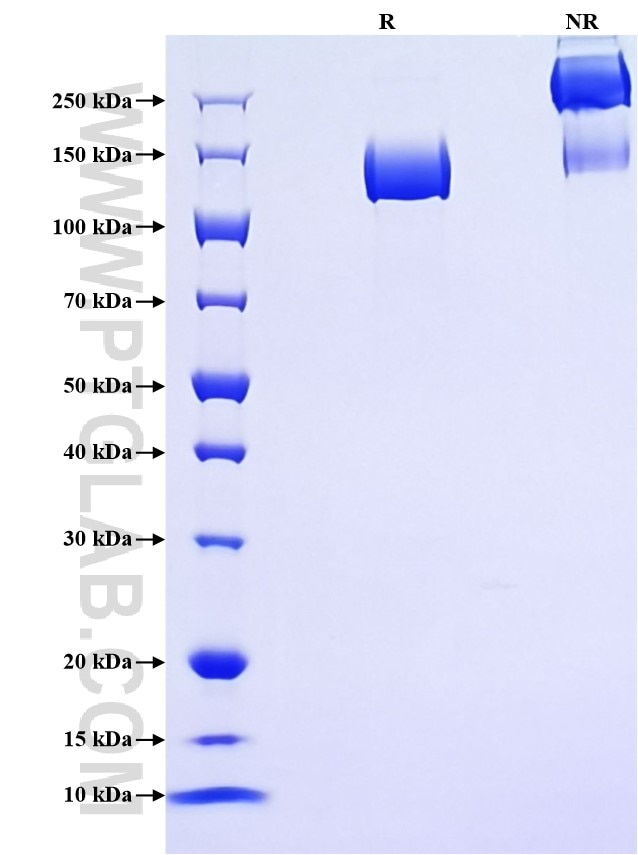
>90 %, SDS-PAGE
Tag
rFc Tag
Activity
not tested
Cat no : Eg4233
Validation Data Gallery
Product Information
| Purity | >90 %, SDS-PAGE |
| Endotoxin | <0.1 EU/μg protein, LAL method |
| Activity |
Not tested |
| Expression | HEK293-derived Mouse ENPEP protein Arg41-Pro945 (Accession# P16406) with a rabbit IgG Fc tag at the N-terminus. |
| GeneID | 13809 |
| Accession | P16406 |
| PredictedSize | 131.0 kDa |
| SDS-PAGE | 120-150 kDa, reducing (R) conditions |
| Formulation | Lyophilized from 0.22 μm filtered solution in PBS, pH 7.4. Normally 5% trehalose and 5% mannitol are added as protectants before lyophilization. |
| Reconstitution | Briefly centrifuge the tube before opening. Reconstitute at 0.1-0.5 mg/mL in sterile water. |
| Storage Conditions |
It is recommended that the protein be aliquoted for optimal storage. Avoid repeated freeze-thaw cycles.
|
| Shipping | The product is shipped at ambient temperature. Upon receipt, store it immediately at the recommended temperature. |
Background
Glutamyl aminopeptidase, encoded by ENPEP, is a membrane protein, which can cut the N‐terminal aspartic acid of angiotensin II, used to increase blood pressure. In previous studies, ENPEP has been shown to contribute to the development of the immune system. ENPEP has also been associated with tumorigenesis in some cancers, such as breast cancer, leukemia, and renal cancer. ENPEP expression levels have been shown to be a prognostic factor in colorectal cancer, linked to the increased survival of patients.
References:
1. Reaux A. et al. (2000). Biochem Soc Trans. 28(4):435-40.
2. Blanco L. et al. (2014). BMC Cancer. 14:386.
3. Haznedaroglu IC. et al. (2016). Eur Rev Med Pharmacol Sci. 20(19):4089-4111.
4. Yuan Y. et al. (2020). Front Oncol. 10:595.