
Recombinant Mouse EGFR protein (rFc Tag) (HPLC verified)
Species
Mouse
Purity
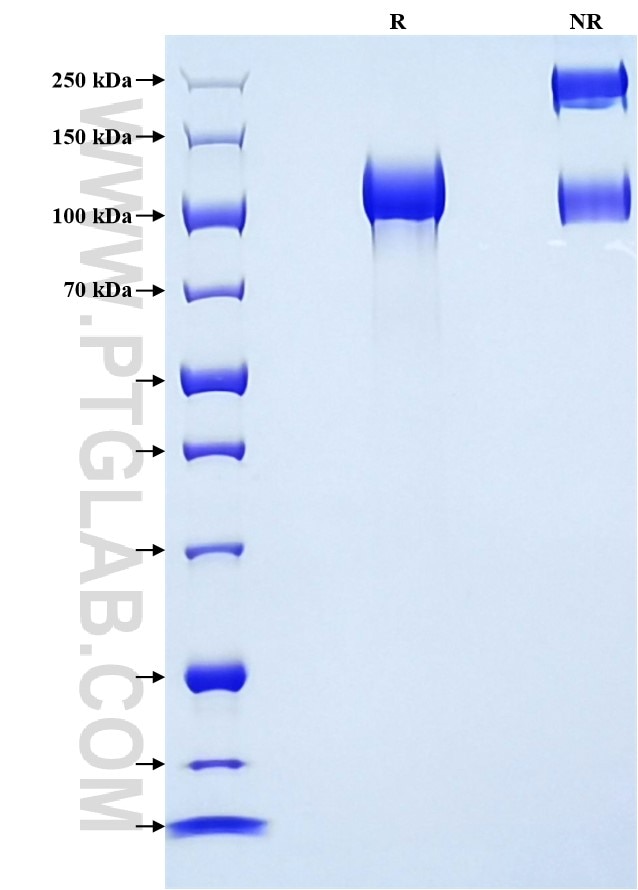
>90 %, SDS-PAGE
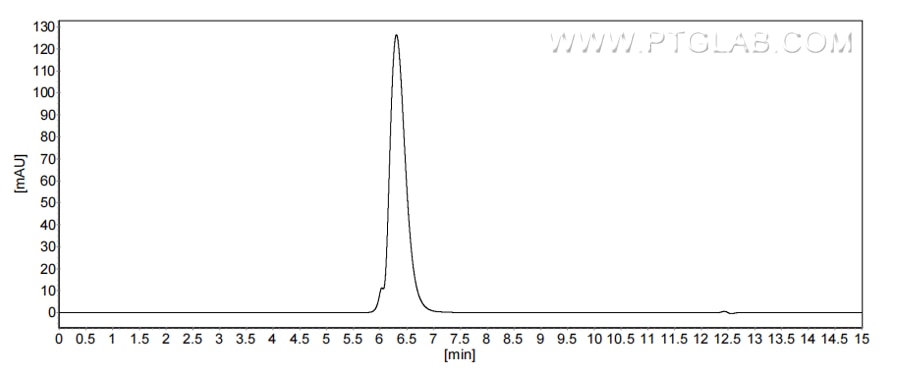
>90%, SEC-HPLC
Tag
rFc Tag
Activity
not tested
Cat no : Eg3498
Validation Data Gallery
Product Information
| Purity | >90 %, SDS-PAGE >90%, SEC-HPLC |
| Endotoxin | <0.1 EU/μg protein, LAL method |
| Activity |
Not tested |
| Expression | HEK293-derived Mouse EGFR protein Leu25-Ser647 (Accession# Q01279) with a rabbit IgG Fc tag at the C-terminus. |
| GeneID | 13649 |
| Accession | Q01279 |
| PredictedSize | 95.6 kDa |
| SDS-PAGE | 100-120 kDa, reducing (R) conditions |
| Formulation | Lyophilized from 0.22 μm filtered solution in PBS, pH 7.4. Normally 5% trehalose and 5% mannitol are added as protectants before lyophilization. |
| Reconstitution | Briefly centrifuge the tube before opening. Reconstitute at 0.1-0.5 mg/mL in sterile water. |
| Storage Conditions |
It is recommended that the protein be aliquoted for optimal storage. Avoid repeated freeze-thaw cycles.
|
| Shipping | The product is shipped at ambient temperature. Upon receipt, store it immediately at the recommended temperature. |
Background
EGFR (Epidermal Growth Factor Receptor) is a receptor for epithelial growth factor (EGF) cell proliferation and signaling and belongs to the ErbB receptor family, also known as HER1 or ErbB1.It is a glycoprotein, a tyrosine kinase-type receptor, with a cell-membrane penetration, and a molecular weight of approximately 170 kDa. EGFR EGFR is located on the surface of the cell membrane and is activated by binding to ligands, including EGF and TGFα. Upon activation, EGFR is converted from a monomer to a dimer, and activation activates its intracellular kinase pathways, including the MAPK, Akt, and JNK pathways, which induces cellular proliferation. Mutations in or overexpression of EGFR generally lead to tumorigenesis, and have been associated with the development of a variety of cancers, including lung cancer, anogenital carcinoma, and polymorphic glioblastoma, and glioblastoma multiforme, among others. (PMID: 37036745)
References:
1. Voldborg BR, et al. Ann Oncol. 1997;8(12):1197-206.
2. Talukdar S, et al. Adv Cancer Res. 2020;147:161-188.
3. Sapmaz A, et al. Oncotarget. 2023;14:297-301.